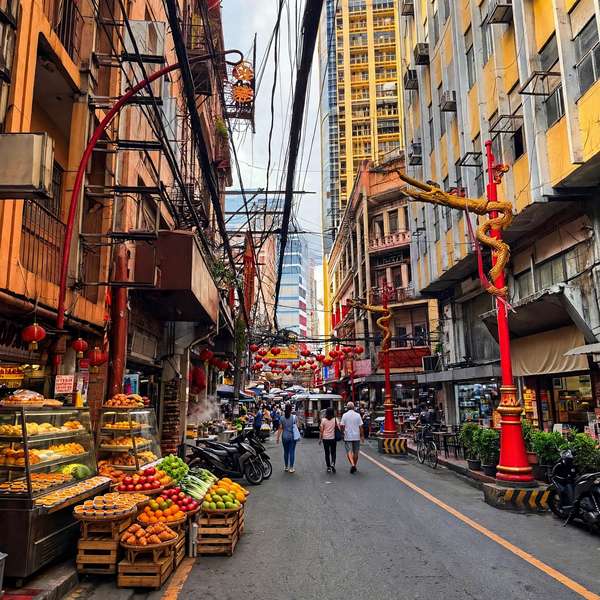
Binondo sits just across the Pasig River from Intramuros and is widely described as the oldest Chinatown in the world. A settlement for Chinese residents was set up here in 1594, and the district has kept its trading and food traditions ever since. Walk its main street, Ongpin, and you will pass gold shops, herbal pharmacies, temples and food stalls that have served the same neighborhood for generations.
For a Cebu-based traveler, a food crawl works best as part of a Manila stopover. You do not need a guide, but you do need a loose plan. The streets are crowded, many shops close early, and it is easy to fill up after two stops if you order a full plate at each one. The route below is built around sharing.
Getting There from Cebu
Cebu to Manila is a short flight into NAIA, and most visitors arrive with luggage. From the airport, a ride-hailing car is the simplest option, though traffic decides the travel time. The budget route is a bus or jeepney to an LRT-1 station and then the train to Carriedo station, which is a short walk from Ongpin. Afternoon traffic on the airport roads can be heavy, so an early arrival gives you the best window to start eating. Leave any bags you do not need at your hotel or at airport luggage storage.
Start Light: Siopao and Soup Dumplings
Shanghai Fried Siopao on Ongpin is a classic first stop. These are steamed pork buns with the bottoms pan-fried until crisp, so you get a soft top and a crunchy base. Eat one standing at the stall while it is hot, because a takeaway box softens the crust quickly. Recent food guides report prices around ₱35 each, but check the counter on the day.
For soup dumplings, Dong Bei Dumplings is a well-known name for xiao long bao and pan-fried dumplings. Xiao long bao take a little practice. Lift one carefully, nibble a small opening, sip the broth, then finish it with vinegar and ginger. Order one basket to share so you can taste more of the menu.
Savory Stops: Noodles and Lumpia
Beef noodle soup is the right order when fried food starts to feel heavy. The bowls are generous, so split one between two people and ask for chili and spring onions on the side. Machang, sticky rice wrapped in lotus leaf, and kuchay ah, a chive cake, make small add-ons that are easy to try while you wait in line.
Fresh lumpia from the street stalls give you a cool, vegetable-based break in the middle of the crawl. They are crisp, garlicky and served with a peanut sauce. Eat them within a few minutes of buying, since the wrapper softens fast in the heat.
Sweets for Later: Hopia from Eng Bee Tin
Eng Bee Tin has been making hopia since 1912, and its headquarters is on Ongpin at 628 Ongpin Street. The classic fillings, such as mung bean, now share shelves with ube versions, and the ube variant is a relatively modern addition to the range. Buy a small bundle to try on the first visit, then pick up pasalubong on your last stop, before you head back to the airport. Check the packaging for storage advice, since shelf life varies by product.
A Three-Hour Route
This loop keeps you on or near Ongpin and fits six or seven tastings:
- Carriedo station to Ongpin (10 minutes): Get your bearings and grab a drink if the afternoon is hot.
- Eng Bee Tin (15 minutes): Look around the shop and buy a small bundle to taste later.
- Shanghai Fried Siopao (25 minutes): One bun each, eaten at the stall.
- Dong Bei Dumplings (50 minutes): Sit down, share a basket and rest your feet.
- Beef noodle house (90 minutes): Share one bowl, plus machang or kuchay ah.
- Fresh lumpia stall (120 minutes): A cool, vegetable stop before dessert.
- Binondo Church (150 minutes): Rest in the courtyard, then buy hopia for the trip home.
Walking distances inside the loop are short, but the crowds slow everything down, so allow more time than the map suggests. From the church, Jones Bridge leads to Intramuros in about ten minutes on foot, which makes it easy to combine both districts in one afternoon.
Budget and Cash
Most stalls in Binondo take cash only, so bring small bills and coins. If you share dishes, a food budget of roughly ₱500 to ₱1,000 per person covers most of the route, based on what recent food guides describe for typical spending. Eating full portions alone will cost more. The larger expense is usually the trip from Cebu, so the cheapest approach is to plan the crawl around a flight you are already taking to Manila.
Timing and Etiquette
Weekday late mornings are calmer than weekend afternoons, which tend to be the busiest. Chinese New Year brings lion dances and very long queues. From June to October the rain can arrive in the afternoon, so pack a small umbrella. Sidewalks are narrow and motorbikes share the same space, so walk single file and keep your bag in front of you. Ask before photographing people at the stalls, and ask permission before taking pictures inside temples.
Is It Worth the Trip?
If you are already flying through Manila, a few hours in Binondo is an easy win. Pair it with the old walled city next door; our 24-hour Manila stopover guide to Intramuros covers that side of the day. For the wider picture of flight and ferry costs, see our Philippines travel budget comparison. Go hungry, share everything, and save room for hopia on the way out.