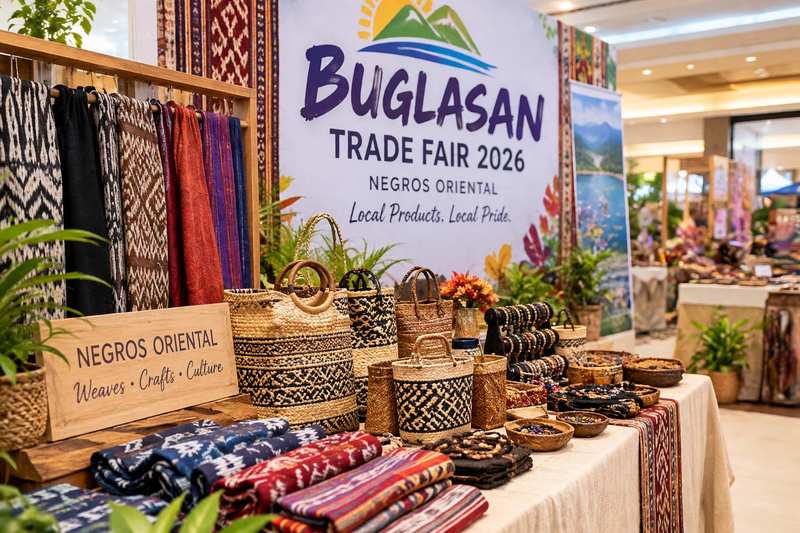
The Buglasan Trade Fair is back at Robinsons Dumaguete after a nine-year gap, and it runs until 22 October. Twenty-five local producers are selling crafts, home and lifestyle goods, and woven textiles, and much of the work is made from natural plant fibers. If you are in Dumaguete for the festival and want something to take home, this is the quickest way to see a wide range of local makers under one roof.
The fair suits two kinds of visitors. Shoppers looking for gifts with a real origin story will find makers who can explain their materials and methods. Festival-goers who need a break from parades and evening stages can spend an hour browsing without leaving the city centre.
This guide covers what to look for at the booths, the fibers behind the products, the questions worth asking, and how to fit a visit into a day in town. Trade fair hours can differ from mall hours, so confirm the schedule with Robinsons Dumaguete before you travel.
What Is on Display
The fair brings together bags and accessories, woven textiles, home and lifestyle pieces, and handcrafted items from producers across the province. Several booths belong to small brands that most visitors will not have seen before, which is part of the reason to walk the full floor instead of stopping at the first table.
Among the exhibitors, Gimena's Handicrafts makes woven bags and handcrafted pieces using traditional techniques. Garnish sells accessories, jewelry and home accents aimed at personal styling and gift-giving. Kaban produces bags and other handmade lifestyle products. Those three give a sense of the range, but the fair has 25 producers in total, so give the less familiar booths the same attention.
The Fibers Behind the Products
Natural fibers are the thread that ties much of the fair together. Abaca is a strong fiber from the abaca plant, traditionally used for cordage and also woven into fabrics and bags. Sinamay is a lightweight cloth usually made from processed abaca. Piña comes from pineapple leaves and gives a fine, slightly sheer textile that is often used in formal wear. Coconut coir is the fibrous husk of the coconut and turns up in mats, brushes and garden goods. Cotton is the familiar natural fiber found in everyday textiles.
Seeing these materials as finished goods makes the process easier to picture. A bag or table runner shows how a plant grown in a field can become something you use every day. When you talk to a maker, ask which fiber the piece uses and where the material came from. Those answers often lead to the most useful conversations of the visit.
Questions Worth Asking at the Booths
- Which fiber was used, and where was it sourced? Knowing this helps you judge quality and compare pieces fairly.
- How should I clean and store it? Many natural fibers need gentler care than synthetic ones, and a seller can tell you what suits a specific piece.
- How is it made? Hand-finished details such as stitching, edging and dyeing take time, and knowing the process explains the price.
- Do you take orders or have an online catalogue? If you like a design but not the colour or size on display, a business page or contact number can help.
Choosing a Piece You Will Actually Use
A souvenir is easier to enjoy when it fits your daily life. For bags, check the stitching where the handles meet the body, look at the closure, and hold the piece to see whether it feels balanced when full. For woven textiles, lay the piece flat in good light and look for an even weave with no loose threads. For home pieces, measure the space first, since a decorative item that looks perfect on a table can overwhelm a small room.
Keep in mind that prices, stock and exhibitors can change during the event. If a booth has sold out of the piece you wanted, ask whether the maker takes orders after the fair.
How the Fair Fits Into a Dumaguete Visit
Because the fair is inside Robinsons Dumaguete, it works well as part of a wider day in the city. Pair it with a walk along the Boulevard or a meal downtown. Plan roughly 45 minutes to an hour for browsing, and more if you are shopping for gifts or want to talk through custom orders. Going in the earlier part of the day is a sensible choice when the evening events are drawing crowds to central Dumaguete.
For the wider festival programme, see our guide to Buglasan Festival 2026 events and schedule. If you are planning other stops in the week, our October 2026 guide to Dumaguete lists more of what is on in town.
Why Events Like This Matter for Makers
For a small maker, a trade fair is a chance to meet buyers face to face. A single good conversation can lead to a repeat order, a referral or a wholesale contact that a social media page might never produce. Buyers gain too, because they can see the texture, weight and finish of a product before they commit.
Larger plans are also under way. DOST-NIR has outlined proposals with the Philippine Textile Research Institute for a regional yarn production and innovation center, along with a national textile fiber innovation hub in Negros Occidental. These are planned facilities, not services you can use at the fair. The aim is to process locally grown cotton, abaca and other natural fibers into yarn within the region, instead of sending raw material to Manila, which could give handloom weavers easier access to natural yarns.
Visitors can support that work simply by buying directly from makers, sharing their pages with friends, and following them for future releases. Each sale helps a producer keep working, and that is what keeps traditional weaving and fiber crafts going.
The Short Version
If you have only an hour in Dumaguete during the festival, spend it at the Buglasan Trade Fair. Walk the whole floor, ask about the fibers, and buy one piece from a maker you enjoyed talking to. That gift will carry a story that no generic souvenir can match.
Sources
DTI, DOST push collaboration to revive local fiber industry – Philippine News Agency, 16 October 2026
Discover Local Treasures at the Negros Oriental Buglasan Trade Fair 2026 in Dumaguete – Homes.ph, October 2026