Most cities call themselves the capital of something. General Santos earns its title every morning before sunrise, when boats ease into the fish port in Barangay Tambler and yellowfin tuna as big as a grown man are hauled onto the concrete, weighed and graded within minutes. By breakfast, some of that fish is on its way to Japan, and by lunch some of it is on a grill in the city.
This guide follows the tuna from the water to your plate. It explains how GenSan became the country's tuna capital, how the fish are caught and graded, how to visit the port at dawn, which tuna dishes to order and when the Tuna Festival takes over the streets.
One update before you plan: a strong earthquake off Sarangani in June 2026 damaged parts of the fish port. Fish landings continued, but some market halls were closed for structural checks, so confirm what is open to visitors before you set your alarm.
How General Santos became the tuna capital
General Santos sits at the head of Sarangani Bay, close to rich tuna grounds in the Celebes Sea and the Moro Gulf. It became a city in 1968 and was named after General Paulino Santos, who led the settlers who arrived in the area in the 1930s. Fishing was always part of life here, but tuna changed the scale of it.
From the 1970s, buyers from Japan came looking for sashimi-grade yellowfin, and local fishers and investors answered with bigger boats, longer trips and better ways to keep the catch cold. Canneries followed. Today the city hosts most of the country's tuna canneries, and the industry supports a large share of local jobs, from crews and porters to packers and truck drivers.
The fish port gave the industry a home. Built with a Japanese government loan and opened in 1999, the General Santos City Fish Port Complex is run by the Philippine Fisheries Development Authority. Even in its first years it handled more than 40,000 tons of fish annually, and it has since become one of the busiest fish ports in the Philippines. A government-funded upgrade of its cold storage and facilities was under way in 2025.
How the tuna is caught and graded
Much of the prized yellowfin is still caught by handline: a single baited hook on a long line, fished deep near floating fish aggregating devices, or payao, and hauled up by hand. Small outrigger boats and larger mother boats with smaller catcher boats both work this way. Because each fish is caught one at a time, it can be bled and iced quickly, which protects the colour and fat that sashimi buyers pay for.
At the port, the fish are unloaded, weighed and laid out in rows. Graders take a thin core sample from each tuna with a metal probe and judge its colour, fat and texture. The best fish are packed in ice and flown out to markets such as Japan. Lower grades go to local markets, processors and canneries, along with the skipjack and smaller tuna that make up much of the canned supply.
How to visit the General Santos Fish Port Complex
The General Santos City Fish Port Complex is in Barangay Tambler, south of the city centre along Sarangani Bay. It is a working port, not a tourist market, so think of a visit as watching people at their jobs and keep out of the way.
When
Be there by 5 to 7 AM
The big tuna come off the boats in the early morning. By mid-morning the action slows and the stalls move on to smaller fish.
Entry
Register at the gate
Ask permission and register at the entrance, and bring a valid ID. A hotel, guide or tour operator can arrange the visit ahead of time.
2026 update
Check what is open
After the June earthquake, market halls 1 to 3 were closed for structural checks and hall 4 was only partly in use. Ask the port or your hotel which areas visitors can enter now.
What to wear when visiting the GenSan fish port
- Long pantsShorts and sleeveless tops are not allowed on the floor.
- Closed shoes and socksFloors are wet. Boots are required in the trading areas and can usually be rented for a small fee.
- Small billsFor boot rental and anything you buy from the vendors.
- A valid IDYou may be asked for it when you register.
Inside, stay clear of the porters, who move fast with heavy loads. Do not touch fish that are being graded, and ask before photographing people or entering any processing area.
Where to eat tuna in General Santos
Nothing from the tuna goes to waste in GenSan. The cuts that other cities throw away or turn into fish meal are dishes in their own right here.
Grill houses and seafood restaurants are spread around the city, with more in the malls if you want air conditioning. Ask your hotel or driver where locals are eating that week, and order by the kilo.
The Tuna Festival every September
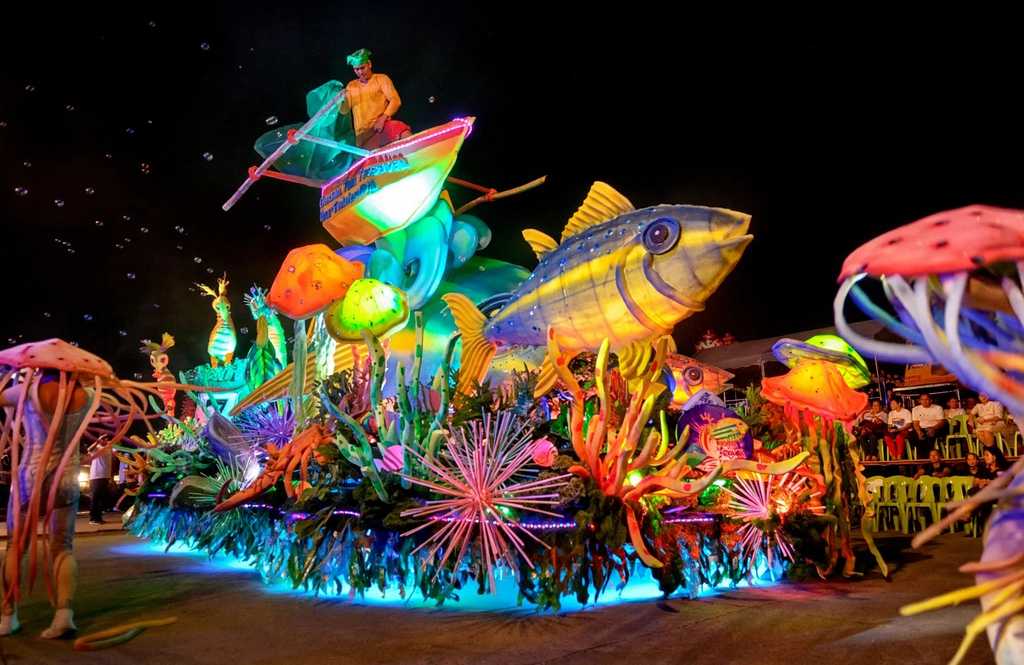
The Tuna Festival has run since 1998 and peaks in the first week of September, closing on 5 September, the city's Charter Day. Expect a parade of ocean-themed floats like the one in the photo above, culinary contests, a fish fest at the port and the Sugbahan sa Dalan, a street grill party where tuna panga and other seafood are cooked out in the open.
The 2026 edition, the 28th, went ahead on a smaller scale after the earthquake. Its theme was "Giting at Pagkakaisa, sa Pagbangon Sama-sama", or courage and unity in rising together, and a night market for quake-hit small businesses ran alongside it. Rooms fill quickly during festival week, so book early if you plan to go in 2027.
Tips for a tuna-focused trip
Plan it right
- Book your ride the night beforeYou need to leave the city before dawn, so arrange a taxi or driver ahead rather than hoping to flag one down.
- Give it two morningsSpend one at the port and keep a second free in case boats are late or the weather is rough.
- Taking fish home?Vendors can pack fish in ice and foam boxes. Check your airline's rules on fresh seafood first.
- Ask about sizeYellowfin stocks are under pressure. Choosing adult fish over juveniles helps keep the fishery going.
- Add the hinterlandLake Sebu in South Cotabato is a good side trip for cooler air and waterfalls after a few days of grilled fish.
For that side trip, our Lake Sebu guide covers the seven falls, the zipline and T'boli culture. Many travellers also come down by road from Davao, so our 3-day Davao City itinerary pairs well with a GenSan stop. If you are weighing up travel in the south, read our area-by-area look at whether Mindanao is safe to travel.
General Santos fish port FAQ
What time does the GenSan fish port open for tuna landings?
The busiest time is early morning, from about 5 to 7 AM, when the large tuna are unloaded, weighed and graded. By mid-morning the trading slows and moves on to smaller fish.
Can tourists enter the General Santos fish port?
Yes. Register and ask permission at the entrance, bring a valid ID, and wear long pants and closed shoes. Boots are required in the trading areas and can usually be rented for a small fee. After the June 2026 earthquake some market halls were closed for checks, so confirm which areas are open before you go.
What should I wear to the GenSan fish port?
Long pants, closed shoes and socks. Shorts and sleeveless tops are not allowed on the trading floor, and the floors are wet.
When is the Tuna Festival in General Santos?
The Tuna Festival peaks in the first week of September and ends on 5 September, the city's Charter Day, with a float parade and the Sugbahan sa Dalan street grill.
What tuna dishes should I try in General Santos?
Start with grilled tuna panga and kinilaw, then try sashimi, grilled belly, and tail cooked in paksiw or sinigang.
Port access, festival dates and grill prices can change, especially while repairs continue, so check with the city tourism office or your hotel before you go.
Photo credit: GenSan News Online (GenSantos.com).


Comments
No comments yet. Been here recently? Share a tip or ask a question.
Leave a Reply