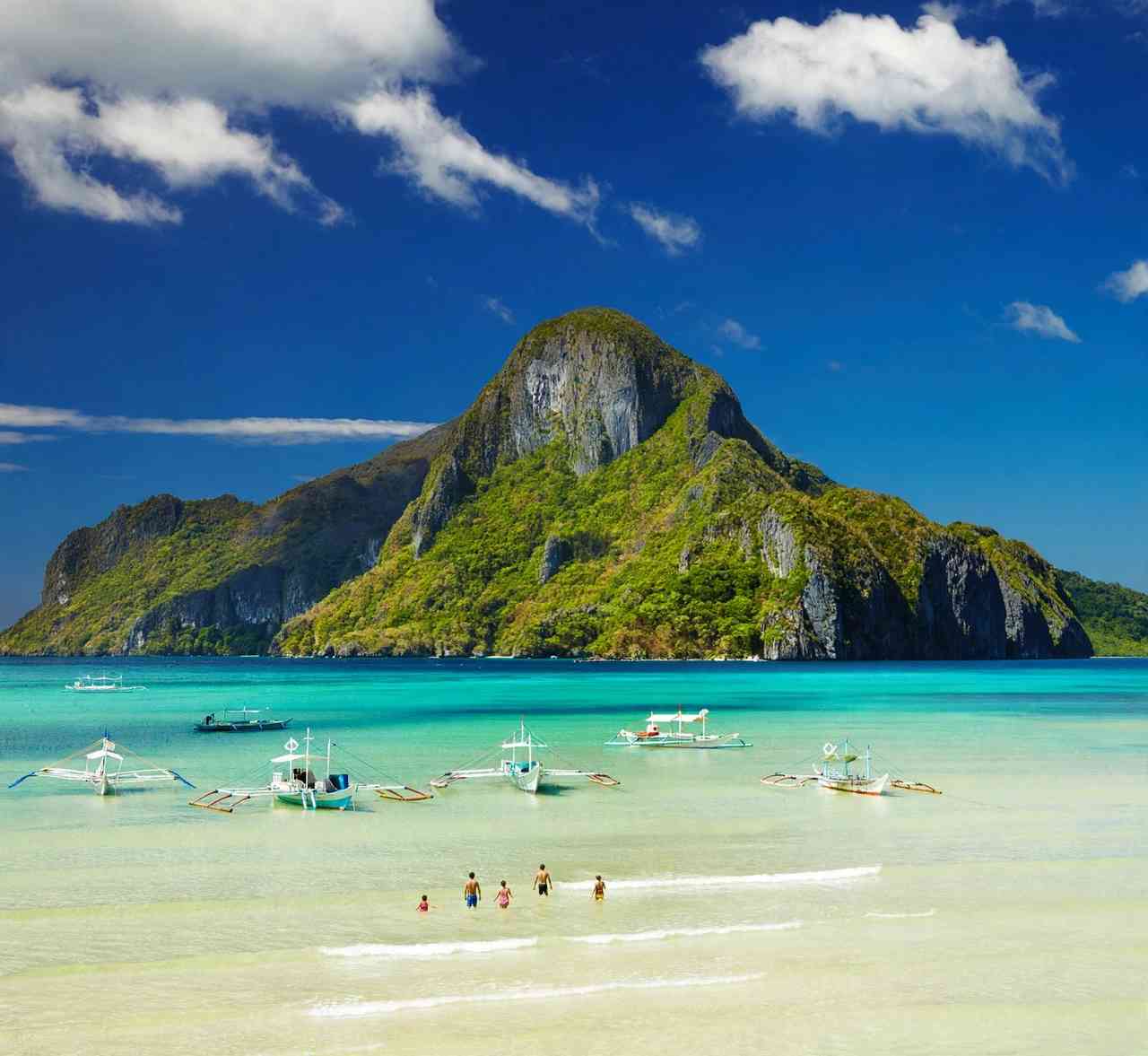
If you want one answer, aim for December to April. That is when most of the country is dry, the sea between islands is at its calmest and the odds of a typhoon wrecking your plans are lowest. Divers and beach people who can take the heat should look harder at March to early May, when the water goes glassy and visibility peaks.
The catch is that the Philippines does not have one weather calendar. It has more than 7,000 islands and four climate types, so a week of blue skies in Palawan can be a week of grey drizzle in Siargao. Broadly, the western side of the country (Manila, Palawan, Boracay, Cebu, Negros) is driest from December to May, while the Pacific-facing east (Samar, Siargao, eastern Mindanao) catches more rain when the northeast monsoon blows from November to February.
Below is how each month usually plays out: the weather, the festivals worth timing a trip around, how busy it gets and what you will pay. Use it to match the month to the trip you actually want.
Amihan, Habagat and the Typhoon Months
PAGASA, the state weather bureau, frames the year around two monsoons. Amihan, the northeast monsoon, brings cooler, drier air from around late October to early April. Habagat, the southwest monsoon, takes over from about late May to early October and carries the rain.
Locals split the dry half again: a cool dry stretch from November to February and a hot dry one from March to May. Temperatures sit between roughly 25 and 32°C most of the year, but Manila and inland towns can climb past 34°C in April and May.
Typhoons ride along with Habagat. Around 20 tropical cyclones enter Philippine waters in a typical year, and most make landfall between July and October. Northern Luzon and Eastern Visayas take the most hits. Southern Palawan and the Zamboanga side of Mindanao see far fewer direct strikes, which is why they are useful fallbacks in the wet months.
The Year, One Month at a Time
January: Dry, Cool and Packed With Parades
The west coast is at its most pleasant, with low humidity and calm crossings to islands like Apo and Siquijor. January is also the big festival month in the Visayas: Sinulog in Cebu City on the third Sunday, and Ati-Atihan in Kalibo and Dinagyang in Iloilo in the same stretch. Hotels in those cities fill months ahead. Crowds and prices: high.
February: The Easiest Month to Get Right
Same dry weather, minus the January holiday rush. For island hopping in Bohol, Negros Oriental and Palawan, it is hard to beat. Baguio is the exception, because Panagbenga fills the city late in the month; the parade weekends mean heavy traffic and few free rooms. Crowds: high, then easing. Prices: high to moderate.
March: Flat Water and Dive Season
Heat starts to build, but the sea is at its flattest. Tubbataha Reefs in the Sulu Sea opens to liveaboard trips only from about mid-March to mid-June, and those berths go early. Elsewhere, ferries rarely cancel and afternoon storms are uncommon. Crowds: moderate until Holy Week.
April: School Break and Holy Week
Peak summer. Families are on holiday and beaches fill up. Holy Week moves every year (in 2027 it runs up to Easter Sunday on 28 March, so expect the rush in late March rather than April). Shops and restaurants in smaller towns close on Maundy Thursday and Good Friday, while buses, ports and airports overflow either side. Marinduque's Moriones and the Lenten rites in many provinces are worth seeing if religious tradition interests you. Prices: second only to Christmas.
May: Fiestas Before the Rain
Still mostly dry in the west, though thunderstorms creep in after mid-month. Lucban in Quezon holds Pahiyas on 15 May, when houses are hung with kiping, the colored rice wafers, and fresh produce. Flores de Mayo and Santacruzan processions run all over the country. Crowds drop after the long weekends and shoulder pricing begins.
June: Habagat Arrives
The southwest monsoon usually starts around late May or early June. Rain on the western side tends to come in short afternoon bursts, so mornings are often usable. Resorts start their promos. Crowds: low.
July and August: Cheap, Green and Unpredictable
Luzon, Palawan and the western Visayas are at their wettest, and flooding and ferry cancellations get more frequent. This is when Mindanao earns attention: Davao and Cagayan de Oro sit mostly below the typhoon track. Davao's Kadayawan harvest festival usually lands in the third week of August, a cultural trip without January prices. Prices: the lowest of the year.
September: The Riskiest Month Up North
September is statistically the busiest month for typhoons near the Luzon Strait, so avoid tight connections in the north. Naga City's Peñafrancia brings its river procession to Bicol. In the Visayas, small-boat trips can be choppy, so check the wind before booking a day out. Beach resorts are close to empty.
October: Turning Point
Habagat usually winds down early in the month and Amihan creeps back late. Weather is mixed. Bacolod holds MassKara around mid to late October, and rooms there get scarce that weekend even though prices elsewhere stay low.
November: Dry Season Is Back
Seas settle in the west, snorkelling visibility improves and resorts go back to full schedules. Siargao is in the last weeks of its September to November surf season, but eastern Visayas and the Pacific coast can stay rainy. A good month for anyone who wants dry weather before the holiday rush. Prices: shoulder, rising.
December: Christmas, Lanterns and Full Airports
Reliable sun in Palawan, Boracay, Cebu and Negros, and the long Filipino Christmas in full swing. Simbang Gabi dawn masses run from 16 to 24 December, and San Fernando's Giant Lantern Festival lights up mid-December. From about the 20th, terminals and ports are jammed with people heading home. Come in the first half of the month if you want the festive mood without the crush.
Matching the Month to the Trip
A Visayas-only trip (Cebu, Bohol, Negros, Siquijor) is the most forgiving. December to April is driest and early boats to Apo or Siquijor run reliably, but the central islands get less rain than Manila during Habagat, so a June or July visit is workable with a spare day built in.
Palawan and Siargao in one trip is where calendars clash. Palawan is best from December to May; Siargao's bigger surf comes from September to November. Most people settle on March to May, when the weather is good in both places and the waves in Siargao are smaller.
Mindanao varies a lot by side. Davao and the north can be visited in the wet months, but east-coast towns such as Bislig get their heaviest rain during Amihan, when the rest of the country is drying out.
Peak Weeks, Value Weeks and Bargain Months
The three periods to book three to six months ahead are Christmas to New Year, Holy Week, and Sinulog week in Cebu. Rooms that are easy to find in February cost far more then, and ferries sell out.
Best value with good weather: February to early March, late April to May (outside Holy Week) and November. The cheapest stretch is June to September, with real discounts and empty beaches, as long as your plans can bend around a cancelled boat.
Before You Lock In Dates
Pick your priority first. Festivals and cool air point to January and February. Diving and flat seas point to March through May. A tight budget points to the wet months, and a December trip gives you Christmas plus the start of dry season.
Whatever you choose, follow PAGASA's tropical cyclone bulletins in the week before you fly, leave a day of slack between island hops, and for festival towns book your room before your flight. Guesthouses run out long before airline seats do.
Comments
No comments yet. Been here recently? Share a tip or ask a question.
Leave a Reply