The Giant Lantern Festival takes over the City of San Fernando in Pampanga every December, and watching it costs nothing. The main competition, the Ligligan Parul, is held on a Saturday in mid-December, and in recent seasons the lanterns have been staged at Robinsons Starmills near the San Fernando exit of NLEX, then kept on nightly display there until New Year's Day. If the competition night doesn't fit your dates, any evening in the second half of December still lets you see them lit.
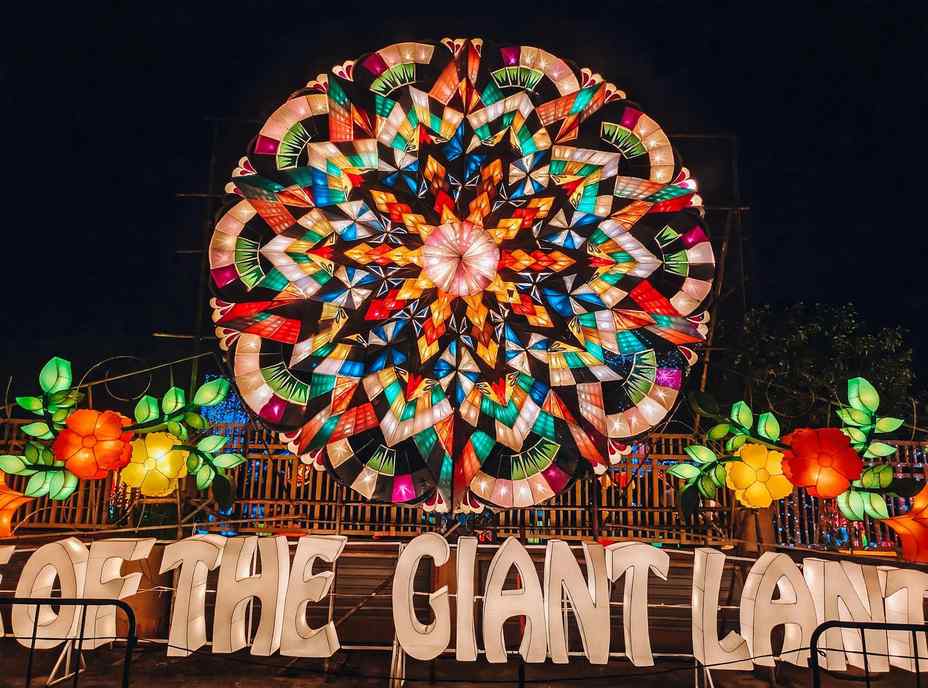
The tradition dates to 1908, and it has stopped only for war and, more recently, the pandemic. It began with modest bamboo stars covered in papel de hapon, the thin Japanese paper still used for small parols. Today's entries are steel-framed giants about 20 feet across, each wired with thousands of bulbs that flash in patterns while the lantern seems to spin and bloom.
Here is how the competition works, which nights to pick, how to reach San Fernando and get home afterward, and a few habits that make a long night in a big crowd much easier.
What Makes a Parol Dance
A giant parol doesn't actually turn. The motion comes from the rotor, a hand-built drum fitted with strips and contacts that switch rows of bulbs on and off as it rotates. Lanterns from the bigger entries have used around 12,000 bulbs linked by roughly 15 kilometers of wire, and the teams behind them spend months on the patterns before a single public lighting. Some teams now use computer controls, while others still rely on the manual rotor and an operator who knows the sequence by heart.
The star shape is the point of it all. A parol stands for the Star of Bethlehem, and every barangay entry, however wild its colours, is built around that star.
How to watch like a judge
Each barangay gets a few minutes under the lights, set to music that can swing from carols to Kapampangan songs to OPM. Judges look at design, colour combinations and how smoothly the light patterns move with the music. As a spectator, you'll enjoy it more if you pick one thing to follow per lantern: the centre for a few beats, then the outer rings, then the way the patterns ripple outward. The best entries never seem to repeat themselves.
Competition Night or a Quiet Display Night?
These are two different experiences, and choosing the right one shapes the whole trip.
Competition night
This is the full show: a run of barangay performances lasting a couple of hours or more, cheering from rival neighbourhoods and fireworks to close. It is also the most crowded night of the season. Plan to arrive around 4 to 5 PM to claim a spot on the open grounds, and bring a mat or a folding stool. Before the date is set, it's easy to assume it falls on the same Saturday every year, but the city changes it, so wait for the City of San Fernando tourism office to post the official schedule, usually in late November or early December.
Display nights
Once the judging is over, the winning lanterns and the other entries stay up and light up after 6 PM. In recent seasons there was also a special Christmas Eve showing between City Hall and the Metropolitan Cathedral in the city centre, and a final lighting on the evening of January 1. Display nights are calmer, easier for children and older relatives, and better for photos, because you can move close to the frames without a wall of phones in front of you.
Getting to San Fernando
San Fernando sits right on NLEX, about an hour or two north of Manila depending on traffic, and only a short ride from Clark.
Flying into Clark or Manila
Clark International Airport is the closer gateway, roughly 20 to 30 kilometers from San Fernando, and it has direct domestic flights from several Visayas and Mindanao cities, Cebu among them. A Grab from Clark to Robinsons Starmills takes around 30 to 45 minutes when roads are clear. The cheaper route is a jeepney to the Dau terminal, then another ride south to San Fernando.
If you land in Manila instead, buses from Cubao and Pasay run north on NLEX and stop in San Fernando in about one and a half to two and a half hours. On competition day, leave Manila by early afternoon. Traffic around the venue builds well before the first lantern lights up.
Getting home after the show
This is the part most visitors forget to plan. When the last fireworks fade, thousands of people leave at once, and ride-hailing prices jump. Either book a room within walking or tricycle distance of the venue, or wait out the first rush with a late snack before heading to the road.
Where to Stay and What It Costs
Entry to the public viewing area is free. Hotels in San Fernando have recently ranged from about PHP 1,500 to 4,500 a night, and rooms near the venue go quickly for competition weekend, so book two to three weeks ahead at the very least. Angeles City, about 15 to 20 minutes north, has a wider choice of hotels and is convenient if you fly through Clark.
Pampanga is one of the best food provinces in the country, so plan your meals around it. Our Pampanga food trip covers sisig and the Kapampangan dishes worth seeking out before the lanterns light up. Food stalls near the venue are convenient, but sitting down to an early dinner in town beats eating standing up in a crowd.
Small Things That Help on the Night
December evenings in Pampanga can get cool by Philippine standards, so a light jacket earns its place. Bring a power bank, because filming a lantern for two hours drains a phone fast. Carry small bills for parking, snacks and tricycles, since many stalls only take cash. If you drive, expect the parking at Starmills to fill early; a drop-off and a short walk is usually less stressful.
For the best view of the full patterns, stand back near the middle of the grounds. Halfway through, walk closer to the side and look at the rotors and wiring behind the frames. Seeing how much of it is built by hand makes the patterns more impressive.
Making It a Festival Season
If you're building a run of Luzon festivals, Angono's papier-mâché giants come out a month earlier, in November, and our guide to the Higantes Festival in Angono covers that parade. If you're already planning ahead for the new year, Baguio's flower festival follows in February, and the Panagbenga guide shows what to expect there.
For the Giant Lantern Festival itself, the plan is simple: watch for the official date, choose between the energy of competition night and the calm of a display night, and sort out your ride home before the show starts. The lanterns take care of the rest.