Every February, Baguio turns into a city of flowers. The name draws on a Kankanaey term for the blooming season, and the festival is the city's yearly way of celebrating it. It began as part of the city's effort to recover after the 1990 earthquake, and it has grown into a month-long programme that brings thousands of visitors up the mountain each year. The whole month is busy, but two events do most of the work: the grand street dancing parade and the grand floral float parade, which is the one many people travel for.
The 2026 edition, the thirtieth, ran from 1 February to 8 March, with the street dance on 28 February and the float parade on 1 March. The 2027 dates are not final yet. Based on how the festival has been scheduled, expect the month-long programme to run from 1 to 28 February, with the main parades on the last weekend of February or the first weekend of March. Confirm the official dates with the Baguio Flower Festival Foundation and the Philippine Information Agency before you book anything, and check again in November and December 2026, when the programme is usually firmed up.
This guide covers what happens during the festival, how to get from Cebu, where to stay and what it costs, and how to watch the parades without losing a day to traffic.
What Happens During the Month
The festival opens with ceremonies at Panagbenga Park and along Harrison Road, then carries on through February with a steady run of activities. Flower exhibits at Burnham Park draw the most photographs, Session Road turns into a market for about a week, and cultural shows and competitions fill the Baguio Athletic Bowl.
The grand street dancing parade is the first big event, usually held on the last Saturday of February. Dancers in flower-inspired costumes move to the beat of drums from Panagbenga Park through Session Road to the Athletic Bowl. Watching from the sidewalks costs nothing, but Session Road fills early. Arrive by 6:30 in the morning if you want a spot near the front.
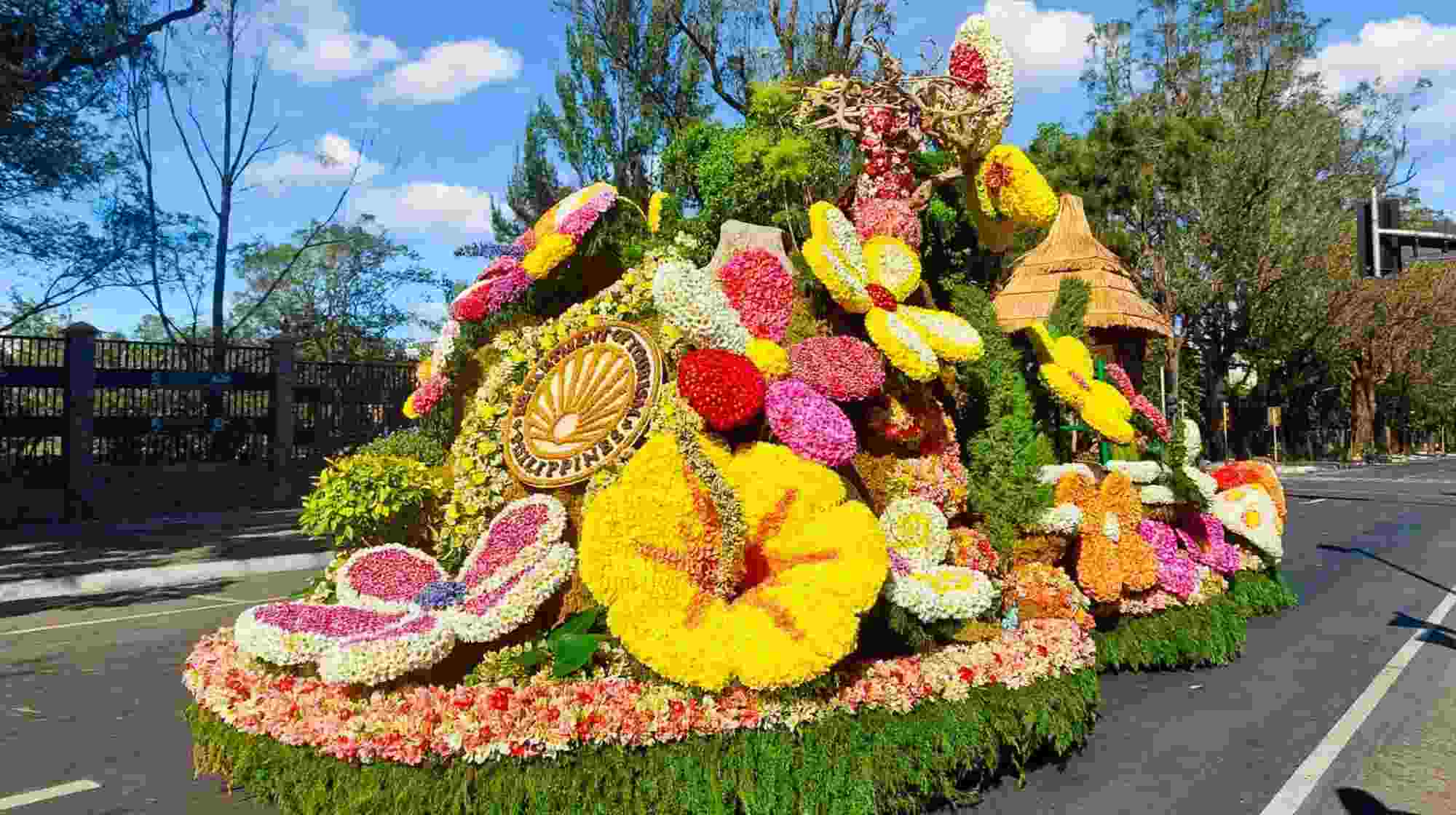
The grand floral float parade is the signature event. Each float is covered entirely in fresh blooms, including sunflowers, chrysanthemums, roses and orchids, and the floats are judged. The parade usually falls on the last Sunday of February or the first Sunday of March. The best entries look less like decorated trucks and more like moving gardens, with thousands of flowers packed onto each frame.
Session Road in Bloom
For about a week, Session Road closes to vehicles and becomes a market and food fair. It is the easiest place to pick up pasalubong such as strawberry jam, Benguet coffee and woodcraft. Bring small bills, because many market stalls at Session Road and Burnham Park take cash only.
Getting to Baguio from Cebu
There is no direct flight from Cebu to Baguio. Loakan Airport has only limited commercial service, so most travelers fly to Manila or Clark and finish the trip by bus.
Through Manila, the Cebu to NAIA flight takes about 1 hour 20 minutes to 1 hour 35 minutes, and one-way fares usually run from PHP 1,200 to 5,000. From NAIA, a taxi or Grab takes you to the bus terminals in Pasay, Cubao or Caloocan. Victory Liner, Genesis and JoyBus serve the Manila to Baguio route in four to six hours. Deluxe seats cost roughly PHP 600 to 1,200, and premium coaches PHP 900 to 1,500. Night buses are popular, since you can sleep through the climb and arrive in the early morning. If your Manila layover is long enough to explore, the Manila 24-hour stopover guide covers what fits into a short visit.
Through Clark, Cebu Pacific and PAL fly the route directly in about 1 hour 30 minutes. From Clark, Genesis and Victory Liner buses reach Baguio in four to five hours, for roughly PHP 500 to 1,000. Clark is often the quicker choice, because its airport is less congested than the Manila terminals.
Door to door, expect seven to nine hours from Cebu if your connections line up. Festival weekends sell out from Friday to Sunday, so book bus seats early. If you fly into Clark, Genesis and JoyBus allow online booking, which saves a queue at the terminal. In Manila, the PITX and Cubao terminals are easier to reach than the city centre during rush hour. Fares change with the season and the date you book, so check the operator before you set a budget.
Where to Stay and What It Costs
Book accommodation three to four weeks ahead for the last weekend of February. Hotels near Burnham Park, Session Road and City Center fill first. Budget inns usually cost PHP 1,500 to 3,000 a night, mid-range hotels PHP 3,500 to 6,000, and upscale choices such as The Manor or Azalea PHP 7,000 to 12,000. Many hotels set a two- or three-night minimum during float parade weekend, so plan your stay around that rule.
Food is part of the trip. Strawberry taho from street vendors costs about PHP 30 to 50, and Benguet coffee is sold throughout the city. Restaurants such as Good Taste and Hill Station are popular with visitors, so expect queues at lunch and dinner during the festival. Eating a little earlier or later than the main rush saves a long wait.
The parades cost nothing to watch from the street. If you want a reserved view, grandstand seats are sold for about PHP 300 to 1,000. Prices vary by stand, so ask at the ticket booth which stand you are buying into and what its view covers.
Getting around Baguio is straightforward. Taxis are metered and start at about PHP 50 flag down, and jeepneys charge PHP 15 to 20 per ride. Traffic becomes heavy around Session Road and Burnham Park during festival weeks, so for short distances walking is often faster than driving.
Watching the Parades Without the Worst of the Crowds
Pack a hat and a light jacket. February mornings in Baguio sit around 12 to 18 degrees Celsius, the midday sun at around 1,400 metres is stronger than the cool air suggests, and evenings cool off again. Comfortable shoes matter too, because the centre has cobblestones and steep streets.
For the street dancing, be on Session Road by 6:30 in the morning. For the float parade, arrive near Burnham Park by 7. If you want wider photos and less pushing, the Athletic Bowl side is calmer than Session Road, and the floats are easier to frame from its edge.
Visit Burnham Park for the flower exhibits on a weekday when your schedule allows. Monday to Thursday are the quieter days. Sunday afternoon buses after the float parade fill quickly, so if you can stay until Monday, you will have an easier return trip.
The best window for flowers with fewer people
Baguio is pleasant from December to March. For a wider look at what else the city offers, see our guide to places to visit in Baguio. If you want the flowers without the biggest parade crowds, go in the first two weeks of February. Session Road in Bloom is already open by then, while the parades have not yet started. The city is usually calmer in that stretch. For how crowds and hotel prices have shifted lately, read Is Baguio Quieter and Cheaper Right Now? Then book the parade weekend once the final dates are announced.
Tips Before You Go
Book hotels and bus seats early
The last weekend of February sells out in Baguio. Hotels and buses need advance booking, especially JoyBus coaches with restrooms. If your dates are flexible, a weekday arrival gives you more choice of rooms and seats.
Dress in layers
A hoodie over a t-shirt covers most conditions. Mornings are cool, midday is warm and evenings feel cold again. You will not need heavy winter gear.
Walk the centre
Session Road and Harrison Road are closed or congested during Panagbenga. Taxis get stuck in the traffic, so use your feet for short hops and save taxis for the longer trips.
Bring cash
Market stalls at Session Road in Bloom and Burnham Park mostly take cash. ATMs along Session Road can have long queues during the festival, so withdraw what you need before the parade weekend.
Is Panagbenga Worth the Trip from Cebu?
For many travelers, yes. It is a daytime festival, suited to families, and it is free to watch from the street. The float parade stands apart from other Philippine festivals because the floats are built from fresh flowers rather than decorated with them. The journey takes most of a day each way, so give yourself at least three nights to make the trip worthwhile.
Fly to Manila or Clark, take the bus up to Baguio, and base yourself near Burnham Park so you can walk to most of the action. Aim for the last weekend of February if you want both main parades. If you would rather have the flowers and a quieter city, choose the first two weeks of February instead.