


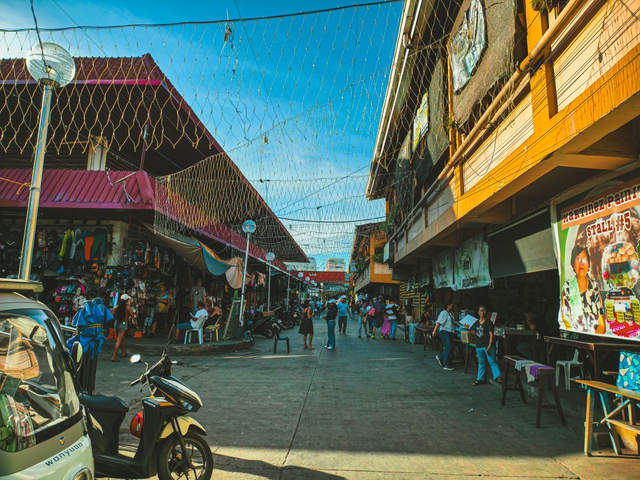
My first visit to Dumaguete was in 2018, and it became our go-to city after we settled in Negros Oriental. The "City of Gentle People" suits a slower trip: you can spend a morning on foot downtown, then reach three of the province's best-known nature stops, Pulangbato Falls, Forest Camp and the Twin Lakes, within about an hour of the center.
This guide covers each place with its fees, how to get there and what to expect, so you can decide how many days to give the city. Prices are what I paid or what has been posted recently, and they do change, so treat them as a budgeting guide and confirm at the gate.
Update (3 Sep 2025): Dumaguete now has traffic lights. The first prototype signals began operating in February 2025 at the junction of E-Rovira and Leopoldo Rovira East Drive in Barangay Bantayan.
Places to Visit in Dumaguete at a Glance
- Rizal Boulevard and Escaño: seafront walk and sunset, in the city
- Bell tower and cathedral: old downtown landmarks, in the city
- Silliman University: historic seaside campus, in the city
- Pulangbato Falls: red-tinted falls and sulfur vents, about 30 minutes away in Valencia
- Forest Camp: spring-fed pools and shade, also in Valencia
- Twin Lakes Balinsasayao: mountain lakes above Sibulan, a separate day trip
In the City: A Walkable Morning
Rizal Boulevard and Escaño
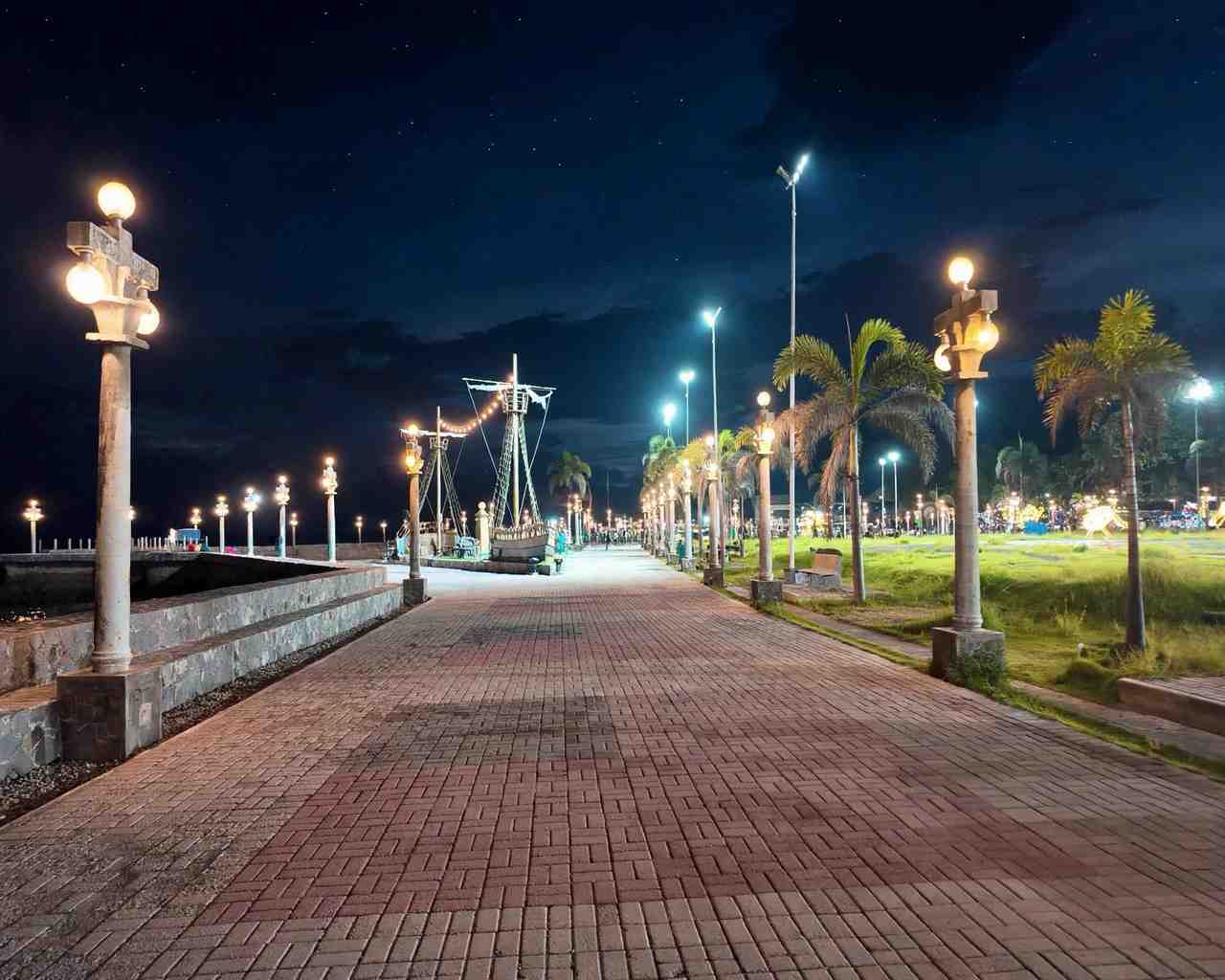
Rizal Boulevard is the seafront promenade, paved in stone and lined with lamps, hotels, cafés and restaurants. It is popular with runners, cyclists and walkers, and street-food vendors set up along it in the evening. The Escaño stretch next to it has a seawall facing the southern tip of Cebu, which makes it a reliable place to watch the sunset, and the restaurants there stay busy after dark.
The Bell Tower and Cathedral
The pentagon-shaped Campanario de Dumaguete stands beside St. Catherine of Alexandria Cathedral. It began as a watchtower against pirate raids and now holds the bell that calls people to mass. Both sit in the old downtown, a short walk apart, so they fit into a half-hour stop between meals. The cathedral is an active church, so keep your voice down and dress modestly during services.
Silliman University
Silliman dates to 1901 and its campus sits beside the sea. Going inside the historic hall and museum takes a little planning, so read our Silliman University heritage walk guide before you turn up. If you want breakfast on the way, our first-timer's food trip in Dumaguete lists what to eat and where to start.
Pulangbato Falls and the Sulfur Vents in Valencia
Pulangbato is still the first place I recommend. Valencia is about 30 minutes from the city center, and the road is passable for any type of vehicle. On the way up you pass the roadside sulfur vents, where steam escapes from the rock and the smell is hard to miss. Stopping there costs nothing, though small donations to the community are welcome.
The falls themselves are in Barangay Malabo. Sulfur deposits stain the rock wall red and orange, which is where the name comes from: pula means red and bato means stone. The falls drop about 30 feet into a deep pool, and swimming is allowed.
When I last went, entrance was ₱20 per person with ₱10 for parking. Some access points charge more, up to ₱100, so ask at the gate which path you are taking and what the fee covers. Nearby, the Red Rock hot spring has warm mineral pools for around ₱100.
Without your own transport, take a jeepney or multicab from Dumaguete to Valencia (roughly ₱15 to ₱25), then hire a habal-habal from town for the last stretch. Expect to pay a few hundred pesos each way, and agree on the price and the waiting time before you ride.
Swimming is easiest from December to May. After heavy rain in the wetter months the current under the falls picks up, so skip the pool if the water has turned brown. Mount Talinis, the volcano rising behind Valencia, is the reason for the sulfur and the hot water, so it is worth following any local advisories before you plan a trip.
Forest Camp in Valencia
Forest Camp is where I send people who want shade and cool water more than a hike. It covers a large area, so it rarely feels crowded, and there are plenty of shaded seats where you can settle for the afternoon. Spring-fed pools are linked by riverside paths and a hanging bridge, and activities such as the zipline and wall climbing are optional.
On my visit, entrance was ₱100 for adults and kids, with free parking. More recent listings show ₱100 to ₱200 depending on the season, so budget the higher figure. It sits in Valencia like Pulangbato, which means the two combine neatly into one half-day: falls in the morning while it is cooler, pools after lunch.
Twin Lakes Balinsasayao Natural Park
Balinsasayao and its twin, Danao, sit in the mountains above Sibulan, the opposite direction from Valencia, so give them a day of their own. Entrance was ₱50 per person on my visit. From the park you can rent a small boat to the vantage tower on the far side, or a duo kayak to paddle around the lake, with big trees all around and birdsong carrying across the water.
Boat rental has run about ₱250 an hour and kayaks about ₱150, so ask for the current rate at registration. Be careful on the water, because there have been kayaking incidents in the past: stay close to shore and check the weather before you go out. The trail, the boat ride and the practical details are in our full Twin Lakes Balinsasayao guide.
If you are commuting, board a Ceres bus at Dumaguete's terminal and ask the driver to drop you at the Balinsasayao bus stop. From there a habal-habal takes about 30 minutes up a scenic road. It is cooler at that elevation than on the coast, so bring a light layer.
How to Get Around Dumaguete
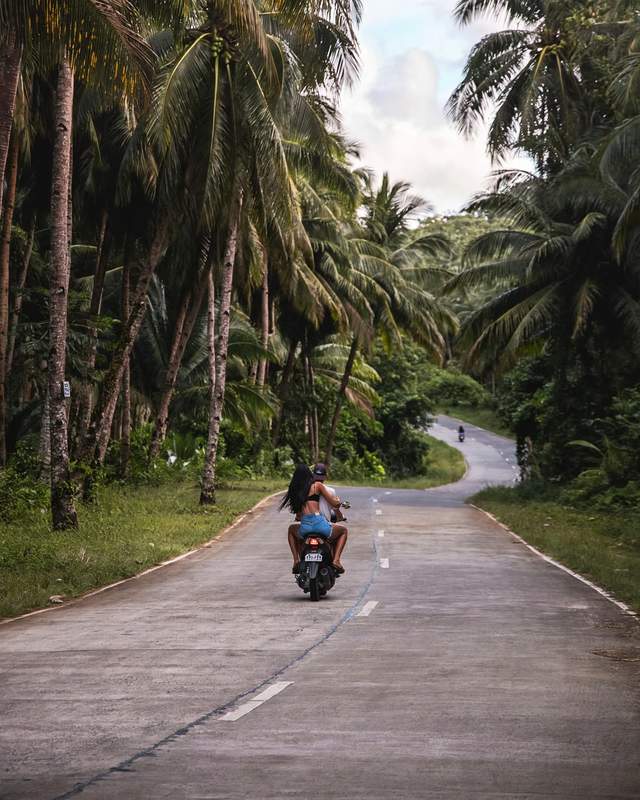
Within the city, tricycles cover short hops, and a group can hire a tricycle or a transport service for a day of sightseeing. For the Valencia side trips, a motorbike is the cheapest way to go. A few years ago we rented one for ₱500 a day and spent ₱100 to ₱200 on gas, and there are plenty of rental shops around the city. Rates have probably gone up since then.
A full-day habal-habal charter runs roughly ₱1,000 to ₱1,200 if you would rather not drive. Arriving from Cebu? The ferry, bus and flight options are laid out in Cebu to Dumaguete: Ferry, Bus or Flight, and Dumaguete on a budget adds up what a three-day stay costs.
When to Go
The dry months, December to May, make the falls and pools easier and safer to enjoy. From June to November, rivers rise quickly after rain, and wet rocks and steps get slippery. Whatever the season, start early: the mornings are cooler and the popular spots tend to be quieter.
Suggested Plans
- One day: Rizal Boulevard and the bell tower in the morning, Silliman after lunch, sunset at Escaño.
- Two days: add a Valencia half-day with Pulangbato Falls and Forest Camp.
- Three days: add the Twin Lakes, or swap in a trip from our list of 5 places near Dumaguete worth the drive, or a boat day with Apo Island snorkelling.
Frequently Asked Questions
How many days do you need in Dumaguete?
Two to three days is a comfortable fit for the city plus one or two nature trips. A single day covers the walkable center and one nearby stop.
Is Dumaguete walkable?
The boulevard, bell tower and downtown streets are close together and easy on foot. The falls, Forest Camp and the lakes all need a ride.
Do I need to rent a motorbike?
No. Jeepneys, multicabs, buses and habal-habal reach all three nature spots, but a rented motorbike gives you the most freedom for the Valencia stops.
Comments
No comments yet. Been here recently? Share a tip or ask a question.
Leave a Reply