Most of Guimaras is farmland and mango orchards, but its south coast breaks apart into a scatter of islets, coves and rock stacks, and that is where island hopping happens. Boats leave from Alubihod Beach in Nueva Valencia, charge by the hour rather than by the head, and can show you four or five stops in a morning. Groups of four or more usually pay a few hundred pesos each.
The catch is that the experience depends a lot on how you plan it. Some stops are swim-and-snorkel islands, some are rock formations you only look at from the boat, and a few are private resorts that boats pass without landing. The hours add up quickly if the boatman takes the long way or the afternoon sea turns choppy.
This guide covers where boats leave from, what each stop is actually like, how the hourly rates work and what a trip costs, a quieter alternative route through the Taklong islands, and timing tips so you spend the hours swimming rather than bouncing over waves.

Guimaras island hopping at a glance
- Jump-off: Alubihod (also spelled Alobijod) Beach, Nueva Valencia, on the south coast
- How it's priced: per boat, per hour; first hour costs more, each extra hour less
- Typical tour: 2 to 4 hours, four to six stops
- Main stops: Natago Beach, Ave Maria Islet, Turtle Island, Baras, Lamurawan Island
- Quieter option: the Taklong islands, now a protected natural park
- Best months: roughly January to May, when the sea is calmer and the weather drier
Where Island Hopping Starts
Alubihod is a short, sheltered cove in Sitio Alubihod, Nueva Valencia, lined by a few resorts including Raymen Beach Resort, Alobijod Cove and California Beach Resort. Boat owners here work through an association with a booth on the beach, and the usual process is to sign a logbook with your name and group size, pay, and wait for the next boat. Resorts can also arrange a boat for guests, sometimes at their own rate.
You don't have to stay at Alubihod to go hopping. Plenty of people ride over from Jordan for the day, and some resorts elsewhere in Nueva Valencia run their own trips to the islands closest to them. Resorts on the cove may charge a small entrance or day-use fee if you walk through to reach the boats.
Getting to Alubihod
Every trip starts with the pumpboat across the strait from Iloilo City to Jordan or Buenavista; our guide on how to get to Guimaras has the wharves, fares and schedules. From Jordan wharf, Alubihod is on the far side of the island. A tricycle hired for the ride takes about 40 minutes to an hour and has usually cost a few hundred pesos one way. Many visitors hire one tricycle for the whole day, so the same driver can wait during the boat trip and then take them on a land tour.
The Island Hopping Stops
Boatmen follow a fairly standard loop, adjusted for the tide, the waves and how long you paid for. These are the stops you are most likely to see.
Natago Beach
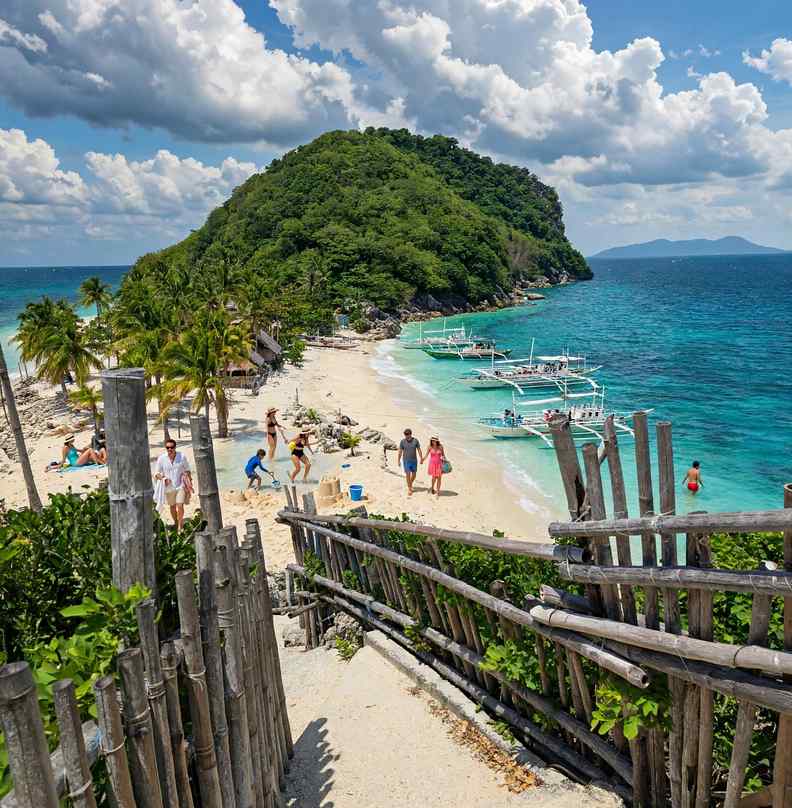
Natago means hidden, and the beach sits in a small bay tucked between two hills, out of sight until the boat rounds the point. It is usually the farthest stop and the best one for a long swim, with calm water, coarse cream sand and rock formations at each end. Vendors sell coconuts and snacks, and snorkel gear has been available for rent. A small entrance fee, reported at around ₱50, is collected on landing.
Ave Maria Islet
About ten to fifteen minutes by boat from Alubihod, this tiny island is the snorkelling stop. Its short stretch of pale sand drops into clear water over rock, coral and seagrass, and the rocks are popular for jumping when the water is deep enough. Bring your own mask if you can, because rental gear is not guaranteed here.
Turtle Island
Across a narrow channel from Ave Maria, Turtle Island is smaller and plainer, with a brownish beach and scattered rock formations. Most boats stop briefly for photos or a dip. It pairs naturally with Ave Maria because the two sit so close together.
Baras Cave and Baras Beach
Baras is a sea cave with small openings that let light into shallow and deeper pools inside, next to a cove beach. Whether you can land depends on the day, and some visitors have only seen Baras from the boat because the beach area is privately managed. Ask the boatman at the start whether landing is allowed and whether there is a fee.
Lamurawan Island and the look-only stops
Lamurawan Island is a small islet that some boats add for a short stop. Other points on the loop are seen from the water only: the eroded rock formation boatmen call Fairy Castle, Isla Naburot (a private island resort that does not take drop-in visitors), and the SEAFDEC aquaculture station at Igang, which you pass on the way. Knowing this in advance helps, because a tour that lists ten spots may only land you at four.
Floating cottages
In some coves, operators moor bamboo cottages over the water where groups can stop for a packed lunch or a grilled seafood meal. It is a nice way to stretch a trip into the afternoon, but every extra hour counts on the boat meter, so ask about cottage fees and food prices before you commit.
A Quieter Route: The Taklong Islands
Off the southern tip of Nueva Valencia, Taklong and its neighbouring islands were declared a national marine reserve in 1990. In July 2025, Republic Act No. 12225 turned the area into the Taklong and Tando Group of Islands Natural Park, giving it stronger protection under the national protected areas system. The islands are covered in mangroves and fringed by coral reefs and seagrass, and the reserve has been recognised as one of the best-managed marine protected areas in the country.
A Taklong trip feels different from the Alubihod loop. Expect fewer boats, a sandbar that surfaces at low tide, mangrove channels and snorkelling over the reef, rather than beach-after-beach stops. The boat ride from the Nueva Valencia shore takes around half an hour. Because it is a protected area, visitors may need to register and pay a protected-area fee, and the rules on where you can land and swim are stricter. Arrange it through a resort near the reserve or ask at the Nueva Valencia tourism office, and confirm the current fees before you go.
How Much Island Hopping Costs
Boats are rented by the hour, and the first hour costs more than each one after it. The rate depends on the size of the boat, not the number of people, so a full boat is far cheaper per person. Rates have climbed over the years along with fuel prices, and recent reports vary between operators, so treat the figures below as a guide and confirm at the booth.
For a group of six on a three-hour tour, the boat alone works out to roughly ₱170 to ₱250 each. A couple pays the same boat price as six people, so solo travellers and pairs save the most by joining another group at the booth, which boatmen and resort staff will sometimes help with.
Packaged tours from Iloilo City are the other option. These bundle the van, the boat across the strait, a guide, entrance fees and sometimes lunch, and cost several times more than doing it yourself. They make sense for short trips or travellers who don't want to deal with transfers, but they are not necessary.
Sample Island Hopping Plans
- Short tripThe close islands
Ave Maria Islet for snorkelling, a quick stop at Turtle Island, and a pass by the rock formations on the way back. Enough for a taste if you are on a day trip from Iloilo and want time for a land tour.
- Standard loopFarthest first
Go straight to Natago Beach while the sea is calm and swim there, then work back toward Alubihod with stops at Baras, Ave Maria and Turtle Island. This is the trip most visitors take.
- Half dayTaklong and the reef
Arrange a boat to the Taklong islands for the sandbar, mangroves and snorkelling, with a packed lunch. Pick a day when low tide falls around midday so the sandbar is above water.
Adding a Land Tour
Island hopping fills a morning, which leaves the afternoon for the rest of the island. The usual land circuit takes in the Trappist Monastery and its shop in Jordan, the mango research centre, the small plaza in Jordan that is often called the smallest in the world, and the Guisi Lighthouse ruins above a rocky beach in Nueva Valencia. The San Lorenzo windmills are further north if you have time. For the mango treats and what to eat on both sides of the strait, see our Iloilo and Guimaras food trip.
Tips Before You Board
- Start earlyThe water is usually flattest in the morning, and the wind and waves often pick up after lunch. Head for the farthest stop first and finish close to Alubihod.
- Agree on stops before leavingAsk which stops you will actually land at, how long you will stay at each and when the clock starts. Note the departure time yourself.
- Wear the life vestPut it on for every crossing, even short ones. Don't board in rough weather, and accept it if the coast guard or boatmen cancel trips. Our island hopping safety guide has a full packing list.
- Bring your own gearA mask and snorkel, water shoes for rocky landings, reef-safe sunscreen and a dry bag for phones make the trip much easier.
- Pack food and waterVendors appear at Natago, but not at every stop. Carry drinking water and bring your trash back to the mainland.
- Mind the seasonFrom about June to October, southwest monsoon swells and typhoons can cancel boats, including the crossing from Iloilo. Keep a spare day if the trip matters to you.
Is Guimaras Island Hopping Worth It?
Set your expectations by what Guimaras is. The islands are small, the sand is cream rather than powder white, and you won't find the dramatic limestone lagoons of Palawan. What you do get is clear, calm water close to shore, short boat rides between stops, prices that stay low for a group, and far fewer crowds than in the big-name destinations. Paired with mangoes and a land tour, it makes for an easy, relaxed day.
If you only have time for one boat trip, take the standard loop and give Natago Beach and Ave Maria most of the hours. If you have already done it, or want something wilder, book the Taklong route instead.

Comments
No comments yet. Been here recently? Share a tip or ask a question.
Leave a Reply