Moalboal's sardine school sits a short swim off Panagsama Beach, roughly 20 to 30 metres from the rocks, and a mask and snorkel are enough to reach it. Pescador Island is a different outing: a boat ride, a reef wall and a cave that belongs mostly to divers. Treat them as two separate plans and the day gets simpler.
The short version: swim out early, pay the ₱100 environmental fee, keep your hands off everything, and book Pescador as its own trip, ideally in the calmer months. The sardines are wild fish, not a scheduled show, and that matters more than most trip plans admit.
The school has disappeared before. It left for about 17 months starting in December 2011, and a rumour in early 2023 claimed it had gone again, which turned out to be false. Most days it is there, but nobody can promise it, so build the trip around the whole reef and not a single sighting.
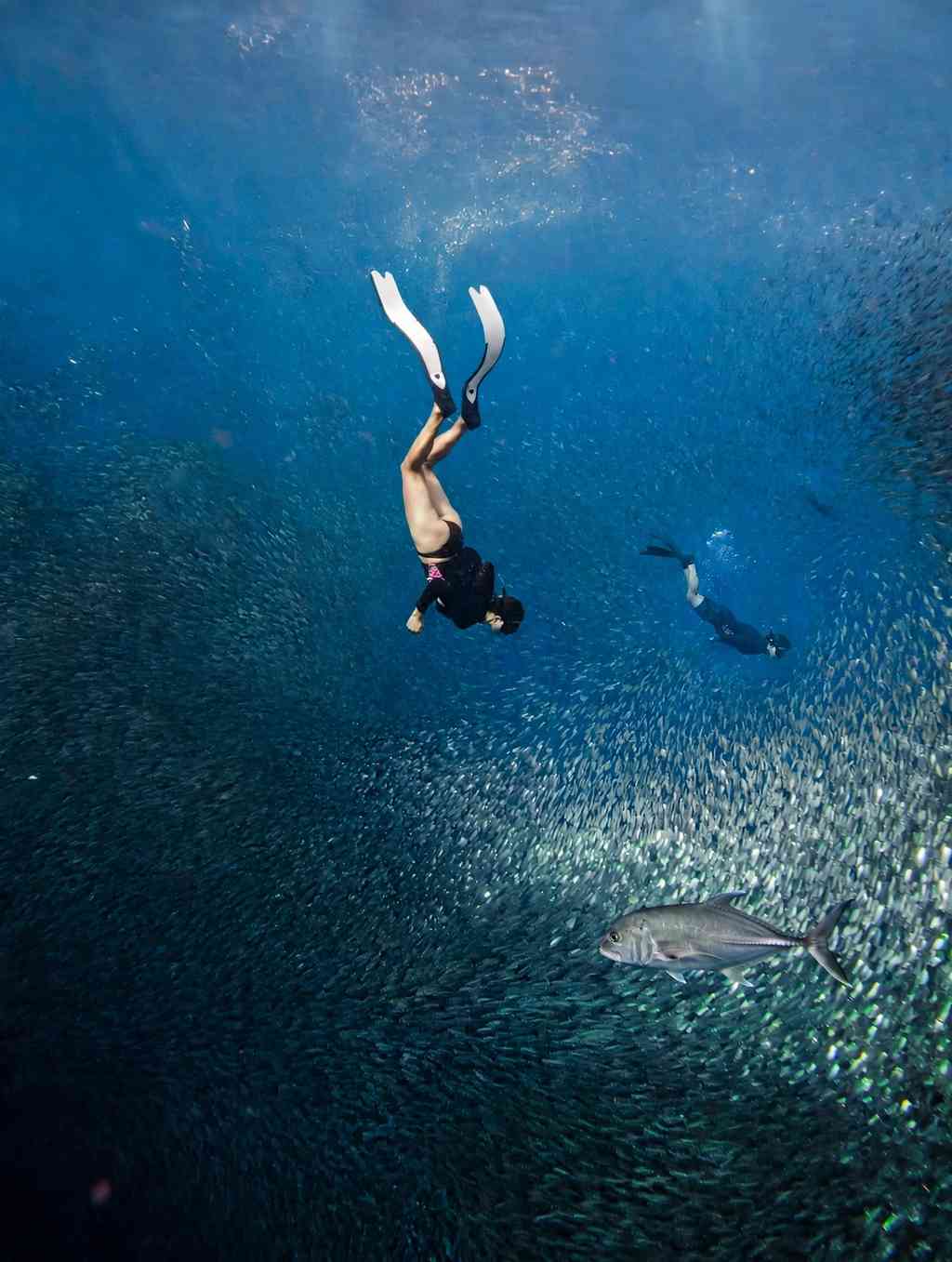
Where the Sardine Run Is
Head for Panagsama Beach in Barangay Basdiot. It is a strip of dive shops, bars and guesthouses along a seawall, with only small sandy coves, so do not expect a postcard beach. You enter the water over rock, which is why aqua shoes are worth wearing, and the ordinance on snorkelling asks for them anyway.
The sardines gather past the point where the reef edge drops away, usually one to ten metres below the surface. That is shallow enough for snorkelling without a guide, and boats do pass near the wall, so lift your head and look before you surface. There is no lifeguard. If you want sand, Basdaku Beach is about seven kilometres north and is a better place for sunsets than for sardines.
Green sea turtles often feed along the same stretch of reef. Stay at least two metres away, skip flash photography and never block a turtle's path to the surface.
The Best Time of Day and Year
Go between 6:00 and 8:00 in the morning. The water is flatter, the fish are active and the tour groups have not arrived. By 9:00 or 10:00 the drop-off can be crowded with guided swimmers in life jackets. The fee desk is often unstaffed before about 6:30, so keep your receipt if you pay afterwards.
The sardines are around all year, so the calendar mostly changes how well you can see them. November to May brings the clearest water, with the best visibility from December to February. June to October brings more rain and stronger currents. Mid-October sits in the transition, with conditions improving as November approaches. For how the weather and crowds shift across the whole island, see our month-by-month guide to the best time to visit Cebu.
Rules and Costs at Panagsama
Moalboal's Ordinance No. 165, passed in 2021, governs snorkelling and island hopping in the municipality's waters. The rules were back in the news in March 2024 after video showed tourists handling turtles and standing on coral. In short:
- Pay the environmental users fee and keep the receipt.
- Do not touch any marine life, stand on coral or anchor on a reef.
- Do not fish or take anything from the water.
- Use authorised guides and registered boats.
- Expect a fine of at least ₱2,500 for violations.
Costs are modest. The environmental fee is ₱100 for entering the water, and some spots also collect a ₱25 beach fee, so carry ₱125 in cash. A mask rents for about ₱100 and fins for ₱100 to ₱150, or ₱200 to ₱250 for a full set. A local guide, including a life jacket and snorkel, runs about ₱300 to ₱500 and is optional for confident swimmers. These are mid-2026 figures, so confirm at the shop before you pay.
Pescador Island: What the Trip Involves
Pescador lies roughly three to four kilometres off the coast, about 15 minutes by banca from Panagsama. The island is uninhabited, with no landing, shade or facilities, and the municipality declared it a marine park and fish sanctuary in 1990. Expect a boat ride, not a beach stop.
Snorkellers should keep expectations realistic. The shallow reef plateau at five to eight metres suits strong swimmers, but the walls and most of the marine life sit deeper. The Cathedral, a chimney cave on the island's northwest side, is entered at around 28 metres, so it is a diving site and not a snorkelling one. Dive shops pay a ₱100 park fee per diver.
A snorkelling run typically costs somewhere between ₱200 and ₱550 per person, depending on demand and how long the trip lasts. Ask what the price includes before you board, and whether any fees are extra. Currents can reach three knots, and the swells of June to October can make the crossing rough or cancel trips altogether. Access can also change: the island was closed to the public for three months in early 2022 so the reefs could recover from Typhoon Odette, so check with your boat operator or the municipal tourism office that it is open for your dates.
Getting There From Cebu City
Take a Ceres Liner from the Cebu South Bus Terminal on Natalio Bacalso Avenue. Pick a bus marked "Bato via Barili", which leaves about every half hour from early morning until late evening, rather than waiting for a direct Moalboal bus, which runs far less often. A bus marked "via Oslob" heads the wrong way around the island. Fares run roughly ₱150 to ₱200 for an ordinary bus and ₱200 to ₱250 for aircon, and the roughly 90-kilometre ride takes about three hours, sometimes a little longer. Ask to be dropped at the public market in Poblacion, then take a habal-habal to Panagsama for about ₱50 to ₱150, a 10 to 15-minute ride. Vans run for around ₱180 and leave once full.
That travel time shapes the whole plan. A same-day return from Cebu City leaves you with a short window in the water, and the best sardine hours are before the first bus would arrive. Sleep in Panagsama at least one night. Kawasan Falls sits in the same stretch of coast, so a second day can go to our Kawasan Falls canyoneering guide, and a three-night trip fits neatly inside our Cebu 3-day itinerary.
A Two-Day Plan That Works
- Day one: Arrive by midday, rent gear, check the sea state with your guesthouse or dive shop, and book Pescador for the next morning if conditions look calm.
- Day two, early: Be in the water by 6:30 for the sardines and turtles, then have breakfast.
- Day two, mid-morning: Take the Pescador boat if the sea allows. If it does not, spend the time along the Panagsama reef or at Basdaku instead.
Who Might Skip It
If you do not swim confidently, the sardine drop-off is not the place to learn, and the surface traffic of life-jacketed groups and boats makes it harder. If you hate crowds, go on a weekday and go early. If you are travelling in the wet months, keep the schedule flexible and accept that Pescador may be off the table. Done on a calm morning, though, the sardines cost a few hundred pesos and a pair of fins, which is hard to beat anywhere in the Visayas.