Capiz calls itself the Seafood Capital of the Philippines, and Roxas City, the provincial capital on the north coast of Panay, is where that claim gets tested at the table. The plan for a trip here is simple: eat shellfish you rarely find elsewhere, eat it close to where it was caught, and pay less than you would at a seafood restaurant in a big city.
This guide is built around the menu rather than a sightseeing list. It covers what to order, where the cooking happens, how to avoid surprises on the bill, which months change what is available, and how to reach Roxas by air or by road.
One thing to know before you book. The most famous Capiz shellfish, diwal, is seasonal and sometimes missing from menus altogether. If angel wing clams are the whole reason for your trip, read the section on timing before anything else.
What to Order in Roxas City
Start with the shellfish. Grilled fish and fried squid are good everywhere in the Visayas, but the clams, scallops and oysters are where Roxas pulls ahead.
Diwal (angel wing clams)
Diwal is a thin, white, wing-shaped clam that lives in the muddy and sandy river mouths along the city's coastal barangays. Cooks keep it plain, grilled or steamed with butter, garlic or a pinch of salt, so the sweet meat does the work. Harvesting happens mostly from July to September and is done by authorised divers. The closed season runs from October to June, and numbers fell far enough in recent years that harvesting was stopped for a time. A menu without diwal is normal, not a sign that you picked the wrong place.
Scallops and talaba
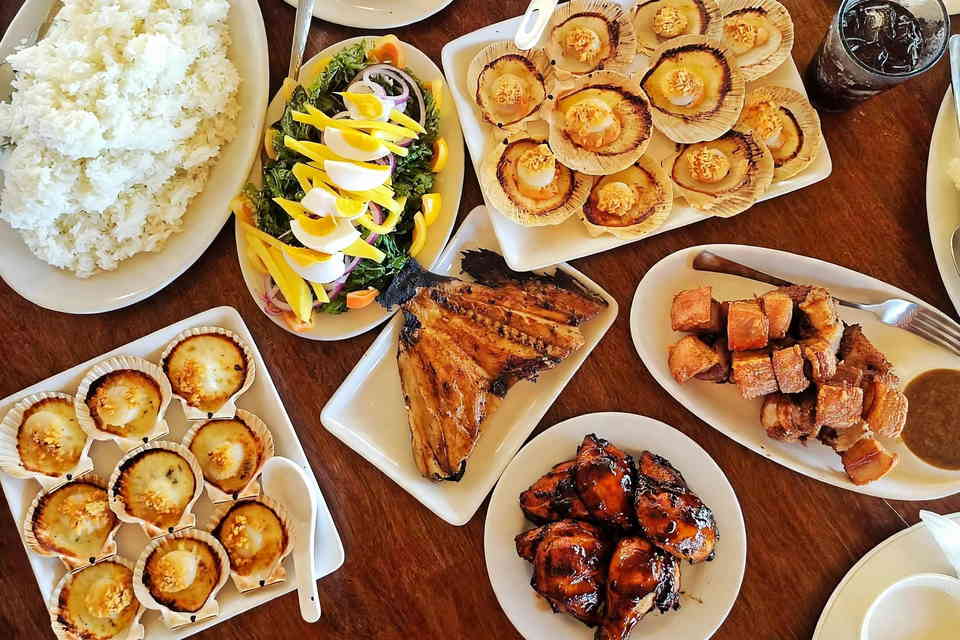
Baked scallops turn up on nearly every table: small half shells topped with garlic and butter, sometimes with cheese, served a dozen or so to a plate. They are cheap enough that most groups order two plates without thinking about it. Talaba, the local oysters, come raw with vinegar, as kinilaw, or grilled until the shells open. If you plan to eat them raw, ask when they came in, and skip them on a very hot afternoon if they have been sitting out.
Shrimp, crab, fish and the sides
Pasayan (shrimp) is grilled, fried with garlic, or cooked as buko kin, with coconut, ginger, chilli and a splash of vinegar. Crabs usually arrive in a thick sweet chilli sauce. For fish, grilled belly cuts and pompano are dependable orders. Cagaycay, a local shellfish, goes into a soup with ginger and lemongrass that is worth ordering if it is on the board. Balance the rich plates with ensaladang lato, a seaweed salad with tomato and onion that cuts through all that butter.
Where to Eat
The Seafood Court at People's Park
La Playa de Roxas People's Park is the city's seafront park on Arnaldo Boulevard in Barangay Baybay, facing the Sibuyan Sea. At one end sits the Seafood Court, a dining hall shaped like kapis shells, the flat, see-through shells the province is known for. Stalls cook the local catch at reasonable prices, and the park has a beach, lawns, a fountain and a playground, so a family can spread out while the food is cooking. Late afternoon into evening is the busiest time, and the sunset over the water is part of the appeal.
Paluto along Baybay Beach
On Baybay Beach the usual system is paluto. You pick seafood by weight, choose how it should be cooked, and pay a separate cooking charge. Ask for the price per kilo and the cooking fee before anything goes on the grill, and watch the weighing. Walking past a few stalls first costs nothing and lets you compare freshness: clear eyes on the fish, shells that close when tapped, shrimp that still look glossy.
An early look at the fish port
Libas Fish Port is a working landing site, so an early visit is more about watching the trade than eating. It is still useful. Seeing what came in that morning tells you what to order at lunch, and what to leave alone.
Prices and How to Order Without Overpaying
Seafood prices in Roxas move with the catch, the season and the price of fuel, so treat any figure you find online as a rough guide rather than a quote. Confirm prices at the counter. Groups of three or four get the best value, because most dishes are sized for sharing, and several small plates go further than one large platter. Carry cash for the smaller stalls and the paluto counters. If a dish is priced "by size" or "market price", ask for the actual number before you order it.
When to Go
July to September is diwal season, but it falls in the rainy months, when typhoons can cancel flights and rough seas can keep boats in. Build a spare day into any trip planned around the clams.
Two festivals are worth timing a visit around. Capiztahan marks the founding of Capiz on 15 April 1901 and stretches over several weeks; the 2024 edition ran from 11 April to 1 May and included an unlimited seafood dinner. Sinadya sa Halaran is Roxas City's December festival, usually held from about 5 to 8 December, with a grand parade, fireworks and a food festival. Hotels fill quickly for both, so book early and check the official schedule once it is announced.
Outside those dates, the drier months early in the year are the easiest time to visit, with calmer seas and fewer weather delays.
Getting to Roxas City
Roxas Airport is about two kilometres north of the city centre, with direct flights from Manila on Cebu Pacific and PAL Express. Schedules change, so check the airlines before you plan around a specific time.
The other way in is by road through Iloilo or Kalibo. Ceres buses and UV Express vans run to the Roxas City Integrated Terminal on Sacred Heart of Jesus Avenue. Allow roughly three hours from Iloilo City, a bit less from Kalibo, and more when traffic or stops slow things down. Tricycles connect the terminal and downtown with Baybay. Coming in through Iloilo also makes it easy to add an Iloilo and Guimaras food trip on the same journey, and arriving through Kalibo in January puts you close to Ati-Atihan in Kalibo.
A Two-Day Eating Plan
Day one. Arrive in the afternoon, check in, and head to People's Park before sunset. Dinner at the Seafood Court: two plates of baked scallops, a grilled fish, a bowl of cagaycay soup if it is available, and lato on the side.
Day two. Go to Libas Fish Port early, then make a slow paluto lunch on Baybay Beach your main meal: oysters, shrimp and crab, with diwal if it is in season. In the afternoon, ride up Tumandok Hill in Barangay Dinginan to the Shrine of the Sacred Heart of Jesus, whose 132-foot statue looks over the city. Pick up a jar of crab aligue, preserved crab fat and roe, to take home before you leave.
If you have more days, the Gigantes Islands off Carles in northern Iloilo are within reach by road and boat and make a good seafood-and-beach add-on. For a first visit, though, two unhurried days in Roxas are enough to eat well, learn what is in season, and work out what you want to come back for.


Comments
No comments yet. Been here recently? Share a tip or ask a question.
Leave a Reply