Siquijor is small enough to circle in a day and rewarding enough to need three. The ring road runs just over 70 kilometres through all six towns, so the sensible way to plan the island is by direction rather than by a list of famous names: east and south on the first day, snorkelling and the high ground on the second, and a flexible third day for the sea or the ferry home.
The plan below assumes you are based on the south side, near San Juan, and that you have a scooter or a hired tricycle. It stays on one side of the island at a time, so you spend your hours at the falls and beaches instead of on the road.
Getting to the island is covered separately in our Dumaguete to Siquijor guide. In short, the ferry from Dumaguete takes about an hour, and from Cebu there is a fast craft through Tagbilaran that takes four to five hours, plus a short flight of about 55 minutes a few times a week. Sailings and flight days change, so confirm them before you book anything non-refundable.
Where to Base Yourself
San Juan, on the south coast, is where most visitors stay. It has the widest choice of rooms, cafés and dive shops, and it sits within reach of both the eastern and western halves of the ring road. Larena, near the northern port, is quieter and handy if you have an early boat. The town of Siquijor itself, the capital, is close to the main port and the old church.
Rooms run from simple hostel beds to air-conditioned guesthouses with pools. Book ahead from January to April, when the weather is at its best and the island is busiest.
Day 1: Lazi and the Waterfalls of the East
Start with the stop nearest the port if you are arriving that morning. The St. Francis of Assisi church and belfry in Siquijor town is regarded as the oldest church on the island and takes only a short stop.
Then ride south to Lazi. The century-old balete tree, said to be more than 400 years old, has a spring at its base where small fish nibble at your feet for a fee of about ₱10. Across the road in Lazi town, San Isidro Labrador Church and its convent are the most photographed heritage buildings on the island, and the church is on the UNESCO tentative list. The convent museum charges roughly ₱20.
Finish at Cambugahay Falls, where 135 stone steps lead down to several turquoise pools. Entry is around ₱20, and local kids charge a little extra for the rope swing. Go in the morning if you can, because the pools fill up by midday. Wear shoes with grip, since the steps and rocks are slippery.
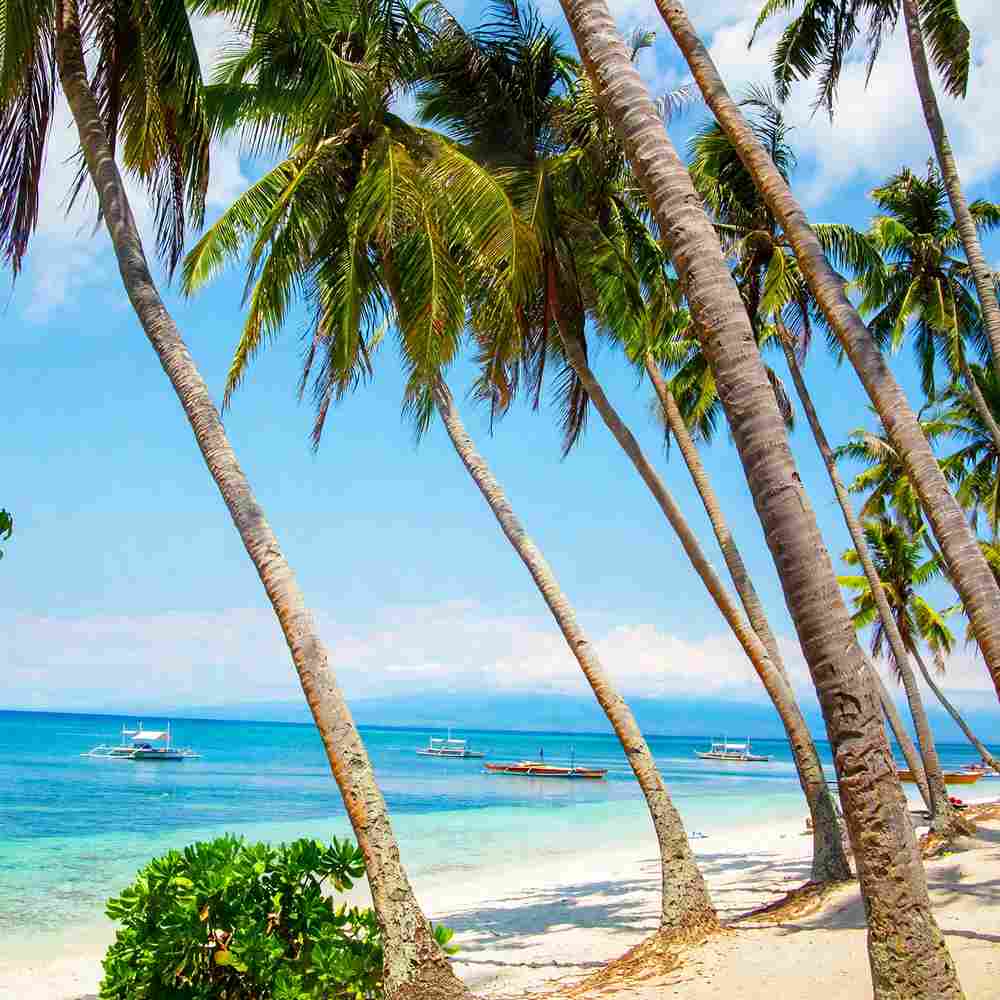
If you still have light, go back to San Juan for sunset at Paliton Beach, where the coconut palms lean over the sand and the cafés open for happy hour in the late afternoon.
Day 2: Snorkelling, Hills and the Cliff Jump
Spend the morning in the water. The Tubod Marine Sanctuary in San Juan has shallow reef you can reach from shore, and an hour or two is enough to see the coral gardens. The island's oldest protected area, the Tulapos Marine Sanctuary, is known for sea turtles and barracuda if you prefer a slower stretch of coast.
After lunch, head inland. Lugnason Falls is free to enter, with parking at about ₱10 and a short walk to the pools. Mount Bandilaan, the island's highest point at about 557 metres, is a protected area with a butterfly sanctuary and a roadside viewpoint, and the air up there is noticeably cooler than the coast.
End at Salagdoong Beach in Maria for the cliff jumps. Go at high tide, when the water below the platforms is deepest, and read our Salagdoong Beach guide for the fees, the platform heights and the safety notes. The drive from San Juan takes about 50 minutes, so leave early enough to be back before dark.
Day 3: Apo Island, Or a Slow Day
If the sea is calm, the third day suits a boat trip to Apo Island, where the turtles are the reason to go. Day trips from the island are arranged through dive shops and resorts and are best booked at least a day ahead. Prices vary by operator, so ask for the full per-person cost before you commit.
If you would rather stay on land, use the day for the places you skipped: a longer stop in Lazi, the Quisol viewpoint, or a lazy morning at the beach before your ferry. Leave the boat decision until you have seen the weather, because sea conditions can change plans.
What It Costs and How to Get Around
- Scooter: About ₱250 to ₱500 a day, plus petrol. Wear a helmet and avoid riding after dark.
- Tricycle with a driver: Around ₱1,000 to ₱1,500 for a full day, depending on your route.
- Multicab: From about ₱3,000 a day, which makes sense for four or more people.
- Entrance fees: Most sights charge ₱10 to ₱50, so budget ₱200 to ₱300 a day. Confirm amounts at the gate, as they change.
When to Go
The dry season runs from November to May, with the best weather between January and April. November, February and May are good shoulder months with fewer visitors. From June to October the rain is more frequent and the seas can be rough, which affects the ferry and any Apo Island plans. Holy Week brings the island's healing festival, along with higher prices.
If you are coming from Cebu and want to understand the ferry options first, start with our guide to Cebu to Dumaguete by sea or road. Whatever route you take, give Siquijor the full three days. The ring road is short, but the stops are the kind you will want to linger at.