Drive south of Dumaguete long enough and the coast starts to change. Past Zamboanguita, the highway leaves the beach resorts behind, and in Siaton a narrow opening in the shoreline leads into a calm, hill-ringed inlet where sailboats sit at anchor for weeks or months at a time. That inlet is Tambobo Bay, and it is one of the few places in Negros Oriental where the main sight is a harbor rather than a beach.
This guide covers what Tambobo Bay is, what you can actually do there, how to reach it by car or bus, where to sleep nearby, and the small practical details that decide whether the trip feels easy or frustrating. The short answer to the question most people ask first: yes, it is worth a visit, as long as you go for the view and the slow pace, not for a long white beach with bars.
Locals often call it Bonbonon Bay, after one of the two barangays on its shores; the other is Siit. Fishing families have worked these waters for generations, and the shelter that protects their bancas from rough seas is the same reason cruising yachts touring the Visayas drop anchor here. Keep both names in mind when you ask for directions, because a tricycle driver may know one and not the other.
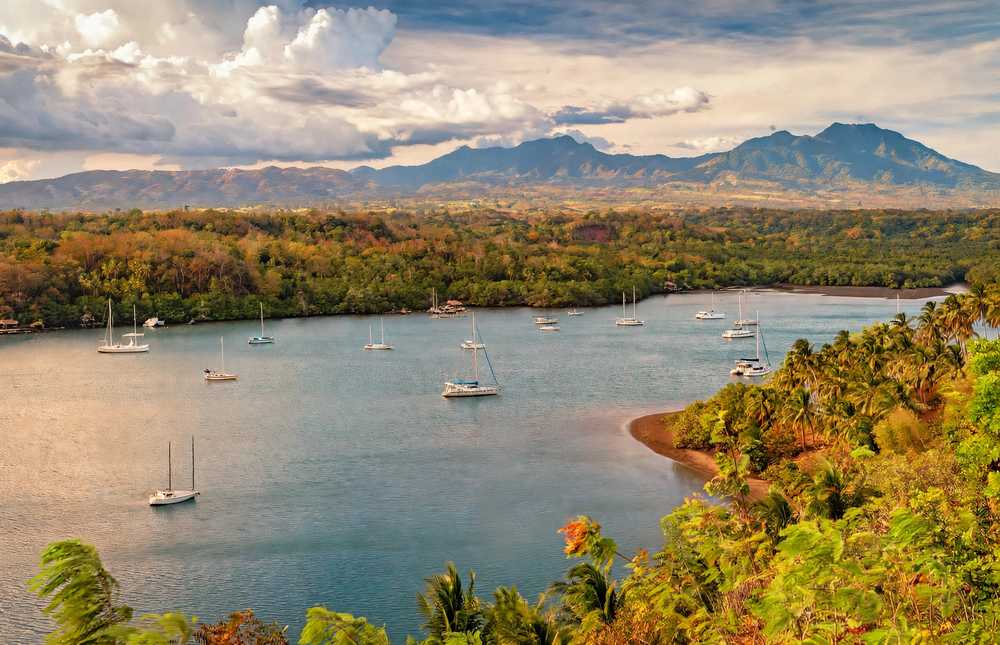
Tambobo Bay at a glance
- Also called: Bonbonon Bay
- Where: Barangays Bonbonon and Siit, Siaton, southern Negros Oriental
- Travel time: roughly an hour or more by road south of Dumaguete
- Known for: a sheltered anchorage for cruising sailboats and local fishing boats
- Nearby: the Siit Mangrove Conservation Walk; Lake Balanan further inland
- Good for: a quiet half-day or overnight stop, not a beach-party trip
Why sailors pick this bay
Look at Tambobo on a map and the appeal for boats is obvious. The entrance is tight, and the land curls around the inner water so that swells from the open sea lose most of their force before they reach the anchorage. On a breezy day you can see whitecaps offshore while the boats inside barely rock.
That shelter has turned a fishing village into an unlikely meeting point. Foreign-flagged yachts share the water with outrigger bancas, and the mix gives the place a feel you won't find at the resort strips closer to the city. Some sailors stay a long time, so the bay has a small, settled boating community rather than a stream of day visitors.
For a land visitor, this means the bay is something you mostly watch. Its shoreline is a patchwork of homes, trees, small docks and working waterfront, with no single long public beach. Go expecting a viewpoint and a slower afternoon, and you won't be disappointed.
Things to do at Tambobo Bay
Take in the anchorage
The main event is simply looking out over the water: masts lined up across the inlet, fishing boats coming and going, and green hills on every side. The light is softest early in the morning and late in the afternoon, which is also when the heat eases. Bring a zoom lens if you have one, since the boats sit some way out.
Walk the Siit mangrove boardwalk
In Barangay Siit, the community runs the Siit Mangrove Conservation Walk, a bamboo boardwalk that takes you into the mangrove forest at the edge of the bay. Mangroves shelter young fish, crabs and birds, and they act as a buffer that keeps the coast from washing away in storms. The walk shows you the bay from the inside rather than from a hilltop.
Bamboo walkways wear out and get repaired, so ask in Siaton or at your accommodation whether the boardwalk is open on the day you plan to go, and whether a guide or a small fee is expected.
Get out on a sailboat
Seeing the yachts often makes people want to ride one. A few local operators around the bay offer sailing trips, but they don't work like walk-in island-hopping tours. Message ahead, ask how long the trip runs, what it includes and what it costs, and expect the operator to cancel or reschedule if the wind or sea is wrong. Calm water inside the bay says little about conditions past the entrance.
Add another Siaton stop
Siaton is a big, spread-out town, so pick one extra stop rather than trying to see everything. Lake Balanan, up in the interior, makes a good pairing if you have your own wheels and a full day; it is a separate drive, not a short walk from the bay. On a Wednesday, you can also stop at the market in Zamboanguita on the way down, covered in our Malatapay Market guide.
How to get to Tambobo Bay
Plan for a road trip of an hour or more south of Dumaguete, depending on traffic and which side of the bay you want to reach. The highway part is straightforward; the final turn-off and access road are where people get lost.
Own car or motorbike
Highway south, then the Bonbonon road
Follow the national highway through Zamboanguita into Siaton, then take the local road toward Bonbonon. Confirm the last turn with residents, and slow down on the narrow access road, especially after rain.
By bus
Bayawan-bound bus to the turn-off
Southbound buses heading to Bayawan pass through Siaton. Tell the conductor you are going to Tambobo or Bonbonon and ask to be dropped at the nearest point.
The last stretch
Tricycle or habal-habal
The bus won't reach the water. Arrange a tricycle or motorbike ride for the final leg, save the driver's number and agree on a pick-up time for the trip back.
Your own vehicle is the easiest choice if you want to fit in the mangrove walk or a second Siaton stop on the same day. Without one, the return ride is the part to sort out first: transport thins out late in the afternoon, and nobody wants to wait on a dark highway shoulder for a bus that may already be full.
When to go
The bay can be visited any time of year. Drier months make the drive and the views more reliable; during the rainy season, showers can hide the hills, muddy the access road and cancel boat plans. Whatever the month, arrive in daylight and leave yourself a buffer before dark. An early start gives you the cooler hours on the water and time for a second stop.
Where to stay near the bay
Lodging around Tambobo is small-scale and locally run, much of it used to hosting sailors as well as travelers. Tongo Sail Inn Beach Resort is one of the better-known places on the bay. Expect simpler facilities than in the city, and contact any place directly to check rooms, meals, payment options and the exact pin location before you set off.
If you'd rather have plenty of restaurants and easy transport, base yourself in the city and treat the bay as a day trip; our guide to where to stay in Dumaguete by area can help you choose a neighborhood. If the point of the trip is to slow down, one night by the water lets you see the anchorage at dawn without a long drive first.
Before you go
Small things that matter
- Carry cashSmall eateries, inns and drivers around the bay may not take cards or e-wallets.
- Download an offline mapSignal can drop on the rural roads, and that is exactly where you need directions.
- Ask before stepping onto docksMuch of the waterfront belongs to families, boat owners and resorts. A quick request goes a long way.
- Check before you swimNot every stretch of shore is a swimming spot. Residents can point you to safe places.
- Go slow on the waterSea turtles come up for air in the bay, so any dinghy or motorboat should move slowly and keep clear of moored boats.
- Bring water and sun coverShade is patchy, and shops are few once you leave the highway.
Is Tambobo Bay worth the drive?
If you like places where daily life carries on around you, it is. Tambobo won't hand you a checklist of attractions. What it offers is a rare scene for the province: a fleet of sailboats at rest in a green bowl of hills, with fishermen working past them as they always have. Pair it with the mangrove boardwalk for a nature-focused day, or make it the far point of a longer loop through the southern towns beyond Dumaguete.
Leave early, line up your ride back, and don't rush the afternoon. The bay rewards people who sit still for a while.


Comments
No comments yet. Been here recently? Share a tip or ask a question.
Leave a Reply