The Baguio Arboretum is the city's newest green space, opened to the public on 19 October 2026 on Leonard Wood Road, right beside the Baguio Botanical Garden. One ticket covers both: ₱110 for tourists aged 13 and up, and ₱27.50 for children 12 and under. Baguio residents pay ₱55, and seniors and persons with disabilities get a 20 percent discount. Inside are shaded walking paths, a collection of trees and woody plants, an elevated walkway and a small gallery, all in a quiet patch of forest a short ride from Session Road.
This guide covers what a first visit looks like: what it is, what you will see, how it fits with the Botanical Garden next door, how to get there, and how to plan a visit that avoids the weekend crowds.
It is also a good answer to a question people ask about Baguio more and more: where can you still find a quiet green corner within the city, without driving out to the mountains?
What an Arboretum Is, and Why Baguio Built One
An arboretum is a garden made mostly of trees. Where a botanical garden mixes flowers, shrubs and themed displays, an arboretum focuses on woody plants, grown and labelled so people can study and enjoy them. Think of it as a living museum of trees.
For Baguio, that matters. The city's pine forests are a large part of its identity, and they are under steady pressure from construction and a growing population. The City Environment and Parks Management Office presented the arboretum as a protected habitat for local birds as well as a place to grow and display trees. At the opening, Mayor Benjamin Magalong and Representative Mauricio Domogan joined CEPMO head Rhenan Diwas, which signals the city intends to keep it as a conservation space, not just another attraction.
What You Will See Inside
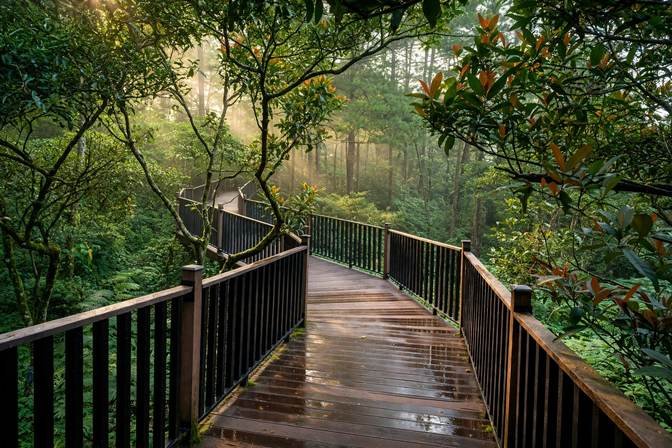
The arboretum is built around walking. Paths wind under a tree canopy, with a mix of pines, broadleaf trees, shrubs and woody plants. An elevated walkway lifts part of the route above the forest floor, which makes the climb gentler and gives better views through the trees. There is also an arboretum gallery with displays on local biodiversity, a useful stop if you want to know what you are looking at before you head down the trails.
The setting suits slow visits. Early mornings bring cool air, mist on some days and the most birdsong. Bring binoculars if you have them. Officials have described the arboretum as an urban bird habitat, and quiet visitors tend to see and hear the most.
This is not a theme park. There are no rides, and the appeal lies in shade, fresh air and the chance to walk among trees close to the city centre. Plan on one to two hours for the arboretum alone, depending on how long you linger.
Pairing It With the Botanical Garden
Since one ticket covers both, visit the two together. The Baguio Botanical Garden is the older and busier of the pair, with a Japanese-style garden, an orchid area, and the Cordillera Village, a display of traditional houses and sculptures that introduces the cultures of the region. It is also popular with families and tour groups, so it gets crowded around midday.
A good plan is to start early at the arboretum while it is quiet, then walk through the Botanical Garden afterwards. If you are travelling with older relatives, keep the walking short and use the benches. Both sites have slopes and steps.
Entrance Fees at a Glance
- Tourists, 13 and older: ₱110
- Tourists, 12 and under: ₱27.50
- Baguio residents, adults: ₱55
- Baguio residents, students, seniors and persons with disabilities: ₱27.50
- Baguio resident children, 12 and under: free
- Non-resident seniors and persons with disabilities: 20 percent discount
Bring a valid ID if you are claiming a resident, senior or disability rate. Fees are set by the city and can change, so treat these as the opening rates.
Getting There
The arboretum is on Leonard Wood Road, near Teachers Camp and next to the Botanical Garden. From Session Road or Burnham Park, a taxi takes around 10 to 15 minutes in normal traffic. Jeepneys on the Leonard Wood route pass nearby; ask the driver to drop you at the Botanical Garden, which is the landmark most people know.
Walking from the centre is possible but involves an uphill stretch, so it is better on the way back. Parking near the gardens is limited on weekends and holidays. If you are driving, arrive early or use a taxi instead.
Best Time to Visit
Weekday mornings are the easy choice. Weekends, school holidays and the Christmas season bring heavier traffic on Leonard Wood Road and more people on the paths.
Weather plays a part too. The cool, dry months from December to February are pleasant for walking, though early mornings can be cold; our guide to the coldest months in Baguio covers what to wear. During the rainy season from June to October, paths and walkways can get slippery, so wear shoes with good grip and bring a light rain jacket.
Visitor Etiquette
Stay on the marked paths and respect barriers. Do not pick plants, carve into trees or feed birds. Keep your voice and any music down, since the quiet is a big part of what makes the place worth visiting and what keeps the birds around. Take your rubbish with you.
Water is worth bringing, as is a light jacket, even on sunny days. The forest canopy keeps the paths shaded and noticeably cooler than the streets outside.
Fitting the Arboretum Into a Baguio Trip
The arboretum works well as a calm morning before a busier afternoon. A half-day of trees and gardens followed by Session Road and an evening at the Baguio Night Market gives a good balance of quiet and bustle. For a longer plan, our five-day Baguio itinerary shows how other stops fit together over several days.
New attractions in Baguio tend to get busy fast once word spreads. If you want the arboretum at its quietest, go soon, go early, and go on a weekday.
Photo credit: The Rising Philippines (Facebook).
Comments
No comments yet. Been here recently? Share a tip or ask a question.
Leave a Reply