


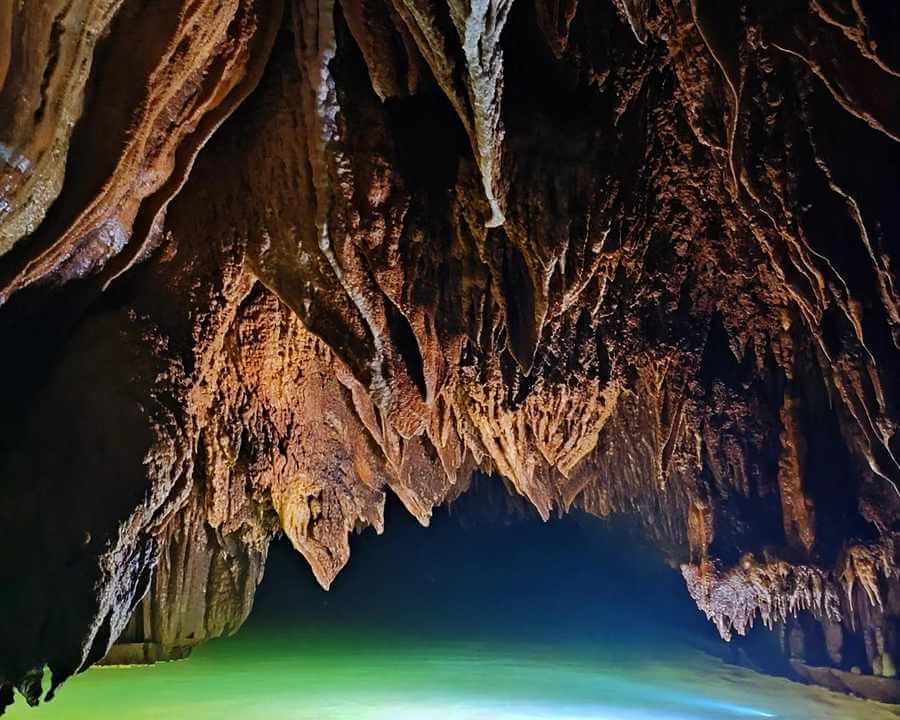
The Capisaan Cave System sits under the hills of Barangay Capisaan in Kasibu, Nueva Vizcaya, and it is the main reason caving fans make the long trip into this part of the Cagayan Valley. Roughly 4.2 kilometres of documented passages run through limestone and marble, with chambers, columns, flowstone and curtain-like formations that have taken a very long time to grow. You can only go in with a local guide, on a route the tourism office has cleared for visitors.
That makes it a different kind of day out from a waterfall or a viewpoint. You coordinate ahead, show up for registration and a briefing, and then spend a good part of the day walking, crouching and climbing in the dark, probably getting wet and muddy along the way. The name also shows up as Capissaan, with a double s, on some signs and pages, so search for both when you look for updates.
This guide covers what the inside of the cave is like, how to reach Kasibu by road or through Cauayan airport, the questions to settle before you book, what to wear and bring, and a simple two-day plan that keeps the long drive and the cave on separate days.
Capisaan Cave at a glance
- Where: Barangay Capisaan, Kasibu, Nueva Vizcaya
- What it is: a limestone and marble cave system, about 4.2 km of documented passages
- How to visit: guided only, on the route the tourism office assigns
- Start point: the Capisaan Tourism and Information Center in the barangay
- Time needed: at least half a day for the cave itself
- Where to sleep: Kasibu to be close, Bayombong for more services
What It's Like Inside
The 4.2-kilometre figure covers the whole documented system, not the walk you'll do. The system has several entrances and branches, and only the sections the tourism office considers safe at the time are open to visitors. Your guide will tell you which route you're on, how long it takes and how hard it is before you go in. Ask questions at that point, not halfway through.
The formations
Most of what you'll be pointing your light at has been built drip by drip, as water carrying dissolved calcite leaves a thin layer behind each time. That's how stalactites, stalagmites, columns, flowstone and the folded sheets people call curtains form. The surfaces are more fragile than they look, and the oil and grit from a single hand can stain or stop the growth, so keep your hands to yourself even where it's tempting to steady yourself on a column.
Chambers, squeezes and water
A traverse can open into a wide, high chamber and then narrow to a passage where you bend low or crawl. Floors are often slick, and depending on the route and recent rain you may wade through shallow streams. Water that looks calm and ankle-deep can hide a drop or a strong pull, so step where the guide steps.
How to Get to Kasibu
Kasibu is in the eastern part of Nueva Vizcaya, and the last stretch to Capisaan is the part that needs planning. Public transport thins out the closer you get, so most visitors arrange a vehicle through the tourism office or their accommodation for the final leg.
By bus from Manila
North to Bayombong or Bambang
Take a bus bound for Nueva Vizcaya or the Cagayan Valley and confirm where it stops. From there, ride a jeepney or van, or hire a vehicle, toward Kasibu.
By air
Cauayan, then by road
Cauayan Airport in Isabela is the nearest air option when there's a suitable flight. The province has advised using accredited transport or a tourist van from the airport.
Already in the province
Kasibu to Capisaan
Ask the tourism office about a local vehicle or guide transfer, and settle your ride back before you go underground.
The drive from Metro Manila takes several hours, and traffic, weather and stops can stretch it a lot. Plan to arrive the day before your cave slot. Going straight from an overnight bus into a long guided traverse is hard on the body and leaves no slack if the road is slow.
Booking Your Cave Visit
Capisaan isn't a walk-in attraction. The province opened a ₱10.4-million tourism and information center in Barangay Capisaan in September 2025, and that center, along with the Nueva Vizcaya Provincial Tourism and Culture Office, is where to start. Get these answers before you set off:
- Is it open on your date?Closures happen for weather and maintenance, so confirm the day itself, not just the season.
- Which route is clearedAsk how long it takes, how difficult it is and whether it involves crawling or wading.
- The full fee breakdownRegistration, environmental fees, guide charges and equipment rental can be separate items.
- Group size and age limitsCheck the maximum per group and any minimum age before you bring children.
- Transport to the barangayAsk whether a vehicle can be arranged from Kasibu or the tourism center, both ways.
- Rain and cancellation rulesFind out what happens to your booking if heavy rain closes the cave.
Fees vary by route and group, so ask for a dated quotation in writing or by message. Prices copied from old blog posts or social media can be well out of date.
What to Wear and Bring
Wear clothes you don't mind ruining and shoes with real grip, and ask the guide what footwear they recommend for your route. Leave large backpacks, loose jewellery and anything valuable behind, because they snag in tight passages.
- A full change of clothesand a towel for after you come out.
- A small waterproof bagfor the few things you carry inside.
- Waterin a reusable bottle, if the guide allows it.
- A headlamponly if the guide asks for one, and of the type they specify.
- A phone or camera strapif photography is allowed on your route.
- Medicines and a basic first-aid kitfor the day and the road.
- Cashfor fees, meals and local transport. Small towns may have few card or e-wallet options.
Staying Safe Underground
Stay with the group, follow the route given in the briefing, and don't attempt a harder section just because another group did. Keep noise down so you don't disturb the bats, and bring every wrapper and bottle back out with you. If heavy rain sets in or the authorities suspend tours, wait for another day.
Be upfront with the tourism office about anything that could make the route hard for you, such as knee or back trouble, poor balance, or discomfort in dark, tight spaces. They can tell you whether the current route suits you before you've travelled all that way. If caves appeal to you, our guide to the caves of Sagada covers another guided caving trip in northern Luzon, and the Samar caves are a bigger adventure in the Visayas.
Where to Stay and Eat
Kasibu puts you closest to the cave and makes an early start easy. Bayombong, the provincial capital, has more places to stay and eat and is easier to reach by bus, at the cost of a longer drive on the cave day. Whichever you choose, check the exact location before booking, since a listing that says "Nueva Vizcaya" can be a long way from Capisaan.
Ask your host whether they can arrange an early breakfast or packed food, transport to the barangay and back, and a contact at the tourism office. Dining choices around Kasibu are limited and stores can close early, so carry snacks and water for before and after the cave, following the guide's rules on what you can take inside.
A Simple Two-Day Plan
- Day 1Get there
Travel to Bayombong or Kasibu, check in, and reconfirm your cave slot and transport. Keep the evening quiet and eat early.
- Day 2Into the cave
Leave early for the tourism center, register and do the briefing, then the guided route. Change, eat lunch, and head on only if transport is confirmed.
With an extra day, the rest of the province is worth a look; it borders Ifugao, so the Banaue and Batad rice terraces make a natural add-on for a longer northern Luzon trip.
When to Go
The drier months make the roads easier and outdoor plans more reliable, but the season alone doesn't decide whether the cave is safe. Rain raises underground water levels and can damage access roads, sometimes after a single heavy downpour. A few days before you leave, ask the tourism office about recent rain, route conditions and any temporary closures.
Capisaan rewards people who treat it as a planned adventure. Lock in your guide and route first, give the road a full day, and leave the formations exactly as you found them, so the next group sees them the same way.
Comments
No comments yet. Been here recently? Share a tip or ask a question.
Leave a Reply