Animasola Island is a small, treeless rock island off Burias, the larger of the two big islands that make up the western side of Masbate province. It belongs to the town of San Pascual, and the only way to see it is on a hired outrigger, usually as the first stop of a Burias island-hopping day. The short version for planning: get yourself to San Pascual, register at the tourism office by the port, hire a boat for the morning, and time your arrival for low tide so the rock pools are open.
The name comes from the Spanish ánima sola, the lonely soul. It fits. There is no village, no store and almost no vegetation on the island, just banded rock walls rising out of clear water with a thin strip of white sand at their feet. You come for the rock and the pools, take your photos, have a swim, and move on to the next island before the midday sun turns the stone into a griddle.
Below is what the rock and pools are actually like, the three ways to reach San Pascual, what the boat and the fees cost, and the small details that decide whether the day goes well.
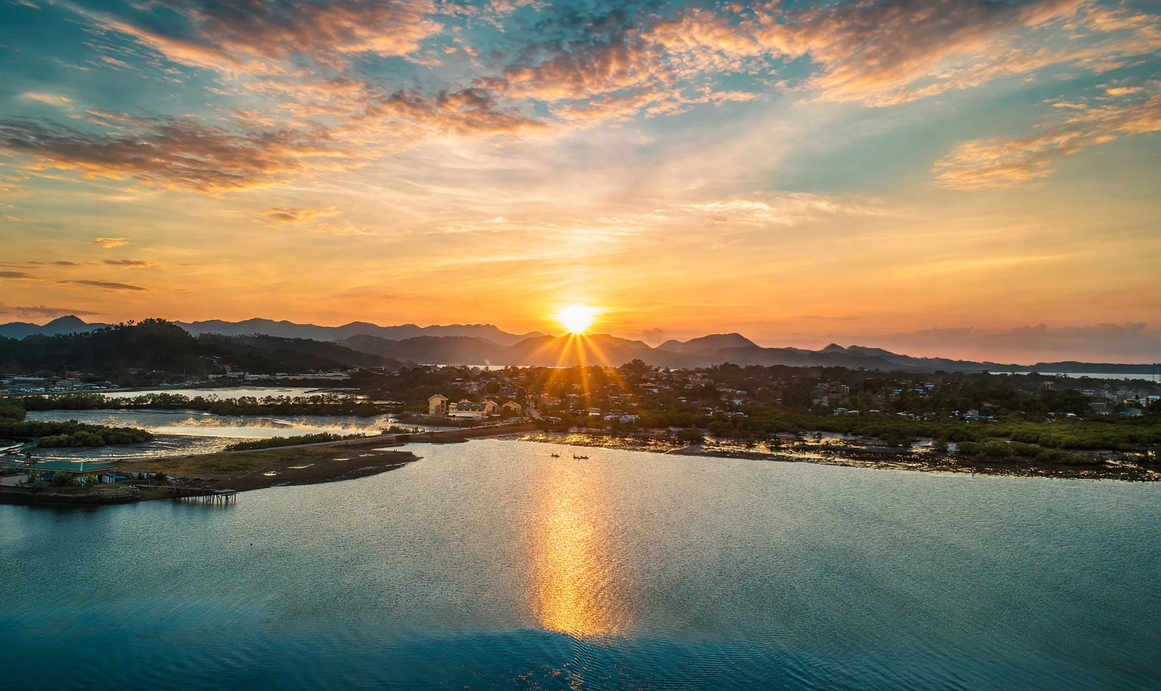
What you see on Animasola
The island is built from sedimentary rock laid down in thin horizontal bands. Wind and waves have cut into it unevenly, so the walls look striped in shades of rust, tan and copper, and the edges have been carved into ledges, overhangs and odd silhouettes. Boatmen like to point out shapes in the rock the way people find animals in clouds. Some of them are convincing, some take imagination.
At the base of the cliffs, the sea has hollowed out shallow basins. When the tide drops, these turn into still pools of warm seawater that locals jokingly call natural Jacuzzis. One of the better ones sits behind the main rock mass and goes by the name Mermaid's Lair. At high tide the same spots are under deep, moving water and the rock is hard to walk around, so the tide matters more here than anywhere else on the Burias circuit.
The rock is rough, sharp in places and crusted with barnacles. Proper aqua shoes with a firm sole are not optional. Rubber slippers slide, and bare feet get cut.
How to get to San Pascual, the jump-off town
All Animasola trips start in San Pascual, on the northern end of Burias Island. There are three ways in, and the one through Pasacao in Camarines Sur is the easiest for most travelers.
Through Naga and Pasacao (the usual route)
Get to Naga City first, by plane into Naga Airport in Pili or on an overnight bus from Manila, which takes around eight to nine hours. From Naga, a van or jeepney to Pasacao port takes about 45 minutes.
Two kinds of boats cross from Pasacao to San Pascual. The Starhorse RORO leaves at around 5:00 AM and 10:00 AM, costs roughly ₱300 to ₱360 and takes two and a half to three hours. Public outrigger boats leave at around 7:00 AM, 10:00 AM and 2:00 PM for about ₱130 to ₱200. Going back, the last outrigger usually leaves San Pascual mid-afternoon and the last RORO around 5:00 PM. Miss both and you stay the night, so check the day's schedule at the port when you arrive. Departures shift with the season and the weather.
Through San Andres, Quezon
Buses from Manila run to San Andres in Quezon in about eight hours. From there the crossing is by chartered outrigger only, often with a stop at Alibijaban Island on the way. Expect around ₱8,000 to ₱9,000 for a boat that seats up to ten. This crossing is longer and more exposed to wind, so it works best for a group on a calm day.
Through Claveria
Claveria is the other main town on Burias, at the southern end. A RORO crosses from Pio Duran in Albay in about three hours, and there are also overnight boats between Claveria and Mobo near Masbate City. The catch is the road: Claveria to San Pascual is a long, rough ride of about four hours by jeepney or habal-habal. Use this route only if you are already in Albay or Masbate City, or if you want to see both ends of the island.
Island hopping boat rates and fees
Boats are hired in San Pascual and have to be registered at the municipal tourism office beside the port before they leave. A standard morning tour covering Animasola, the Tinalisayan sandbar and Sombrero Island runs about ₱3,000 to ₱4,000 for a boat of five or six people. Adding a stop such as Dapa Island usually costs around ₱500 more.
On top of the boat, plan for a few small charges, each paid in cash to a different person:
These amounts move from year to year, so ask the tourism office for the current list when you register. Split six ways, a full island-hopping day usually comes to somewhere around ₱1,200 to ₱1,500 a head, not counting the crossing to Burias.
Low tide, early start, calm months
Three timing decisions shape the whole trip.
Tide
Arrive at low tide
Ask your boatman when low tide falls and build the route around it. Animasola and the Tinalisayan sandbar both need the water down, and a good boatman will order the stops so you catch each one at the right moment.
Time of day
Leave by 8:00 AM
Set off from San Pascual between about 5:30 and 8:00 AM. The wind picks up in the afternoon and the water between the islands gets choppy. An early start also gets you onto Animasola before other boats arrive and before the rock heats up.
Season
March to May is calmest
November and December are quieter but can still bring late storms. From June to October, the southwest monsoon and typhoons often lead to no-sail orders, and a cancelled crossing can strand you on either side.
The rest of the Burias circuit
Animasola is rarely a trip on its own. Tinalisayan is a flat strip of white sand that only appears fully at low tide, with no shade at all. Sombrero Island is named for its central rock, which looks like a cowboy hat from the right angle, and it is the usual place to spend the night, with tents, simple cottages and a generator that runs from evening to early morning. Dapa Island has tall cliffs and a small cove for swimming and jumping, but it is also home to venomous sea kraits that rest in the rock crevices, so keep your hands out of gaps you cannot see into.
If you like this kind of coast, the wave-cut rocks and tide pools of Biri Island in Northern Samar make an interesting comparison, and the boat-and-bus logistics will feel familiar if you have done Caramoan in Camarines Sur, which also starts from Naga.
What to bring and what to know
- Cash, in small billsThere are no ATMs on Burias. Withdraw in Naga or Pasacao before crossing.
- Aqua shoeswith a hard sole for the barnacle-covered rock.
- Sun coverAnimasola has no shade. Bring a hat that ties on, a rash guard and sunscreen.
- Water and foodThere are no restaurants on the outer islands. Pack drinks and snacks in San Pascual.
- A dry bagfor phones and cameras on the boat.
- Low expectations for signalMobile data is weak outside San Pascual town, and electricity in town is limited mostly to evening hours.
- A trash bagWhatever you bring to Animasola leaves with you.
For more on gear and boat safety in general, the island hopping safety checklist covers life vests, weather calls and what to pack.
Where to stay
San Pascual has a handful of basic inns near the port, including Sunset View Tourist Inn in the town centre, plus a few beach resorts a short ride away. Sombrero Island is the choice if you want to camp or wake up on a beach. Rooms are simple everywhere on Burias, power can cut out, and booking ahead is wise in the March to May peak. Many travelers spend the night before the crossing in Naga, where there are far more hotels, and take the first boat out of Pasacao in the morning.
Animasola takes some effort to reach, and that is part of why it stays quiet. Plan it around the tide and the morning calm, bring cash and good shoes, and the lonely soul of Burias is well worth the long boat ride.
Photo credit: Abet Llacer on Pexels.

Comments
No comments yet. Been here recently? Share a tip or ask a question.
Leave a Reply