Three islands, one week of leave, and a group chat that cannot agree. Boracay, Palawan and Siargao top most Philippine beach wish lists, yet they reward very different kinds of trips. Pick the wrong one and you spend your holiday fighting the island instead of enjoying it.
Here is the short version. Boracay suits a short, easy beach break with little planning. Palawan pays off when you have at least five days and want limestone cliffs, lagoons and long days on a boat. Siargao is for surfers, slow mornings and anyone happy on a scooter, as long as you can live with turboprop flights and the odd power cut.
The rest of this guide breaks the choice down by the things that actually decide a trip: how long it takes to get there, what the water is like, what you pay before the fun starts, the months that work, and the downsides each island tends to leave out of its brochures.

Travel Time: How Fast You Reach the Sand
Boracay wins this round easily. Caticlan Airport sits a short ride from the jetty port, so you can step off a plane, pay your fees, cross on a pump boat and be on White Beach in well under two hours. Flights into Kalibo are often cheaper, but they add a road transfer of roughly two hours each way. Our guide to the Caticlan and Kalibo routes walks through both options step by step.
Palawan is bigger than people expect, and distance is its main cost. Puerto Princesa takes jet flights from Manila and is the simplest way in. El Nido's small Lio Airport now gets its flights from Clark and Cebu, since Manila service ended in March 2026, and those seats tend to sell at a premium. Land in Puerto Princesa instead and you face a shared van of five to six hours north to El Nido, usually ₱600 to ₱800 a seat.
Siargao sits in between. There is no nonstop from Manila. Flights come from Clark, Cebu and Davao on small propeller planes, and Sayak Airport is in Del Carmen, about 45 minutes by van from the surf town of General Luna. The cheaper alternative is a boat from Surigao City to Dapa port, which suits travellers already in northern Mindanao but eats most of a day.
The Water and the Scenery
Boracay is about one beach done very well. White Beach runs along the west side with fine, pale sand and shallow water, split into Stations 1, 2 and 3. Station 1 is quieter and pricier, Station 2 is the busy middle with the bars and D'Mall, and Station 3 has more budget rooms. On the east side, Bulabog Beach catches the wind and fills with kitesurfers in the northeast monsoon months, which makes it poor for swimming but great to watch.
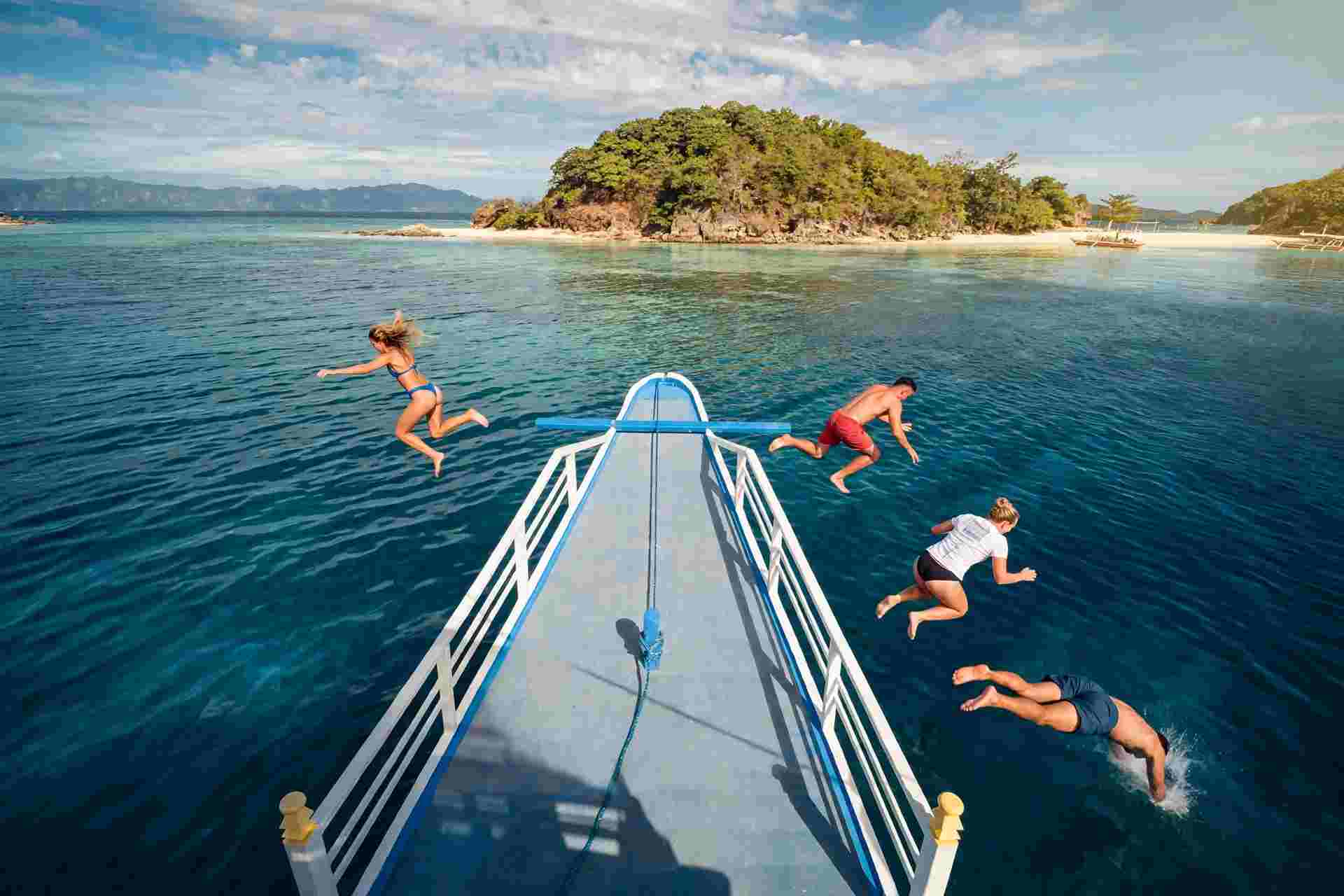
Palawan is the place for drama. The karst islands of Bacuit Bay around El Nido, the lakes and wrecks around Coron, and long empty stretches such as San Vicente give you scenery Boracay simply does not have. The catch is that most of it is seen from a boat. Expect island-hopping tours, life jackets and a lot of sun between stops.
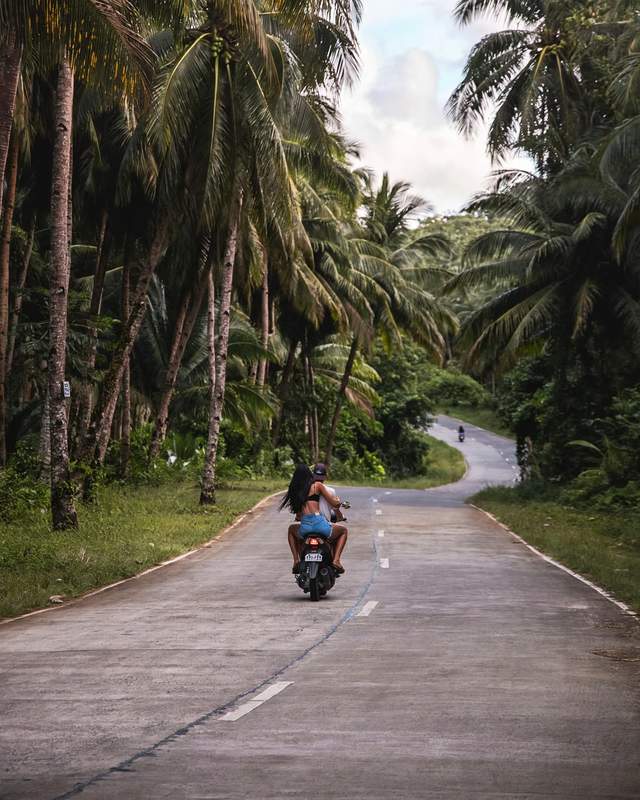
Siargao is greener and rougher at the edges. Coconut palms cover the interior, the famous waves break over reef, and the calm-water spots, such as Naked, Daku and Guyam islands or the Sugba Lagoon side trip, need a boat or a long ride. Beginners can learn to surf on gentler breaks around General Luna, but reef breaks like Cloud 9 are for experienced surfers.
What You Pay Before You Even Swim
Each island has its own fees, and they stack on top of flights and rooms.
Boracay: a terminal fee of ₱150 at the Caticlan Jetty Port, plus an environmental fee paid once per stay, currently ₱150 for local tourists and ₱300 for foreign visitors. You also need a confirmed booking at an accredited hotel, because the port checks it before letting you board.
El Nido: an environmental tourism development fee of ₱400 per person, valid for ten days. Keep the receipt, since tour operators ask for it. Shared island-hopping tours A to D usually fall between ₱1,400 and ₱1,800 each, and the Big Lagoon permit is often paid separately.
Siargao: no island-wide tourist fee, but beaches, pools and viewpoints charge small entrance fees. Carry plenty of small bills. The bigger expense is getting there, since turboprop fares rarely drop as low as jet fares to Caticlan or Puerto Princesa.
On the ground, Boracay and El Nido both run at resort-town prices, with El Nido meals often costing more than you would pay in Puerto Princesa. Siargao can be cheap if you stay inland and ride a scooter, and expensive if you book a beachfront villa in General Luna in peak months.
Picking the Right Months
Weather should shape the choice as much as taste, because the three islands peak at different times.
Boracay is at its best in the dry months from November to late April. October tends to be the wettest month, and the southwest monsoon season can make the water off White Beach choppy.
Palawan runs its high season from December to May, when boats go out daily. From June to October rooms are cheaper, but tours can be cancelled when storm signals go up, which hurts a short trip built around boat days. Late May and November are good shoulder months.
Siargao splits by purpose. The best surf usually comes from about September to November, which overlaps with typhoon season. If calm water for island hopping matters more, March to May is the safer window. The WSL surf contest at Cloud 9 runs from 31 October to 10 November 2026, so rooms and flights around those dates will be tight. Our month-by-month guide to Philippine weather helps if your dates are fixed.
The Honest Downsides
Boracay is busy. It is the most developed of the three, the main stretch of White Beach can feel crowded in peak weeks, and smoking and drinking on the beach are banned. If you want a quiet, undeveloped island, this is not it.
Palawan punishes rushed plans. Splitting four days between Puerto Princesa, El Nido and Coron means most of your trip happens in vans, boats and terminals. One base, or two at most, works better. Our 5, 7 and 10-day Palawan itineraries show how to route it without doubling back.
Siargao has infrastructure gaps. The island's power supply depends on a submarine cable that has failed more than once, including a two-week outage in December 2024 and another fault in January 2026. Ask whether your accommodation has a generator. Roads are fine for scooters, but riders need a valid licence and a helmet, and hospitals are limited compared with the bigger towns.
So Which Island Should You Choose?
Choose Boracay if...
You have three or four days, you are travelling with children or older parents, or this is your first Philippine beach trip. Short transfers, walkable stations and lots of food options make it the lowest-effort choice.
Choose Palawan if...
You have at least five days and the scenery is the point. Couples, photographers and anyone who loves snorkelling between limestone walls will get the most out of El Nido or Coron, provided they accept long boat days and some travel time.
Choose Siargao if...
You surf or want to learn, you prefer cafés and coconut roads to resorts, or you plan to stay a week or longer and work remotely. Go in the surf season if waves are the goal, or in March to May if you care more about calm water.
Trying to fit all three into one short trip rarely works, since each needs its own flight and transfer. If you have two weeks, pairing one island with another region makes more sense than rushing all three. Whatever you pick, check the airline schedule and current fees close to your dates, because routes and prices on these islands change often.
Comments
No comments yet. Been here recently? Share a tip or ask a question.
Leave a Reply