Carcar is the town most Cebuanos pass through with the bus window open, waiting for the smell of roast pork to drift in. The city sits about 40 kilometres south of Cebu City on the coastal highway, right where the road splits toward Barili and Moalboal on one side and Sibonga, Argao and Oslob on the other. Plenty of people only ever see it for ten minutes. That is a shame, because Carcar is one of the easiest food stops on the island to turn into a proper half-day.
The short version: go in the morning, eat lechon at the public market, buy chicharon and the sweets near the rotunda, then walk off lunch among the old houses around the church. This guide explains how each stop works, what things cost, and the few habits that save you from overpaying.
Carcar became a component city in 2007 and has long been known for three things: lechon, chicharon and shoes. The first two are why most visitors stop. The third is worth a look if you have time, since the city has been working to revive its shoemaking trade and even built its Kabkaban Festival performance around local shoemakers in August 2026.
Getting to Carcar and planning the day
Buses heading south from the Cebu South Bus Terminal pass through Carcar, including those bound for Moalboal, Oslob and the Dumaguete route via Santander. Tell the conductor you are getting off at the Carcar rotunda, the roundabout at the centre of town, and you will land within walking distance of everything in this guide. Fares change with fuel prices, so check at the terminal. With a car, budget at least an hour and often more, since traffic through Talisay, Minglanilla and Naga can be slow on weekday mornings.
Timing matters more than anything else here. Lechon in Carcar is roasted before dawn and reaches the counters by mid-morning, and the best pigs are usually gone by early afternoon. Arrive between 9 and 11 a.m. and you get the full choice. Arrive at 3 p.m. and you are picking from what is left.
Lechon at the Carcar public market
The lechon section is at the front of the Carcar City Public Market, a row of counters under one roof with whole pigs laid out on display. Locals call it the litsonan. Expect sales attendants to wave you over and offer a taste. Sampling is normal, and it is the best way to choose between stalls.
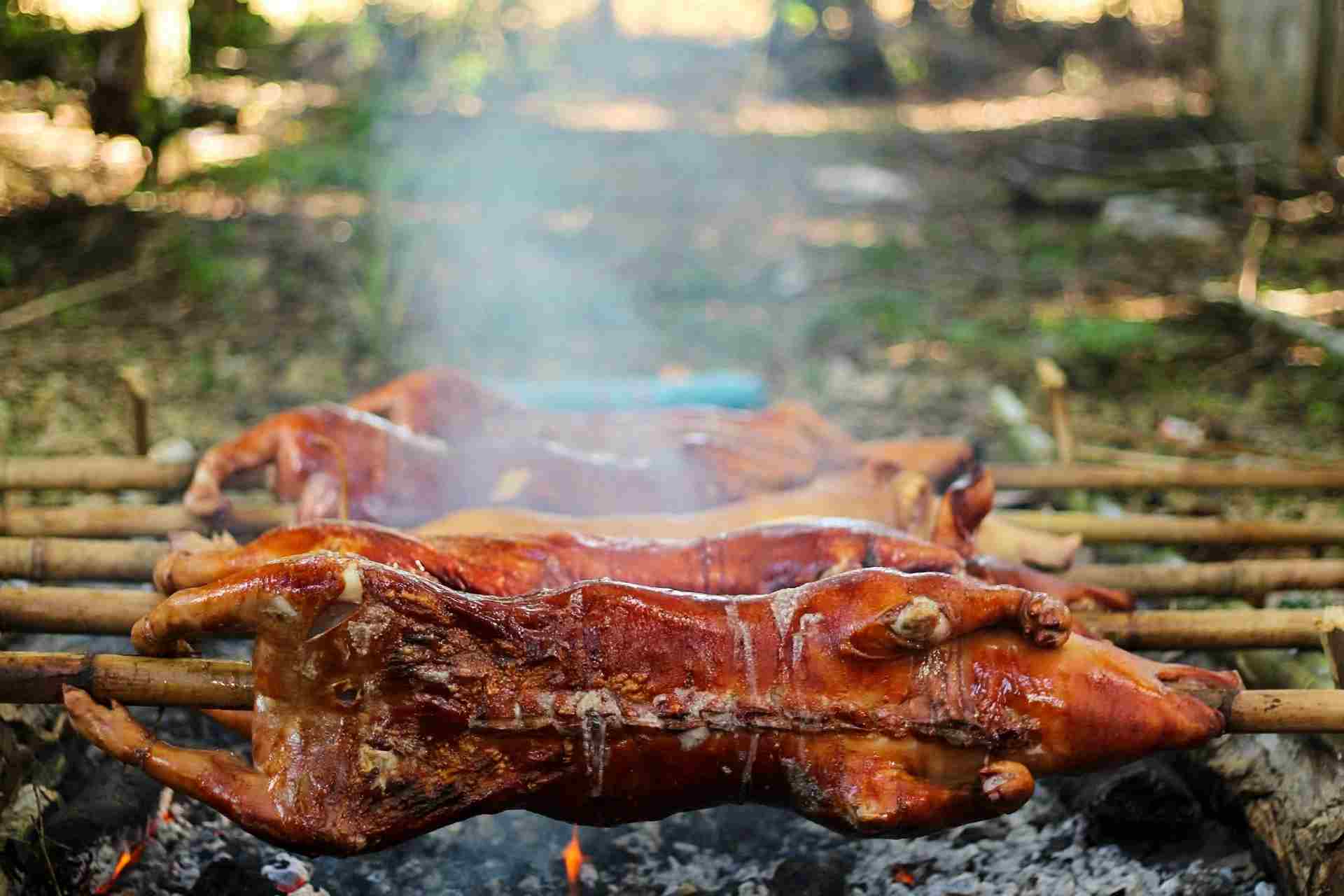
One detail sets Carcar apart. Before chopping your order, many vendors run a hand torch over the skin of the pig. Roast pork skin goes soft within hours in Cebu's humid air, and the quick blast of flame brings the crackle back. A stall that torches each order fresh is a good sign. One that serves from a tray already cut and sitting out is worth skipping.
Lechon here is sold by the kilo, and in late 2026 it was going for around ₱400 a kilo, cheaper than in Talisay, the other Cebu town famous for its roast pig. Prices climb in December, when demand peaks for Christmas and New Year. Head and feet cost less than belly and back. If you want the Talisay comparison, our guide to Talisay's Halad Inasal festival covers the city that shares Carcar's lechon reputation.
How to buy without getting burned
The market has a history worth knowing. In November 2019, after complaints went viral online, the city closed four lechon stalls for missing permits, faulty weighing scales, aggressive hawking in the passageway and selling reheated lechon. Things have been calmer since, but a few habits still help:
Walk the whole row before you commit. Ask the price per kilo out loud and agree on it before anything is cut. Watch the scale as your order is weighed. If a vendor starts wrapping pork you never asked for, say no clearly and move on. You are under no obligation to buy just because you tasted.
Most stalls will chop a half kilo or less for a light meal, served with rice and the usual vinegar dip. For a fuller view of where else to eat roast pig around the island, see our guide on where to eat lechon in Cebu.
Carcar chicharon: crunch with meat attached
If lechon is Carcar's main course, chicharon is what people carry home. What makes the local version different is that it is made with pork rind that still has some meat attached, which locals call chicharon with laman. The pieces fry up deep gold, curl into puffy shapes and have a much heavier crunch than the pale, airy kind sold in supermarket packs.
You will find chicharon in kiosks and stores around the rotunda, and in shops along the streets nearby. Most sell in sizes from small 100-gram packs up to a kilo, and many shops will let you taste before buying. Peddlers also board southbound buses a few kilometres before town with bags of chicharon and banana chips, which is handy if you are just passing through but less fresh than a sealed pack from a shop.
A few buying tips. Check the packing date, since chicharon stays crisp for a short time once opened. Pick the plain version if you plan to eat it with spiced vinegar, the way it is commonly served in Cebu. Packs with laman are richer, so a small bag goes further than you think.
Ampao, bocarillo and the other sweets
The same stalls around the rotunda sell two old-fashioned sweets that rarely appear outside the province.
Ampao is puffed rice bound with sugar syrup and pressed into bars, traditionally white and rectangular. It is light and only mildly sweet, the kind of snack people eat with coffee in the afternoon.
Bocarillo goes the other way. It is made from strips of young coconut cooked in sugar, shaped into little flower-like pieces, dyed in loud, bright colours and wrapped one by one. The outside is slightly crisp and the inside soft and chewy. It is very sweet, so buy a small pack first.
Both travel well and cost little, which makes them good fillers for a pasalubong box next to the chicharon. If you are building a bigger haul, our Cebu pasalubong guide covers what else to bring home and what you cannot take on an international flight. Pork is generally not allowed through customs abroad, so finish the lechon and chicharon before you leave the country.
Walk it off in the heritage district
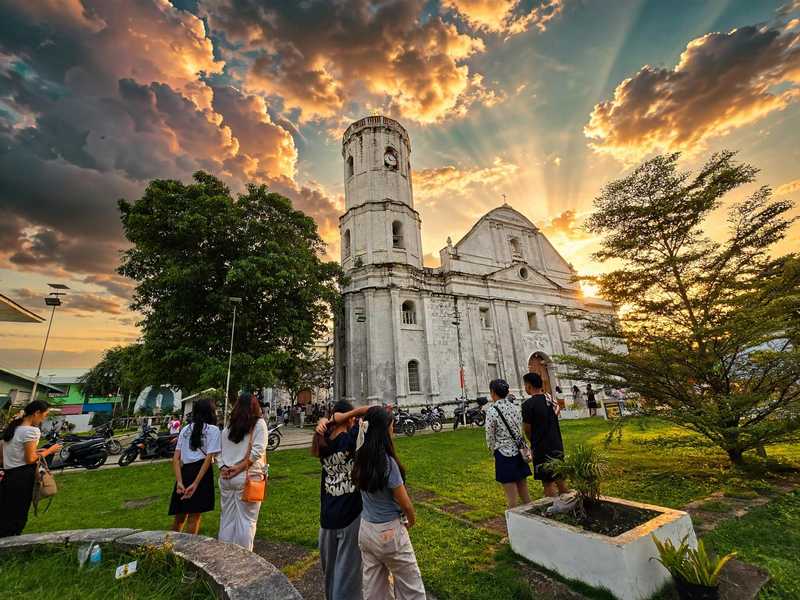
After eating, the old centre is a short walk from the rotunda. St. Catherine of Alexandria Parish Church dates to 1860 and sits on raised ground above the plaza. Nearby, Balay na Tisa, is a restored colonial house built in 1859, and the Carcar City Museum occupies the former town dispensary. Several private houses from the Spanish and American periods still stand along the side streets. Most are family homes, so view them from the street.
If shoes are on your list, the shops around the centre sell locally made pairs. It is a small, practical way to support a trade the city is trying to keep alive.
A simple plan for the day
Leave Cebu City by 7 or 7:30 a.m. Reach Carcar around 9, walk the litsonan, taste at two or three stalls and eat at the one you like best. Spend an hour around the church, the museum and the old houses. Buy chicharon, ampao and bocarillo last, so the bags stay sealed and crisp, and be back on the road by early afternoon. If you are continuing south toward Moalboal or Oslob, Carcar makes an easy brunch stop on the way.
Bring small bills, carry a bag for the drippings and a few wet wipes, and go hungry. Carcar rewards the people who come early and take their time choosing.
Comments
No comments yet. Been here recently? Share a tip or ask a question.
Leave a Reply