Dumanjug is a coastal town on the southwestern edge of Cebu, facing the Tañon Strait with Barili to the north and Ronda to the south. Plenty of travelers pass through on the way to Moalboal and never stop. That is a missed chance. The town has a historic parish church, a food tradition built around native chicken, a hilltop lookout, a waterfall that rewards a short walk, and a shoreline far quieter than the resort strips farther south.
This guide covers how to get there, what to see, where to eat, and how to plan a single day without rushing it. Dumanjug works best as a slower stop with one or two real goals rather than a checklist of everything on the map.
Getting to Dumanjug
Dumanjug sits about 73 kilometers southwest of Cebu City. The drive usually takes two to three hours, depending on traffic, roadworks and rain. Buses bound for the southwestern coast depart the Cebu South Bus Terminal. Look for one heading toward Ronda, Moalboal or Badian, and ask the conductor to drop you in Dumanjug, because not every bus runs through the poblacion.
A private car gives you the most freedom, especially if you want Mt. Sinai and Pityak Falls on the same day. Set your navigation to a specific barangay or landmark rather than the word "Dumanjug" alone, since the municipality covers a wide area of coastal and upland communities. For hillside and waterfall spots, a motorcycle taxi is often the practical choice. Agree on the fare, the waiting time and the return before you set off, and ask whether the driver knows the access road. If you are continuing south afterward, the road to Dumaguete guide lays out the other ways to make the long trip.
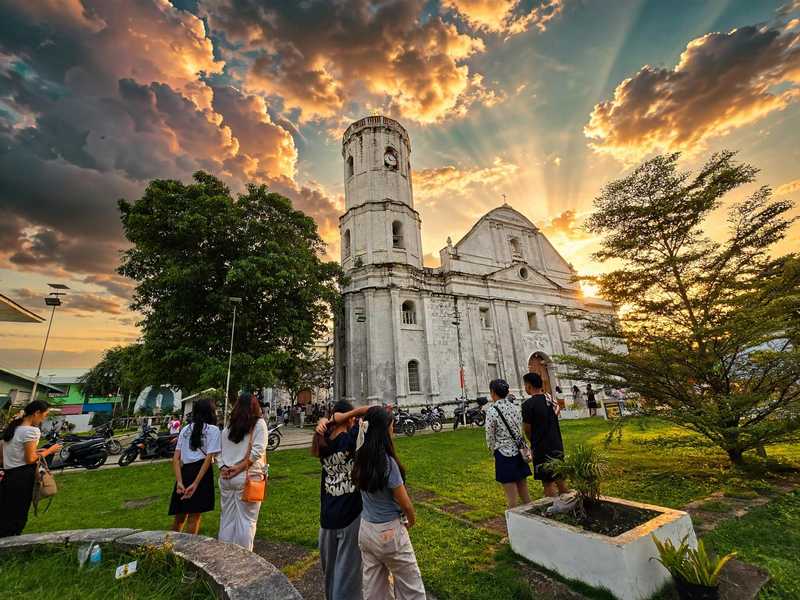
A Short History Built Around the Parish
Before it became a municipality in its own right, Dumanjug was a visita, a mission station attached to the older parish in Barili. The Parish of St. Francis of Assisi was established on March 28, 1854. A year later, in 1855, the Spanish authorities set up the first municipal government. Church and town administration grew up side by side, which is why the parish and the old center still anchor the place today.
Dumanjug is sometimes called the "Home of the Governors," a nickname tied to the political families and public figures linked to the town. Its patron is St. Francis of Assisi, whose feast day falls on October 4. If you visit around that date, expect more activity in the town center and check the parish for the schedule of masses and processions.
Places to See in Dumanjug
St. Francis of Assisi Parish Church
The parish church is the historical anchor of the town. It is still a working place of worship, so treat it that way rather than as a quick photo stop. Dress modestly, keep your voice down, and avoid walking through during a service. Ask before photographing people inside the church or during a ceremony.
Go in the morning or late afternoon, when the building is calmer and the light is kinder to the facade. Then walk the short distance to the plaza.
The Municipal Plaza and Town Center
The plaza is the easiest place to slow down. Residents meet there, families take evening walks, and community events often begin here. Use it as a base for a snack or a lunch break, and ask the shopkeepers about current activities, the best way out to the barangays, and where locals buy their native chicken.
Mt. Sinai Viewpoint
Mt. Sinai is one of the town's known lookouts, and the reason to climb it is the height. From the top, the coast and inland hills look different than they do from the highway. Check the access route with a local contact before you leave. The final stretch may suit a motorcycle or a private vehicle better than a regular car, depending on the exact access point and conditions on the day.
Wear shoes with good grip, carry more water than you think you need, and skip the trip after heavy rain or when visibility is poor. Do not count on food stalls, toilets or steady mobile signal at the top. A small snack and a rain layer are worth packing.
Pityak Falls
Pityak Falls, also known locally as Tubod-Duguan Falls, suits travelers who want a quiet countryside stop. The flow changes with the season, so a visit after rain can look nothing like a visit in a dry spell. Water can rise quickly. If it is fast, deep, muddy or climbing, stay out of it, and keep well away during and immediately after a downpour.
Treat the falls as a natural site rather than a developed resort. Ask about trail conditions before you leave the main road, consider a local guide if this is your first visit, and take everything you brought back with you.
The Coast Along the Tañon Strait
The coastal barangays face the Tañon Strait and offer a calmer alternative to the busier beaches farther south. Some seaside properties suit a short stop, a meal with a view or a private group stay. The shoreline varies, though. Much of it is rocky or patchy with sand, so this is not one uniform beach strip.
Before you plan a swim, confirm whether day use is allowed, whether there is an entrance or cottage fee, and how the tide and currents look that day. If you are booking a seaside property, contact the owner in advance so you have a room and a plan for lunch.
Eating Bisnok in Dumanjug
Bisnok comes from Bisayang manok, the native chicken that has become part of the town's food identity. It is smaller and firmer than the broiler chicken most people eat at home, and the flavor is stronger. It is usually grilled or roasted, and the way it is prepared depends on the cook.
Our Bisnok Festival article looks at the celebration and what the chicken means to the town. This guide stays with the practical side of eating it on the road.
A few habits help. Ask whether the chicken is freshly cooked before you sit down, because popular plates sell out and the wait can be long. Check whether a whole chicken is more than your group needs. Keep the rest of the meal simple, with rice, so the chicken stays the focus. Bring cash, since small eateries may not accept cards or e-wallets.
A Realistic One-Day Plan
One day is enough for a good taste of Dumanjug if you keep the list short. Leave Cebu City early so the drive does not eat into your time in town. Start at the parish church and the plaza, then have an early lunch built around Bisnok.
In the afternoon, pick one destination. Choose Mt. Sinai for the view or Pityak Falls for the walk. If you would rather slow down, spend the afternoon on the coast instead, once you have confirmed access and swimming conditions. Either way, head back toward the main road before dark. Rural roads are harder to read at night, and a small delay can turn a relaxed day into a rushed drive.
When to Go
The drier months, generally November to May, make road trips and outdoor walks easier. The weather still shifts from year to year, so check the forecast before you commit. In the rainy season, trails turn slippery and waterfalls can rise fast, which changes a pleasant walk into a risky one.
Festival season brings more visitors, more traffic and fuller accommodation. If you want to see local celebrations, confirm the dates through the municipality's announcements rather than an old social media post without a date attached.
Practical Tips Before You Leave
Carry small bills for food, tricycles and motorcycle rides. Pack water, sun protection and shoes that handle uneven ground, since most of the interesting places are outdoors. Keep the coast clean, and take your rubbish home. Respect religious spaces, and ask before photographing residents or community activities.
Check opening arrangements, fees and transport the day before you travel, not only the week before. Schedules and access can change, and a message to a local contact is often the quickest way to get a reliable answer.
Is Dumanjug Worth a Stop?
Dumanjug is worth more than a pass-through if you enjoy small towns, local food and countryside scenery. It does not offer the facilities of Cebu's busiest destinations, and for many travelers that is the appeal. Plan your transport ahead, keep the list short, and give the town a few hours. A plate of native chicken, a walk around the parish grounds and one scenic outing make a satisfying first day.
Photo credit: Mis Marian.