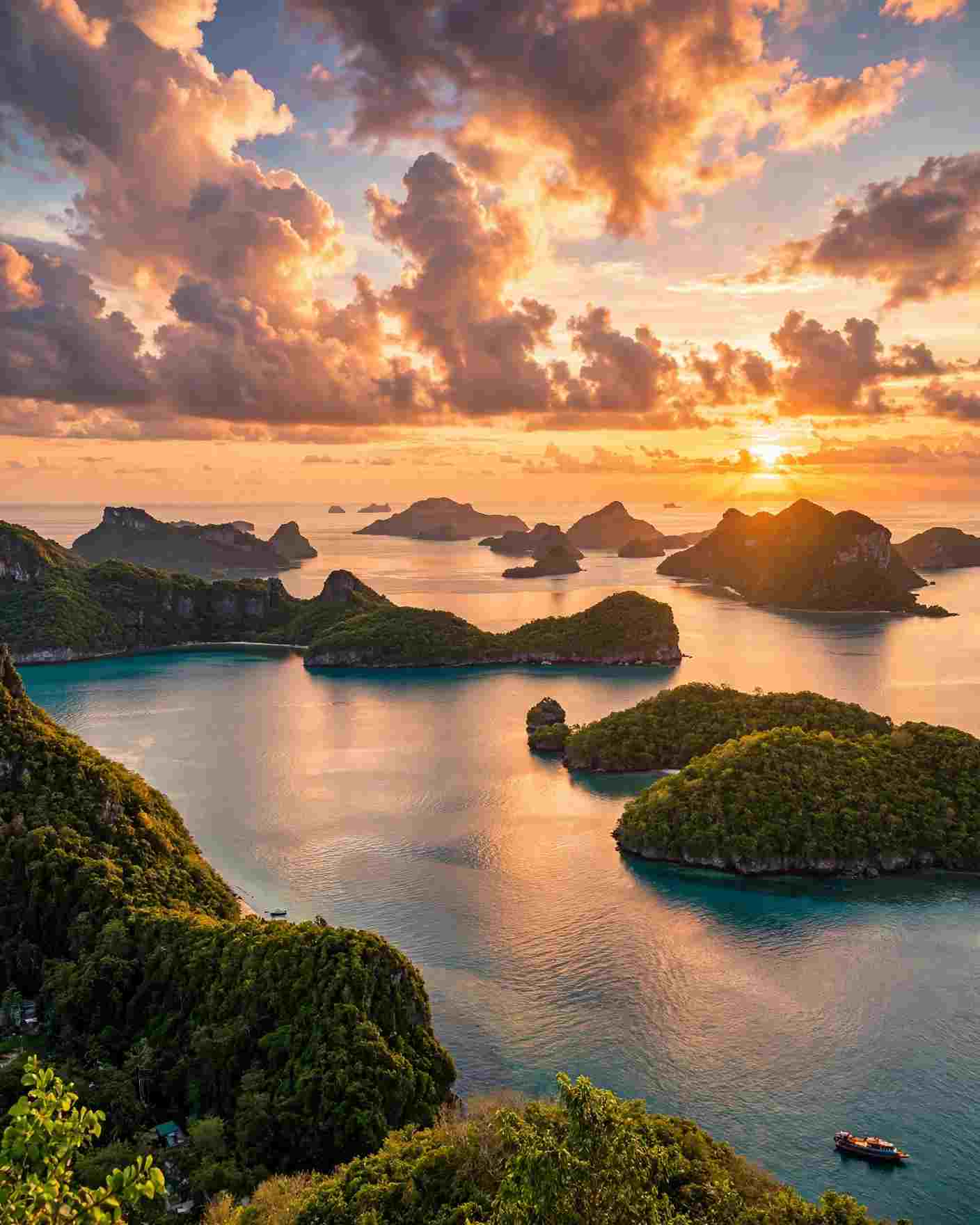
Hundred Islands National Park sits off the coast of Alaminos City in Pangasinan, facing Lingayen Gulf. Its 123 islands and islets become 124 when the tide drops, and only a handful are set up for visitors. Most day trips spend their hours on four or five of them: Governor's for the view, Quezon for snorkeling and the giant clam garden, Children's for shallow water. The park drew about 438,000 visitors in 2023, so timing and boat planning matter more than memorizing the map.
From Cebu, this is a Manila detour rather than a quick side trip. Plan on two nights if you can, so the island day is not rushed and you can start early from the wharf.
Getting There from Cebu
There is no direct flight to Alaminos. Fly from Mactan-Cebu to Manila, a flight of roughly one and a half to two hours, then take a bus north. Victory Liner runs the Cubao to Alaminos route. Its 2025 schedule listed regular air-conditioned fares at ₱670 and deluxe seats at ₱770, with a journey of about six hours. Check the timetable before you book, because departure times change, and reserve a seat for the afternoon trips if you want to arrive while there is still light.
Once you reach Alaminos, take a tricycle to Lucap, the barangay where the wharf and the park's registration office are. The ride is short, usually well under half an hour. If you are arriving late, ask your accommodation whether they can arrange a pickup from the bus stop.
Fees and Boats: What the Day Actually Costs
Every island tour starts with registration at Lucap. The day-tour registration fee has been raised to ₱120 per person, and children aged five and below enter free. Senior citizens and persons with disabilities get a 20 percent discount on the environmental portion when they show a valid ID.
Boats are charged by size and tour length. For a one-day tour, a small boat for one to five passengers costs ₱1,400, a medium boat for six to ten costs ₱1,800, and a large boat for eleven to fifteen costs ₱2,000. Two-day rates run ₱3,000, ₱3,800 and ₱4,500 for the same sizes. Five friends sharing a small boat pay about ₱280 each for the boat, plus ₱120 registration, before food, snorkel gear or activities.
Expect a refundable ₱200 deposit for the garbage bags you receive. You bring your trash back to the office at the end of the tour, and the deposit is returned. Keep the trash separate and bring it back with you, because the staff check it.
Guide assistance is offered as an optional add-on through the tourism office, and published rates have varied from one fee sheet to another. Ask at the wharf for the current amount before you pay. Snorkel gear rents for ₱250 a set, kayaks cost ₱250 an hour for two people, and helmet diving is ₱400 for about 20 minutes. Governor's zipline is ₱250 a jump, while the shorter Quezon zipline is ₱100.
The Islands Worth Your Time
Governor's Island: the view
Governor's has a climb of roughly 180 steps to the View Deck, the highest point in the park. The panorama of the scattered limestone is the reason most first-timers come. Go early, before the midday heat, and wear closed shoes, since the steps are exposed and can get slippery after rain.
Quezon Island: snorkeling and the giant clams
Quezon is the most developed island, with a guest house, gazebos, picnic tables, kayaks and helmet diving. The coral and giant clam garden is the best reason to snorkel here. Lunch hour is the busiest time, so either eat early or ask your boatman to take you to a quieter spot afterward. Do not touch the corals or the clams.
Children's Island: calm, shallow water
Children's Island has calm, shallow water for a long stretch, which makes it the easiest choice for families, non-swimmers and anyone who wants to float without worrying about depth. It is also close to Cuenco Island, where a dome-shaped cave and a seafood restaurant sit beside the beach.
Marcos Island and the cave jump
Marcos Island is known for Imelda Cave and a high jump into the water at its entrance. Jumping is optional. If you go, check the water and the boat crew's signal before you leap, and do not jump while carrying a life vest.
When to Go
The dry months, roughly November to April, give you the calmest seas and the clearest water for snorkeling. From June onward, rain and rougher seas can cancel boat trips for a day or more. Weekdays are noticeably quieter than weekends and holidays, when boats can start filling before 7 AM.
A Simple Two-Day Plan
Day one: Fly from Cebu to Manila in the morning, then take the afternoon bus from Cubao to Alaminos. Check in at Lucap, eat seafood and try the local bangus.
Day two: Register at the wharf before 7 AM, then head to Governor's for the view, Quezon for snorkeling and lunch, and Children's for a swim on the way back. Be on the water with enough daylight to return before the boats stop for the day, and leave time to return your garbage bags for your deposit.
Day three: Take an early bus back to Manila, or extend to a second night if you want a slower morning.
Is It Worth the Trip from Cebu?
If you want island-hopping with clear fees, climbable viewpoints and a calm family option, Hundred Islands is worth the detour. Treat it as a two-night trip built around one full boat day, plan your registration early, and carry cash for the small fees. If you can only spare a single day, the Manila route will take more of it than you expect, so consider a Northern Luzon stop at the same time, such as the Laoag and Pagudpud road trip or a surf stop in San Juan, La Union.