Mount Pinatubo's crater lake sits inside the volcano that erupted violently in 1991, and the trek to its rim is one of the more memorable day hikes in Luzon. The water shifts between green and deep blue with the light, while the route crosses lahar fields and ash-grey gullies that show how much the mountain was reshaped.
Before you plan dates, know that access has stopped more than once. Tourism activities around the lake were suspended in 2020, resumed in October 2021, and were halted again after a steam blast that November. The Capas trail reopened in June 2025 after months of closure, and the Botolan side was suspended in May 2025 for trail reconstruction. Treat any itinerary as provisional until the local tourism office confirms the trail is open.
The trek itself is not technical, but it is long, dusty and hot. Most people do it as a day trip from Clark or Manila, starting before dawn. The trail you choose shapes the day more than the tour company does, so compare the two options before you book anything.
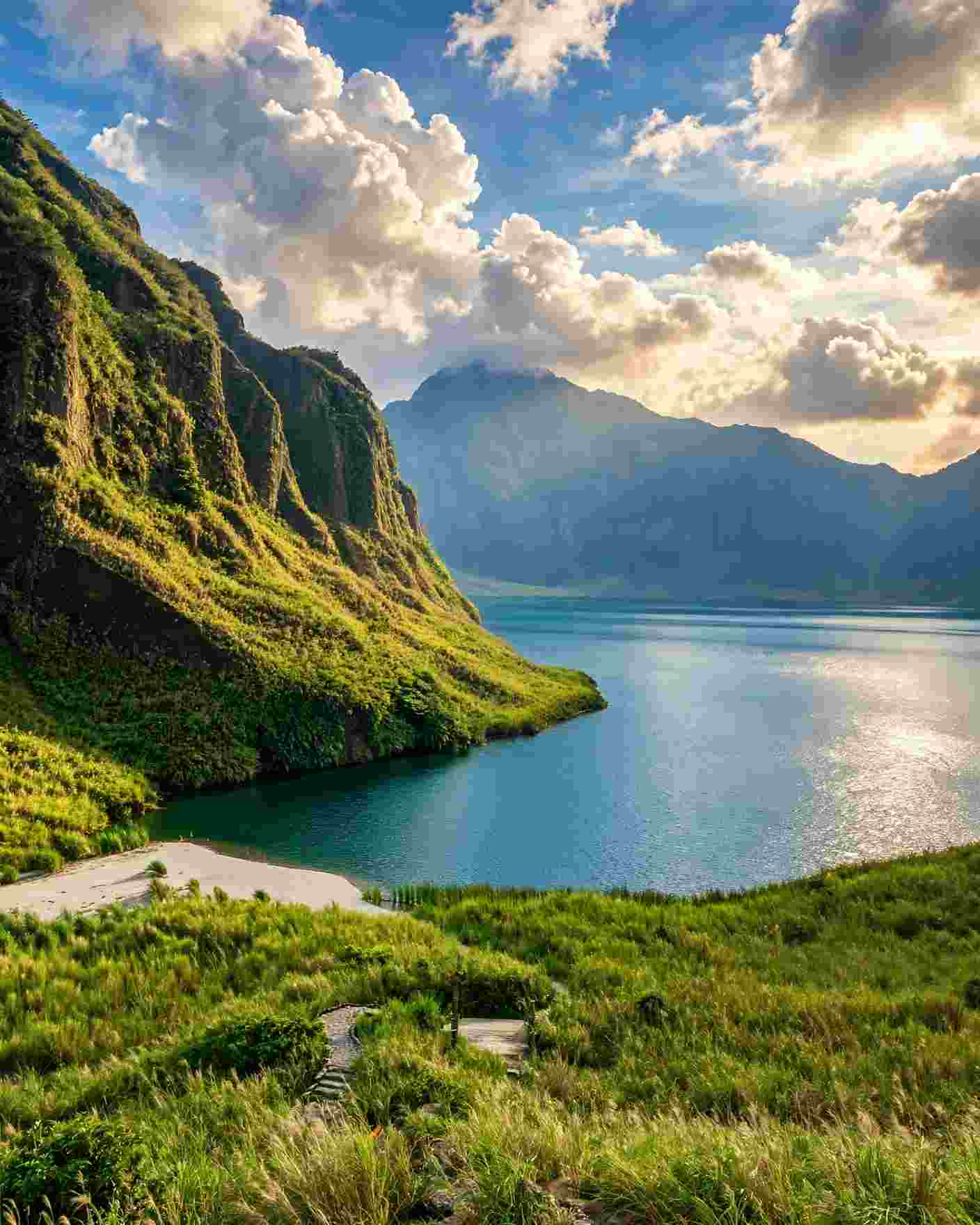
The Capas Trail: The Established Route
Capas is the route most tour operators use. Registration takes place at the Capas Tourism Office in Barangay Santa Juliana, which is also the jump-off point. Plan on a 7:00 a.m. registration cutoff, so arrive around 5:00 a.m. to get a queue number, and confirm the current cutoff when you call ahead.
From the drop-off, a shared 4x4 takes about an hour across the lahar plains and river crossings. The walk from there runs roughly 1.5 to 2 hours one way in the wet season. In the dry season, when jeeps can go farther, it can shrink to around 1 to 1.5 hours. Pack lunch, at least two liters of water and sun protection. The food sold near the crater is limited and priced for captive visitors.
The Botolan Trail: Shorter Access, Less Certainty
The Botolan side begins in Zambales, and fewer operators run it. It approaches the crater from a different direction and avoids the busier Tarlac jump-off, but it carries more uncertainty. Botolan suspended tourism for trail reconstruction in 2025, and the fee dispute between Botolan and Capas goes back to at least 2016, when Botolan's ₱700 tourist fee drew protest. If you are already in Zambales for the coves, Botolan can make sense, but confirm the route is open and book through the Botolan tourism office first.
What the Fees Look Like Right Now
Fees change, so treat the figures below as a planning guide and confirm each one at the tourism office before you pay:
- 4x4 jeep: about ₱3,000 to ₱3,500 per vehicle, shared by up to five people
- Local guide: about ₱500 per group
- Capas eco or conservation fee: about ₱300 per person
- Botolan fee: between about ₱400 and ₱700 per person depending on the operator, so ask whether it is included
- Parking: about ₱50 per vehicle. Showers: about ₱50 to ₱100
If you book a package from Clark, the per-person price falls as the group grows. Published rates from one operator run from about ₱3,600 per person in a group of eight to over ₱13,000 for a solo traveler. Those packages usually bundle the jeep, guide, entrance and fuel, so compare inclusions rather than the headline price. Rates from before 2025 may have shifted, so ask for a written total before you pay a deposit.
Can You Swim in the Crater Lake?
No. Swimming is prohibited for safety reasons after drowning incidents at the lake, and guides enforce the rule. You can reach the shoreline, touch the water and take photos from the viewing area. Older blog posts showing swimmers are out of date and should not guide what you plan to do.
Getting There from Cebu
Cebu has no direct road link to the crater, so you fly and then travel by land. Clark is the closer gateway to Capas. Check the airline's schedule for a direct Mactan to Clark flight, since routes change, and if none suits your dates, fly to Manila instead.
From Clark, a private car or van covers the drive to Capas in a few hours, depending on traffic. Public transport is cheaper but slower, combining a bus with a tricycle. Tricycle fares from Capas Junction to the jump-off are commonly listed at about ₱300 to ₱600 one way, so agree on the fare before you board.
From Manila, buses head toward Tarlac, and many visitors join a van tour that leaves before dawn instead. If you travel on your own, confirm your drop-off with the conductor, because Capas town and Santa Juliana are separate stops. Our Philippines travel budget guide compares flight and ferry costs for the wider trip, and the Manila 24-hour stopover guide is handy if you have a day to spare in the capital.
When to Go
Operators describe the dry season as roughly December to May. In those months jeeps can drive farther and the trek shortens. June to November is the wet season, when treks can run past two hours, river crossings can close and tours get cancelled. Afternoon showers can still arrive in drier months, so start early and plan to be heading down before the sky turns.
Check the local tourism office's social media the day before you go for closure notices, since access can change at short notice.
What to Pack
- Two liters of water per person, plus electrolytes and a packed lunch
- A hat, sunglasses, sunscreen and a buff to keep dust off your face
- Quick-dry clothes and closed shoes with good grip, since lahar sand is slippery on the way down
- A dry bag for your phone and camera
- A trash bag. Everything you bring in goes back out with you
- Cash for guide tips and small purchases
Aeta communities hold ancestral domain claims over the crater area. Treat guides and villagers as hosts: ask before photographing people, and tip your guide, who is part of the community you are visiting.
Choosing Your Trail
For most travelers coming from Cebu, the Capas trail with a registered operator is the simpler choice, with more departures and a clearer process. Pick Botolan only if you are already in Zambales and the trail is confirmed open. Whichever you choose, confirm fees and cutoffs in writing, leave a buffer day after the trek rather than a flight the same evening, and be walking before the sun is high.