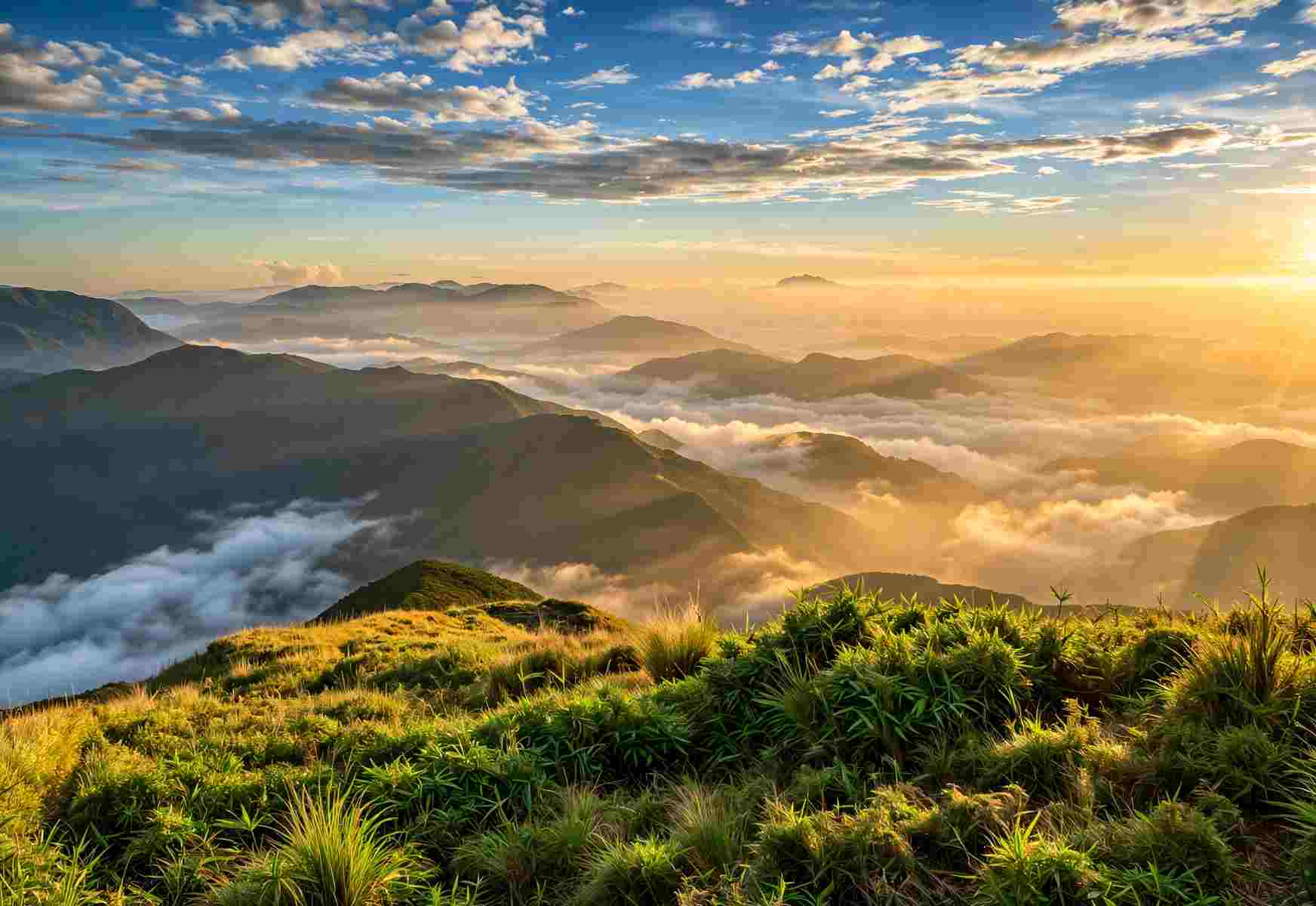
Mount Pulag is the mountain people in Luzon name when they talk about a sea of clouds. At 2,926 meters, the summit rises above a layer of cloud that, on a clear dawn, fills every valley around you. Climbers call the top the Playground of the Gods. The name is grand, but the first light on that white sea is what people remember.
The trip is more of a commitment than it looks on a map. Most visitors need a long weekend at the least, a flight or two, and a bus, and the willingness to stand in the cold at 2 a.m. Pulag is also a protected landscape, declared so by a law signed in 2022, and it is managed under strict rules. Those rules are the reason the trail still looks the way it does, so treat them as part of the plan.
Permits come before everything else
You cannot simply walk up. Climbers need registration and a permit through the DENR office that manages the protected landscape, usually in Bokod, Benguet. Many visitors book through a Baguio-based organizer who handles the paperwork. Expect to show a valid ID and a medical certificate stating you are fit to climb. Most clinics can issue one, so get it before you leave. Then attend the short orientation at the DENR office, which covers the rules and the mountain's cultural importance.
Fees change, and the figures in older guides are already out of date. A 2023 guide listed an entrance fee of 175 pesos on weekdays and 350 pesos on weekends, a separate environmental and cultural fee of 150 pesos, and camping at 50 to 100 pesos a night. Guides and porters are charged on top of that. Confirm current amounts at the office before you pay. Weekends from December to February fill quickly, so book two to three weeks ahead, and go on a weekday if your schedule allows it.
Ambangeg or Akiki: pick your trail
Ambangeg for most first-timers
Ambangeg is the trail most climbers use. It starts at the Babadak Ranger Station, and a shared habal-habal ride from the DENR office costs roughly 250 to 350 pesos a person. The route moves through pine forest, then mossy forest, then open grassland, with no river crossing. One guide puts the summit three to four hours from the ranger station. Altitude slows even fit climbers, so keep a pace you can talk at.
Akiki for experienced hikers
Akiki is a different proposition. The climb is much steeper, can take ten to eleven hours to reach the summit, and usually means camping on the way. It suits people who have already done a few serious mountains and want something quieter. Some hikers link the two trails into a traverse, but the transport has to be arranged in advance because the routes end in different places.
Dress for the cold, not the beach
Coming from sea level, the drop to Pulag is a shock. From December to February, expect temperatures near or below freezing before dawn, with frost on the grass, and the wind on the summit makes it feel colder still. Dress in layers: a synthetic or merino base (cotton holds sweat and turns cold), a fleece or insulated jacket, and a windproof, waterproof shell. Add a hat that covers your ears, gloves, a neck gaiter and two pairs of wool socks. Grippy trail shoes matter more than you might expect, because the path stays muddy before sunrise. Pack a headlamp with spare batteries, and a sleeping bag rated for cold weather if you are camping.
Getting there from Manila or Clark
There is no direct route, so plan four legs. Fly into Manila or Clark. Take a bus to Baguio, which can be an overnight trip from Manila. A taxi from the Victory Liner drop-off in Baguio to the Old Slaughterhouse Terminal takes about 10 to 15 minutes. From that terminal, catch a commuter van to Kabayan. Vans leave about hourly from around 7 a.m., the ride takes two to three hours and costs about 150 to 250 pesos, and you should ask to be dropped at the DENR office in Kabayan. Miss the last van and you may be stuck, so plan your arrival in Baguio around the morning run. For the Baguio leg, our Baguio guide covers the city in more detail.
A workable timeline looks like this. Fly out on Thursday night, reach Baguio on Friday morning, and finish the permit and orientation. Spend Friday night near the ranger station, start climbing around 1 to 2 a.m. on Saturday, and aim for the summit before sunrise. Head down, return to Baguio that evening, and fly home on Sunday. Build in a spare day if the weather or transport does not cooperate.
What the trip costs
Land costs from Baguio add up quickly. Fees, a guide and porter, transport in and out, a homestay and meals come to a few thousand pesos per person for a do-it-yourself trip, while a tour costs more in exchange for less planning. Guides are priced per group, so five people share the cost far better than two. Flights depend mostly on how early you book. For a broader view of the air leg, see our ferry and flight budget guide, and for the practical side of getting around the Philippines, check arrival basics and money.
Why the rules are strict
The rules are not just paperwork. In early 2018, the DENR said it would sue seven hikers over a blaze inside the park. Fires in the surrounding forests have also led to closures, including of the Akiki trail. Stay on the trail, carry out all your rubbish including tissue, do not pick plants, and keep voices low before sunrise. The mountain is sacred to the Ibaloi, Kalanguya and Kankana-ey peoples, and that deserves respect at the summit.
Which trail fits you?
If you want the sea of clouds with a limited schedule and little mountain experience, take Ambangeg. You get the sunrise with manageable effort, and the trip can fit into one overnight. If you have climbed big mountains, have two full days, and want solitude, Akiki asks more and gives more back.
Either way, the sea of clouds is never guaranteed. It depends on the weather and on how the cloud settles in the valleys overnight. Bring layers, a headlamp and patience, and let the morning decide the rest.