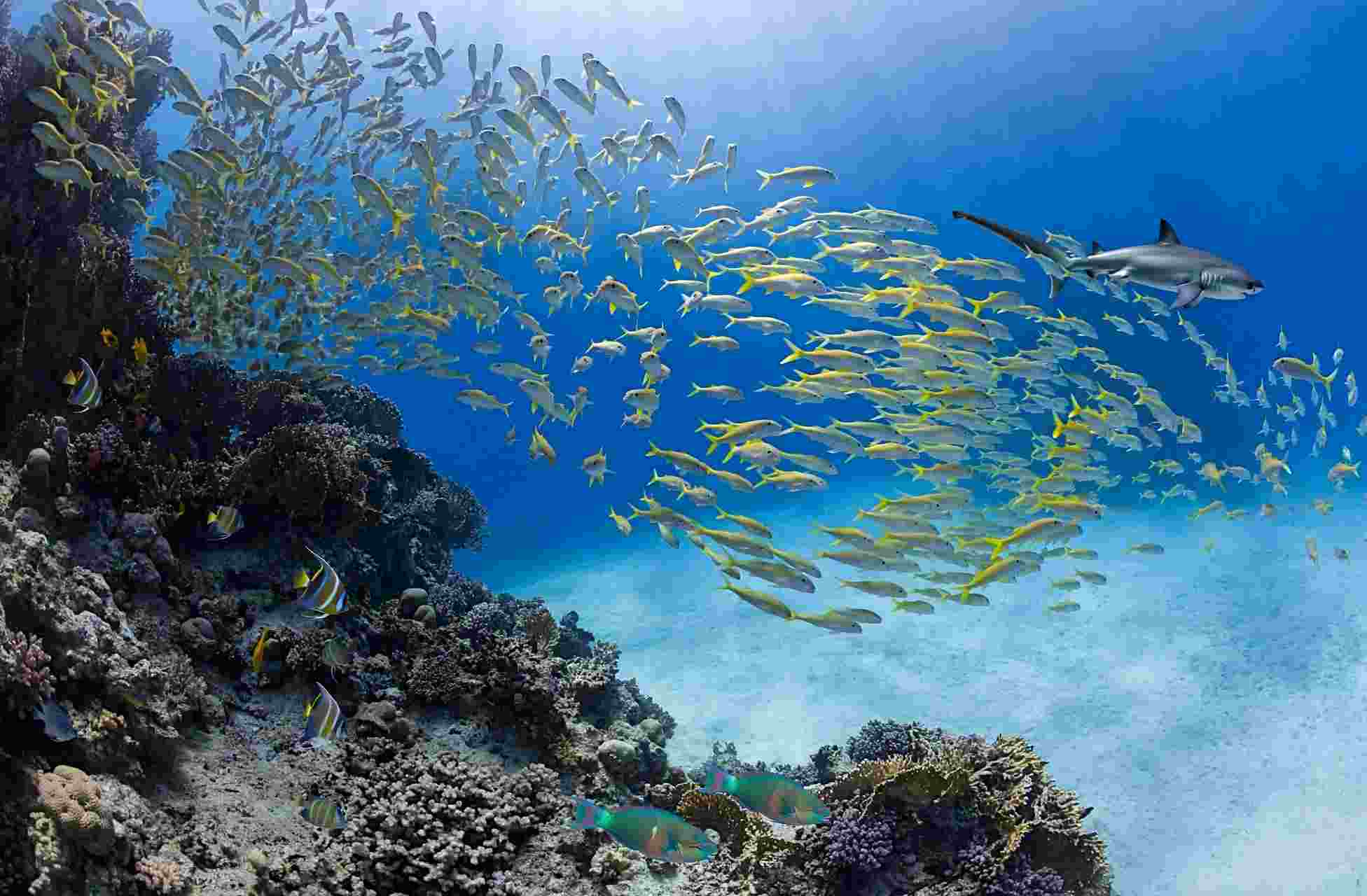
Malapascua is a small island off the northern tip of Cebu, and most divers who make the trip come for one animal: the pelagic thresher shark, a slender shark with a tail nearly as long as the rest of its body. Seeing one at recreational depth is rare in most of the world, which is why a bus ride and a boat crossing from Cebu City can be worth organising around a single dawn dive.
The sharks visit cleaning stations on the reef, where small fish pick parasites off their skin. They are shy, they come in around first light, and they can be seen through the year. Seeing one is likely rather than guaranteed, so plan for more than one morning.
This guide covers the two shoals where the dives happen, who can join them, how to get to the island from Cebu City, what to budget, and how many nights to book.
Monad Shoal or Kimud Shoal?
Monad Shoal made Malapascua famous, and many older articles still point there. It is a deep underwater plateau a short boat ride from the island, and the thresher dive there usually means going to around 30 metres or more. In recent years, many divers report that Kimud Shoal is the more productive site. It is further offshore, with the top of the ridge around 14 metres and the cleaning stations deeper, at roughly 28 metres.
Some divers believe the sharks moved because larger predators such as tiger sharks and hammerheads turn up around Monad. Whatever the reason, ask your shop where it is running its thresher boats that week, and expect the answer to be Kimud more often than not. Kimud is about an hour by boat, so it is the longer ride of the two.
Who Can Do the Dive
The cleaning stations are deep, and boats leave in the dark, so operators generally ask for Advanced Open Water certification. Some shops may take Open Water divers on Kimud with an instructor, but policies differ, so message the shop with your certification level and your date of last dive before you book.
If you are not yet advanced certified, Malapascua has dive schools that run the Advanced course on the island. It adds days and money, but it is a practical way to qualify without planning a separate trip. If you have not dived for a year or more, expect a refresher dive first.
What a Thresher Morning Looks Like
Boats usually leave before dawn, which means a wake-up call around 4 a.m. and coffee in the dark. The sharks tend to retreat to deeper water once the sun gets bright, so the early slot matters.
Once at the shoal, the routine is quiet and patient. Divers settle low and hover away from the cleaning stations so the sharks and the cleaner fish are not disturbed. Chasing a shark, kneeling on coral, or tapping a tank pushes them away, and flash photography is prohibited. Good buoyancy and slow breathing do more for your chances than any gear.
A single thresher dive wraps up early, and a day with two or three dives can stretch into the early afternoon. Choose your timing with that in mind.
Getting to Malapascua From Cebu City
There is no bridge, so the trip has two parts. First, take a bus from the Cebu North Bus Terminal to Maya, the port at the far end of Daanbantayan town. Allow four to five hours, and more on holidays and weekends. Vans also run on northern routes, and a direct hotel or private transfer saves effort if you have lots of luggage.
From Maya, public boats cross to the island in about 30 to 45 minutes. The fare has recently been around ₱240, and the Daanbantayan tourism office lists an environmental fee, which has been ₱75 for local visitors and ₱120 for foreign visitors. These figures change, so confirm them with your resort or the tourism office and keep the receipt. Boats run from morning until late afternoon and can leave when full, wait for passengers, or be cancelled in rough weather.
The practical advice is to aim to reach Maya by mid-afternoon at the latest. If you miss the last public boat, a private charter is the fallback, and it costs far more. Do not plan a same-day connection around the boat times.
Reach Malapascua the day before your thresher dive. The boat leaves too early to join from the mainland, and arriving the night before also gives you time to meet the shop and sort your gear. Two or three nights is a sensible minimum, as the extra mornings are your buffer for a shy shark or a day when the sea is too rough to go out.
What It Costs
Thresher dives usually run around US$30 to US$40 each, and a three-dive thresher package has been priced at about ₱6,000. A regular local fun dive on the island starts around ₱1,800. Gear rental, shoal or marine park fees and the boat charge are sometimes included and sometimes added on top, so ask for the all-in price in writing when you message the shop.
Add the bus fare, the Maya boat, the environmental fee, meals and your room. Bring enough cash for the island, since card payments and reliable machines should not be assumed. A second or third dive day adds to the bill quickly, so work out your total before you commit to a package.
When to Go
Threshers can be seen year-round, so you are not chasing a season for the sharks themselves. December to April is the busiest stretch for visitors, which means rooms and dive boats book up, so reserve early. Sea conditions affect boat departures at any time of year, which is another reason to keep a spare day. For general weather and crowd patterns across the island, see our month-by-month guide to the best time to visit Cebu.
If You Do Not Dive
Malapascua is a small beach island with a quiet village feel, and it works for a slow couple of days. But a long journey for a dawn dive you will not join is hard to justify, so be honest about what you want. Non-divers can try an introductory course or snorkel the shallow reefs, though neither is the draw that the thresher dive is.
For divers, the usual second-day trip is Gato Island, a protected islet known for sea snakes and its caves. If your main aim is snorkelling with fish schools rather than sharks, the Moalboal sardine run is much closer to Cebu City and can be done from the shore. Malapascua also appears in our look at how Cebu tourism is moving beyond the city.
Practical Tips Before You Book
Bring your certification card and logbook. Keep your torch off at the cleaning stations and leave the flash at home. Equalise early on the descent, and consider a hood or vest if you chill easily at depth. Most importantly, avoid flying on the same day you dive: follow your dive computer and your shop's guidance on no-fly time, which is commonly 18 to 24 hours after diving.
Is Malapascua Worth the Journey?
For a certified diver, yes, if you accept the logistics. The reef is not the main show here. It is a pre-dawn dive spent hovering quietly while a long-tailed shark glides in from the blue. Give yourself two or three mornings, ask the shop where the sharks have been showing up that week, and keep an extra day in the plan. That is what turns a long bus-and-boat trip into a reliable one.