Most people cross to Samal for a resort day: a cottage, a swim, a plate of grilled fish, and a boat back to Davao City before dark. That is a fine way to spend an afternoon, but it leaves out the parts of the island that have nothing to do with resort wristbands. Samal has a cave holding the largest known colony of one fruit bat species, a sandbar that sinks twice a day, a fisherfolk-run garden of giant clams, a waterfall that has just reopened after years of closure, and a smaller island to the south where power is still limited.
This guide covers those places, how to string them together, and what to sort out before you go. The island's official name is the Island Garden City of Samal, and locals often shorten it to IGaCoS. It is split into three districts: Babak in the north, Samal (centred on Peñaplata) in the middle, and Kaputian in the south. Thinking in districts saves a lot of back-and-forth on the road.
The boat crossing, ferry wharves and the basic beach-day plan are already in our Davao travel guide, so this piece starts once you are on the island. The Davao–Samal bridge is still under construction, with completion targeted for 2028, so for now every visit begins with a short boat ride.
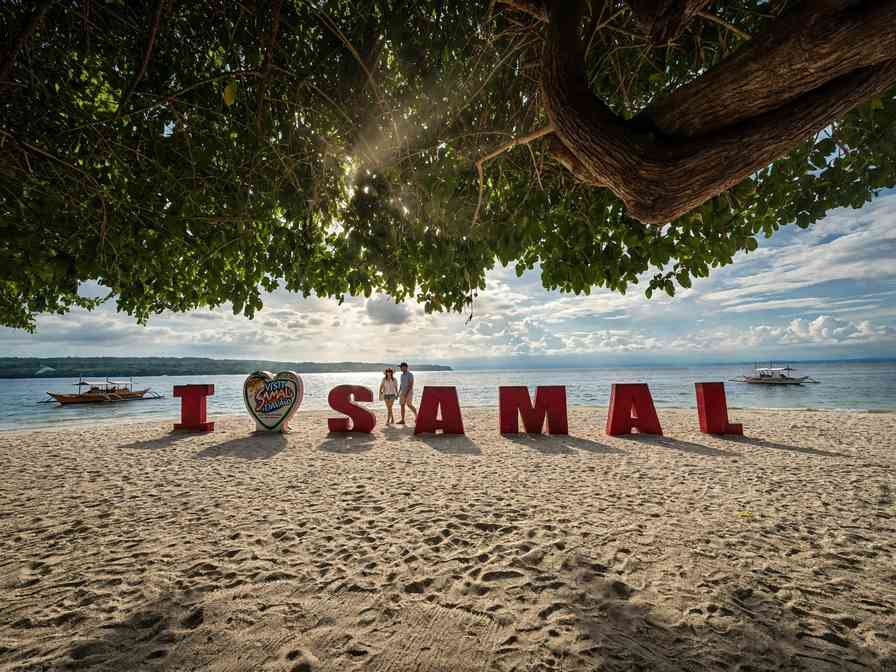
Babak: Bats and a Sandbar in the North
Babak is where most ferries from Davao City land, which makes it the easiest district to explore first.
Monfort Bat Sanctuary
The cave sits on private land in Babak, near the island's northern end, and is protected by the Monfort family, who own the property. It is home to Geoffroy's rousette fruit bats, and Guinness World Records has listed it as the largest single colony of the species. Counts have been put at close to two million bats, though nobody can tally them precisely.
You do not go inside. The cave is roughly 75 metres long with several openings that face upward, and visitors look down into them from behind fences. Expect the smell before you see anything. Keep your voice low, skip the flash, and hold on to your phone when leaning over the rail. There is a small entrance fee, collected at the gate. Ask there about current opening hours before planning the rest of the day around it.
Vanishing Island
Its official name is Sanipaan Shoal, a sand and seagrass bar a few minutes by boat off Tambo in Babak. At low tide it rises out of the water and you can walk on it. At high tide it drops back under, and all you get is waist-deep water and a view of the floating cottages anchored nearby.
Timing is everything here. Check a Davao tide table the night before and plan to be on the water an hour or so before low tide. Boats are arranged locally in Tambo, usually as a short hire for a small group; agree on the price and how long the boatman will wait before you leave the shore. Bring reef-safe sunscreen and water shoes, since the bar is partly seagrass and the sun on it is harsh by mid-morning.
Adecor's Giant Clam Garden
Barangay Adecor runs one of the more thoughtful wildlife visits in the Davao Gulf. The waters off the village were declared a marine park in 1999, and since 2013 the Adecor United Fisherfolk Organization has guided visitors through it under a project supervised by Davao del Norte State College. The farm holds more than 3,700 giant clams across six species, including a large share of mature ones.
The Taklobo Tour takes about two hours. A banca brings you to a floating cottage for a briefing, then you snorkel for around an hour over the clams, with a life vest on and masks provided if you need them. Touching the clams is not allowed. The farm sometimes closes for a few days for guide training, as it did in May 2026, so message ahead before you build a day around it.
Hagimit Falls, Open Again
Hagimit, in Barangay Cawag near Peñaplata, was closed by the city in late 2022 because the stream also feeds the island's water supply. After a long rehabilitation it reopened in 2026, with closer monitoring of visitors. It is a set of low, stepped falls dropping into cold pools, shaded by forest, about 30 to 45 minutes by road from Babak wharf.
There are two ways in. The budget gate at Casa Tanaw charged ₱150 for adults and ₱50 for children as of mid-2026, with cottages from ₱300 and no corkage, so you can bring your own food. The Stream Valley Nature Park side, run by Virtuquest Samal Resort and Spa, costs ₱1,000 and bundles food vouchers, private pools and a shuttle. Confirm both prices before you go, since rates were still settling after the reopening.
Wear shoes with real grip, as the limestone is slick when wet, and expect about 120 steps down to the lower pools and the same climb back. Everything you carry in has to come back out with you. Weekends fill up, so arrive early.
Talikud: The Island Off the Island
Talikud belongs to Samal city but feels a decade behind it, in a good way. Resorts are simple, electricity and water are limited, and the main reasons to come are snorkelling and doing very little. Coral Garden and Angel's Cove are the usual snorkel stops, and Mansud Wall is a known dive site for those with a dive operator.
Most people reach Talikud directly by boat from Santa Ana Wharf near Magsaysay Park in Davao City, a ride of an hour or more, rather than going through the main island. Boats run in the daytime only and the last trip back leaves in the afternoon, so check the schedule at the wharf on the way out. If you stay overnight, bring a power bank, cash and a flashlight, and expect to pay a resort to cook whatever fish you buy.
Linking the Stops in One Day
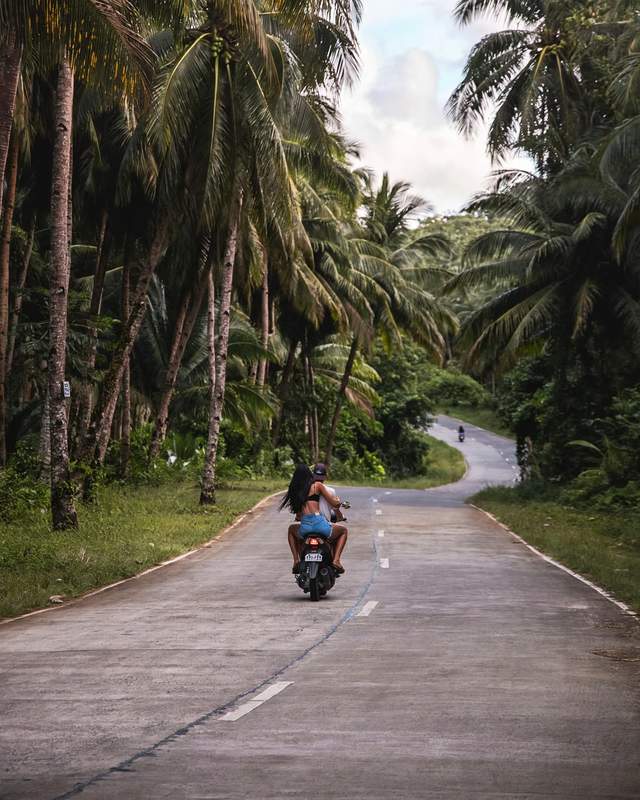
Samal is bigger than it looks on a map, and the roads into the interior are slow. Most visitors hire a tricycle or habal-habal for the day, or a van with a driver for a group. Settle the route and the total price before you set off, and keep small bills for gate and environmental fees.
A workable loop, if low tide falls in the morning, looks like this:
- Early: boat out to Vanishing Island from Tambo while the bar is exposed.
- Late morning: Monfort Bat Sanctuary, close by in Babak.
- Lunch: anywhere along the road south, or packed food at Hagimit.
- Afternoon: Hagimit Falls for a cold swim before heading back to the wharf.
The giant clam tour fits on a separate morning, since it needs calm water and a booking. Talikud deserves its own day, ideally with a night on the island. If you have spare time on the mainland, the Philippine Eagle Center in Malagos is another wildlife visit run on conservation lines, and pairs well with the bats and clams.
Crowds, Weather and Timing
Samal gets very busy around long holidays. The city counted nearly 48,000 arrivals over Holy Week 2026 alone, most of them local day-trippers and families. Undas, Christmas and summer weekends follow the same pattern, with longer queues at the wharves and fuller resorts. Weekdays outside those dates are far calmer at the falls and the sandbar.
The Davao Gulf usually sits outside the main typhoon tracks, but afternoon squalls and rough water still cancel small-boat trips. Plan anything that needs a banca for the morning, and keep the falls and the bat cave as your backup when the sea is choppy.
Which Stop to Choose If You Only Have a Few Hours
Pick Monfort if you want something you cannot see anywhere else, and Hagimit if you want shade and fresh water after a hot week in the city. The sandbar rewards people who check the tides, and the clam garden rewards those who book ahead. Talikud is for anyone willing to trade comfort for quiet. Any one of them makes a better story than another afternoon by a resort pool.
Comments
No comments yet. Been here recently? Share a tip or ask a question.
Leave a Reply