The Philippine Eagle Center in Malagos, Baguio District, is where Davao keeps the Philippines' national bird in sight of ordinary visitors. It is a conservation breeding site run by the Philippine Eagle Foundation, set on about 8.4 hectares of forest near the foothills of Mount Apo, roughly 32 kilometers from downtown Davao City. Entry is PHP 150 for adults, the gates open daily from 8 AM to 5 PM, and most people finish the visit in one to two hours.
Expect a working conservation facility, not a zoo. Rescued birds, breeding enclosures and education displays take up most of the grounds, and roughly 30 to 36 Philippine Eagles live here at any given time, including captive-bred birds such as Pag-asa. The eagles are the reason to go. Everything else is a supporting cast.
This guide covers the three ways to reach the center, the current fees, what the trail actually shows, and how to stretch the same trip into Malagos' other attractions so the long ride feels worth it.
How to Get to the Philippine Eagle Center in Malagos
Davao's Francisco Bangoy International Airport (DVO) is the entry point for most visitors, and the center lies about 45 minutes to an hour from the city by road when traffic is light. On a weekend or at rush hour, allow up to an hour and a half.
The easiest option is a Grab or taxi. Grab from downtown has run about PHP 600 to PHP 900 one way, and a metered taxi usually lands a little lower. If you want to avoid hunting for a ride back, ask the driver to wait. A van with waiting time has been quoted at roughly PHP 2,500 to PHP 3,500 for the round trip, which makes sense when four people split it or when you plan to add Malagos Garden Resort and Eden Nature Park to the same day.
The budget route takes longer but is straightforward. Go to the Annil Transport Terminal in Davao City and board a bus bound for Calinan. Buses run frequently, take about 45 minutes to an hour, and the fare has been around PHP 50 to PHP 80. At the Calinan public market, ride a habal-habal or pedicab for the last 10 to 15 minutes, usually PHP 50 to PHP 100 per person. Agree on the fare before you climb on, and ask the driver to point out the return pickup spot.
A third option is a Davao day tour that bundles the center with Malagos and Eden. Group rates have ranged from about PHP 1,800 to PHP 3,200 per person with van, guide and entrance fees, which is a fair deal if you would rather not arrange anything yourself. For the rest of your time in the city, our Davao guide to Samal Island, Mount Apo and food fills out a second day.
Entrance Fees and Opening Hours
The center is open daily from 8 AM to 5 PM, and last entry is normally around 4:30 PM. Heavy rain can shorten the day, so check the foundation's page if the weather looks bad.
Adults pay PHP 150, senior citizens PHP 120 with a valid ID, and youth aged 4 to 17 PHP 100. Children 3 and under enter free. A separate Malagos watershed fee of about PHP 5 per adult and PHP 3 per child is collected at the gate before the center. Bring cash in small bills, because the gate staff and habal-habal drivers rarely have change for a PHP 1,000 note, and card terminals are unreliable. Fees change, so confirm them at the gate.
What You Will See on the Trail
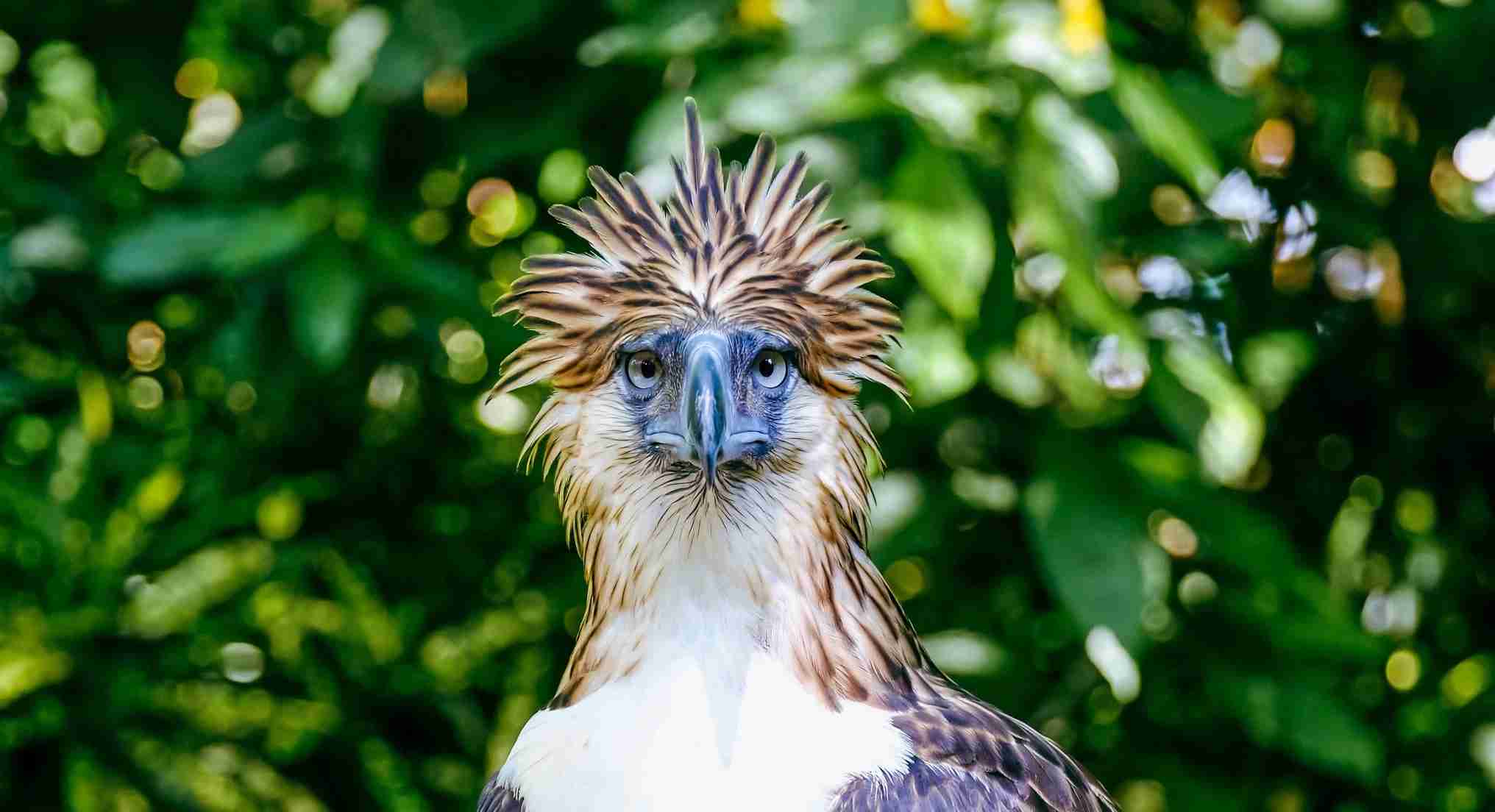
The main path loops past individual enclosures, and each one has a board with the bird's name, age and how it arrived. Some eagles were rescued from injury, others hatched here, and the boards make it easy to follow their stories. The Philippine Eagle is among the largest and rarest eagles anywhere, with a wingspan of around two meters, a shaggy crest and a heavy bill. Seeing it perched at close range is the highlight of the day.
The center also keeps a few other birds, a handful of mammals and some reptiles, including rescued raptors and crocodiles used for education. The collection is small, so do not plan around it. Instead, spend time at the breeding facilities and the education hall, where the foundation explains how captive breeding works and why forest loss, hunting and conflict with people remain the main threats. If a keeper talk is scheduled during your visit, it is worth sitting through. Ask at the entrance for the day's times.
The grounds are secondary forest with ferns, tall trees and shaded benches. The loop takes one to one and a half hours at an easy pace, closer to two if you read every board. Eagles are most active in the cooler early hours, roughly 8:30 to 10:30 AM, so try to arrive near opening. Keep your voice low, skip the flash, and stay on the marked path. Many of the birds are survivors of trauma, and noise stresses them.
Why the Visit Matters
The Philippine Eagle is critically endangered and found only in the Philippines. Wild numbers are low, and estimates are often put at a few hundred pairs. The foundation works on four fronts: breeding, rescue and rehabilitation, forest protection with indigenous communities, and education. Releasing a bird is not simple, because the forest, the prey and the people around it all have to be safe first. That is why the field work around Mount Apo matters as much as the enclosures you walk past.
Your entrance fee goes toward that work. The foundation also runs a symbolic eagle adoption program and accepts donations near the exit, so ask there if you want to give more. Pricing for adoption varies, so confirm it at the office.
Add Malagos' Other Stops
Since the center is about an hour out of the city, it makes sense to bundle it. Malagos Garden Resort is two to three kilometers away and has a bird dome, a butterfly sanctuary and an orchid garden, with garden entry around PHP 100 for adults and day-use packages that cost more. The Malagos Chocolate Museum offers a tree-to-bar tour with tasting, typically around PHP 650 to PHP 700. Eden Nature Park is about ten minutes further, with day-tour entry around PHP 200 to PHP 300. A tricycle between the center and the resort costs PHP 50 to PHP 80.
If animals are your reason for traveling, our Philippine Tarsier Sanctuary guide pairs well with this one as a Visayas counterpart.
Best Months and a Simple Budget
November to May is the drier stretch and the easier one for walking. December to February is the coolest, and March to May is hot, so go early. June to October brings muddy trails and afternoon showers, but the center stays open and crowds thin out. Hotel prices in Davao climb during Kadayawan in mid-August, so book ahead if your dates overlap.
For one person using public transport, a half-day visit costs about PHP 400 to PHP 800 in transport and fees. A private van split four ways comes to about the same. Add food at a local carinderia, usually PHP 150 to PHP 350 a meal, and a budget room in the city, often PHP 1,000 to PHP 1,800 a night. Our Philippines travel budget guide helps you plan the airfare side of the trip.
Is the Philippine Eagle Center Worth the Trip?
For PHP 150, yes, as long as you want to see the national bird and understand what protecting it takes. Go early, bring water and a cap, carry small bills, and pair the visit with Malagos so the ride pays off. If you expect rides or large animal exhibits, this is the wrong place. If you like quiet forest paths and a good reason for being there, it is one of the better half-days in Davao.