Two of Negros Occidental's best-known heritage stops sit in different cities and work best at different hours. Silay's ancestral houses belong to the morning, while the museums are open and the heat is bearable. The Ruins in Talisay belongs to the last hour of the day, when the old mansion catches the low light and the garden lights come on. Do them in that order and the day ends near Bacolod, in time for dinner.
Both stops also come with a catch that older guides skip. Balay Negrense, the best-known house in Silay, is in a multi-year conservation programme and has been closed for repair. The Hofileña house lost its longtime curator in 2021 and now needs a call ahead.
Below: what each stop is, what it costs, how to order the day around opening hours and light, and how to reach Negros from Cebu. The airport is in Silay and Talisay lies between Silay and Bacolod, so the route runs naturally from north to south.
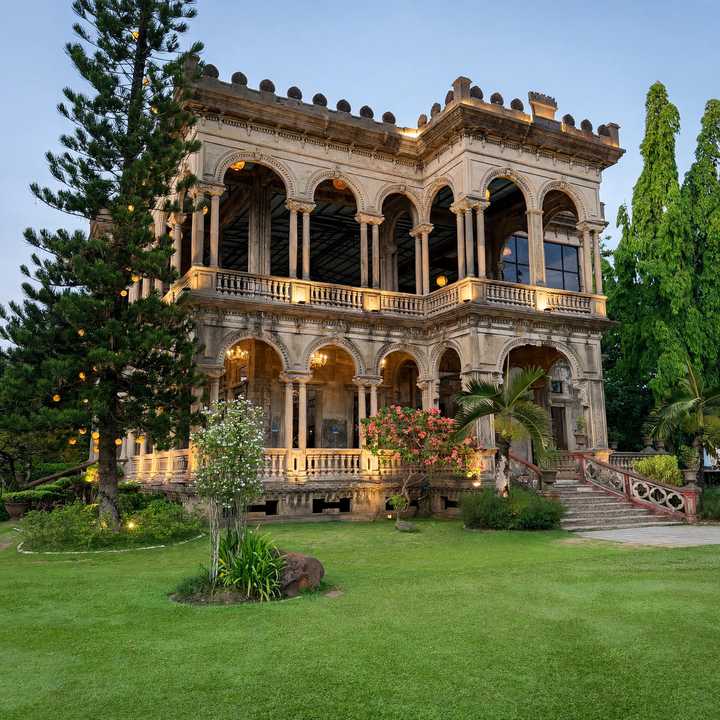
The Ruins: A Mansion Built for a Wife
Don Mariano Ledesma Lacson, a sugar planter, built the Italianate mansion in the early 1900s in memory of his wife, Maria Braga, who died in childbirth. It was a family home until the Second World War, when guerrillas set it on fire so Japanese forces could not use it as a headquarters. The blaze is said to have burned for three days. The thick walls, columns and arches survived; the roof and interiors did not.
The family still owns the property, which is kept as a ruin and surrounded by farmland. An hour is enough for most visitors. A short video on site tells the story, the arched ground floor and upper veranda are the photo spots, and the lawn is where you stand back for the full facade.
Fees, hours and timing
Entry is PHP 150 for adults, PHP 100 for seniors and persons with disability, and PHP 80 for students. Children under 8 get in free, and photoshoots are charged separately. It opens in the morning and closes at 8 PM, but the estate is also a wedding and events venue and shuts on days reserved for functions, so message or call before you build a day around it. Bring cash.
Arrive about an hour before sunset. That gives you daylight for the stonework and time to stay when the lights come on. The last stretch is a narrow street past a memorial park, marked by small signs on utility poles, so leave extra minutes if you are driving.
Silay: A Street Built on Sugar Money
Silay grew rich on sugar, and about 30 ancestral houses from that era still stand, many of them private homes. Only three work as museums: Balay Negrense, the Hofileña house and the Jalandoni house. The rest you enjoy from the pavement along Cinco de Noviembre and Rizal Street. Cinco de Noviembre is named for 5 November 1898, the day of the uprising that Negros marks every year as Negros Day. Museum tickets here have long cost only tens of pesos, but rates change, so keep small bills.
Balay Negrense
Victor Fernandez Gaston, son of the Normandy-born sugar pioneer Yves Gaston, built this house around 1900, and it ran as a museum from 1990. The lower storey is concrete, while the posts, floors and upper level are balayong wood under an iron roof. The provincial government took over its upkeep in 2023, and a conservation programme of up to five years followed. Treat the facade on Cinco de Noviembre as a free photo stop, and ask locally before counting on going inside.
Hofileña Heritage House
Manuel Severino Hofileña built the house in 1934 for his wife, Gilda Ledesma Hojilla, and their nine children. It became Silay's first house museum in 1962. The upstairs gallery holds works by Juan Luna, Fernando Amorsolo and other Filipino masters, plus a work by José Rizal. Ramon Hofileña, the curator who guided visitors for decades, died in 2021, but the house still receives guests. Cameras are not allowed upstairs after an Amorsolo painting was stolen and later recovered. Tours are arranged with the house, so call or message first rather than turning up.
Jalandoni and the rest of the street
The pink Jalandoni house on Rizal Street is the easiest third stop. A few blocks away, San Diego Pro-Cathedral was finished in 1925 to a design by the Italian architect Lucio Bernasconi. El Ideal Bakery, in a heritage house on Rizal Street, has been baking since 1920, which makes it a sensible lunch or merienda stop. The Golez house is now a bank branch, so admiring it costs nothing.
A Day Plan That Follows the Light
Morning: land at Bacolod-Silay Airport, drop your bag at your Silay stay if you have one, and walk Cinco de Noviembre. Visit the Hofileña house at the time you arranged, then see the Balay Negrense facade.
Midday: Jalandoni house, the cathedral and a bakery stop on Rizal Street. Rest indoors through the hottest hours.
Late afternoon: head south to Talisay and reach The Ruins about an hour before sunset.
Evening: continue to Bacolod for dinner. The Bacolod food trail covers chicken inasal, piaya and where to find them.
Getting There From Cebu
Cebgo and Philippine Airlines fly Mactan-Cebu to Bacolod-Silay in about an hour. The airport is in Silay itself, roughly 15 kilometres from Bacolod, so you land close to the heritage street instead of the city. Current schedules include very early departures and evening returns, so a single long day is possible, but a night in Silay or Bacolod is far less rushed. Flight times change, so check before you book.
The slower route is the Lite Shipping ferry from Toledo to San Carlos, about two hours from PHP 440, followed by a bus south along the northern coast. Silay comes before Bacolod on that road, so ask the conductor to drop you there. Budget seven to eight hours from Cebu City, which means an overnight stay. Silay's heritage street is walkable, but between Silay and Talisay you will need a taxi or hired vehicle.
When to Go and What to Expect
The drier months from November to May suit walking Silay and an open-air mansion. October brings MassKara crowds to Bacolod, so book flights and rooms early if you travel then. For a contrast with Silay's sugar-era mansions, try the heritage walk through Cebu's old houses and streets. Heading further south afterwards? The Sipalay and Danjugan Island guide picks up from Bacolod.
This trip suits people who enjoy facades, stories and light more than interiors. While Balay Negrense is closed, the Hofileña house and The Ruins carry the day, and both reward a call beforehand. Wear comfortable shoes and carry cash and water.