


Calayan sits in the Babuyan Islands, off the northern tip of Luzon in Cagayan province, and reaching it takes a long trip to the coast followed by a small outrigger boat across the Babuyan Channel. What waits on the other side is Sibang Cove's long curve of pale sand, grassy hills high above the sea at Nagudungan, and a sea cave you reach by boat, with very few other visitors around.
The honest part first: the sea runs this trip. Boats leave only when the channel is safe, departures can be once a day or less, and a crossing that was on yesterday may be off today. People who enjoy Calayan tend to arrive with spare days and a loose plan. Those who try to squeeze it into a long weekend often spend it waiting at the port.
This guide covers the main sights, the two mainland ports and how to reach them, a six-day plan with room for bad weather, the months when the channel is usually calmer, and what to sort out before you leave the mainland.
Calayan Island at a glance
- Where: Babuyan Islands, Cagayan province, off the north coast of Luzon
- Jump-off ports: Claveria or Aparri, Cagayan
- Boat: local motorized outriggers known as lampitaw
- Main sights: Sibang Cove, Nagudungan Hills, Lusok Cave and Lagoon, Bataraw Falls
- Plan for: 4 to 6 days, including weather buffers
- Calmer seas: usually March to May
What Makes Calayan Different
Calayan has none of the resort strips, dive shops or tour desks you find in El Nido or Boracay. It is a working island of fishing and farming families, with limestone cliffs, grassy headlands and quiet coves along its shore. Days here are simple: walk a beach, climb to a viewpoint, swim where the water is calm, and eat whatever the kitchen has that day.
The island is also home to the Calayan rail, a flightless bird found nowhere else in the world. Spotting one is never guaranteed, but it is a good reason to walk quietly and stay on the paths your guide picks. If the far north appeals to you, our Batanes guide covers the better-known trip in the area. Calayan is rougher than Batanes, with fewer services and less predictable transport.
Places to See on Calayan Island
Sibang Cove
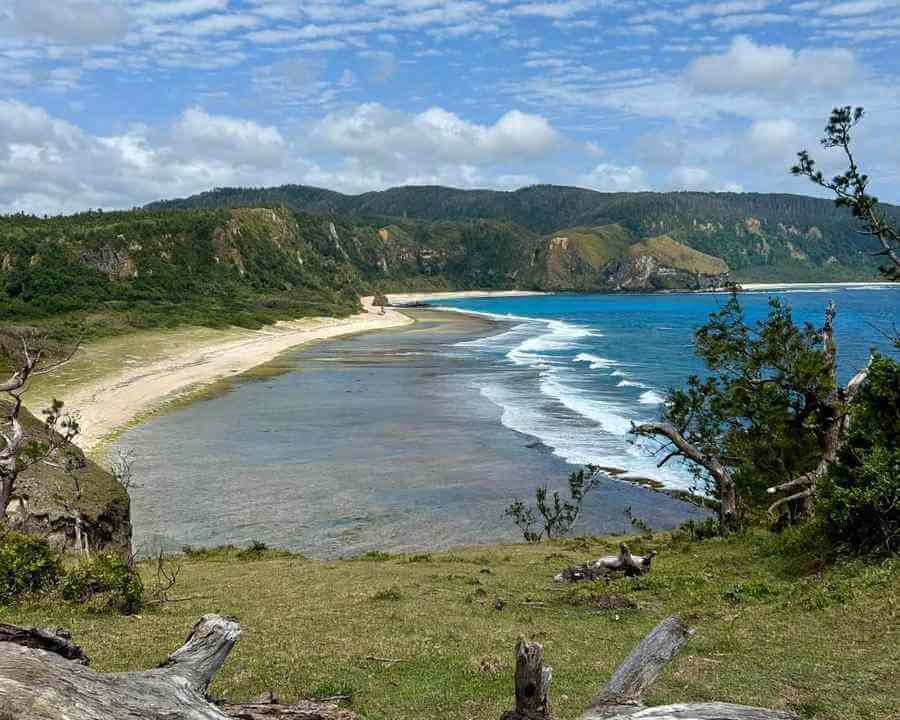
Sibang Cove is the view most people picture when they hear the name Calayan: a wide crescent of pale sand with green cliffs and hills rising behind it. It is the spot for long walks, photos and a slow afternoon. The water can look calm from the shore while currents run further out, so swim only where locals say it is safe, and stay on the sand when the waves pick up.
Nagudungan Hills
The grassy slopes of Nagudungan look out over the coastline, the cliffs and the open sea, and they make the island's best-known viewpoint. Go with a local guide, who will know the easiest route and whether the path crosses private or community land. Wear shoes with grip, carry water, and aim for the morning or late afternoon, when the light is softer and the heat easier to handle.
Lusok Cave and Lagoon
Lusok is a coastal cave and grotto with clear seawater and a small natural pool inside. Getting there usually means a boat ride along the coast and some wading, so the visit depends entirely on the tide and the swell. If your guide says no on a given day, take the no. Put your phone in a dry bag and leave anything that can't get wet back at your room.
Bataraw Falls
Bataraw is the island's waterfall stop, and how it looks depends on recent rain: fuller after wet weeks, thinner in dry spells. Ask about the trail, the water level and whether swimming is allowed before you head out.
The town itself
Leave an unplanned hour or two for the town. Eat at a local carinderia, watch the boats come in, and chat with residents who are up for it. Calayan is a community, not a resort, so ask before photographing people, homes or anyone at work.
How to Get to Calayan Island
Every route has two legs: reach a port on the north coast of Cagayan, then cross the Babuyan Channel by boat. Claveria and Aparri are the usual jump-off points, but neither has a boat every day by default. Your lodging on Calayan or a boat operator can tell you which port is running on your dates.
By bus from Manila
The long ride north
Buses run from Metro Manila to Cagayan, and some continue to Claveria or Aparri. Routes and terminals change, so check with the operator before you book.
Flying to Laoag
Then east along the coast
Laoag suits travellers heading to Claveria. From the airport, continue by bus or van and confirm the onward leg in advance.
Flying to Tuguegarao
Then north by road
Tuguegarao is the other air gateway. Compare the whole door-to-port journey, not just the flight, since you still have to catch the boat.
Coming through Laoag, you can fold in some of the stops from our Ilocos Norte road trip on the way. Whichever route you take, plan to sleep in Claveria or Aparri the night before the crossing. If your bus pulls in after the boat has left, you'll be staying over anyway.
The boat crossing
Boats to Calayan are lampitaw, motorized outriggers run by local operators. They tend to leave early in the morning, and the crossing can take several hours depending on the port, the boat and the sea. Trips go only when cleared by the Coast Guard, and the captain has the final word.
Before you board
- Confirm the trip twiceCheck with the operator the day before and again that morning, and register with the Coast Guard if asked.
- Pack for sprayKeep phones, cameras and documents in dry bags, and wear the life vest you're given.
- Carry extra cashHold back enough for a delayed sailing and an unplanned night on either side of the channel.
- Let the captain decideIf a crossing is called off, don't push for it. A day lost at the port beats a bad day at sea.
For more on small-boat trips, our island-hopping safety checklist covers what to check and what to bring.
A Six-Day Calayan Itinerary
Six days sounds like a lot for one island, but two of them are travel days and at least one should be held back for weather.
- Day 1Reach the coast
Travel to Claveria or Aparri, confirm the boat and stay the night near the port.
- Day 2Cross over
Sail once the boat is cleared, check in, eat, and take an easy walk around town.
- Day 3Sibang and Nagudungan
Beach time at Sibang Cove, then a guided walk up Nagudungan Hills when the light is good.
- Day 4Cave or falls
Lusok Cave if the sea is calm, Bataraw Falls if it isn't. Pick whichever is safe on the day.
- Day 5Spare day
Your weather buffer. Revisit a favourite spot, or head back early if the boat schedule calls for it.
- Day 6Head back
Take the boat when it's running safely, then continue to your next stop on the mainland.
A weekend from Manila rarely works. Between the long land journey and a crossing that can be pushed back a day or two, you could spend nearly all of it in transit.
When to Go
March to May
Usually the calmest
The most dependable window for the crossing, and the months most travellers aim for. Rooms fill sooner, so book ahead.
November to February
Cool but rough
The air is cooler, but the northeast monsoon can send big swells into the channel and cancel boats for days.
June to October
Typhoon season
The southwest monsoon and passing typhoons make this the riskiest stretch of the year for small boats.
These are patterns, not promises. Check the marine forecast and any Coast Guard advisories in the days just before you travel.
Where to Stay and What to Eat
Rooms on Calayan are in guesthouses, homestays and small inns, simpler than what you'd get in a mainland beach town. Before booking, ask whether the room is air-conditioned or fan-cooled, whether the bathroom is private, whether meals are included, and whether the host can arrange guides and help confirm boat times. Ask too what happens to your booking if the weather holds you up on either end.
Food is home-style, with fresh seafood when the catch allows. Restaurants may not keep long hours, so most visitors eat what their host cooks. If you have dietary restrictions, mention them before you arrive, because choices on the island are limited. Pack snacks and water for both travel days.
Budget and Money
Costs swing a lot depending on how you travel north, whether a public or private boat is running, how many nights you spend on each side of the channel, and whether you hire guides and boats for the sights. Rates change, so get current prices from your lodging or the boat operator. Set aside a separate emergency fund for extra nights caused by cancelled crossings. Bring cash in small bills, because ATMs and mobile data are unreliable on the island, and save offline maps and contact numbers before you leave the mainland.
What to Pack
- Dry bagsfor phones, cameras and documents on the boat.
- Shoes with gripfor hill trails and rocky shores.
- Sun coverA hat, sunglasses and reef-conscious sunscreen.
- Motion-sickness tabletsif long, choppy crossings bother you.
- A small first-aid kitplus any personal medicines.
- A power bankand spare camera batteries.
- A light rain jacketThe weather on the channel can turn quickly.
- A reusable bottleRefill it wherever your host allows.
Travelling Lightly on the Island
Hire local guides for the hills and the cave. It keeps you safer and puts money straight into the community. Leave shells, coral and plants where you find them, carry your rubbish back to proper disposal points, and give wildlife plenty of space, especially nesting birds and the Calayan rail. Respect private land and community rules, and never swim alone or in rough water.
Calayan suits travellers who are happy to go slowly and let the weather set the pace. Sort out the boat and the room before you leave the coast, keep a day spare, and carry enough cash for the night you didn't plan on. For current updates, the Municipality of Calayan's tourism office and the Department of Tourism's Love Philippines site are good places to start.

Comments
No comments yet. Been here recently? Share a tip or ask a question.
Leave a Reply