Tinalisayan is the stop on the Burias island-hopping circuit that most people end up liking best, and it is easy to see why. A small, low island sits off the coast of San Pascual, Masbate, and when the sea pulls back it leaves a bar of fine white sand running out into shallow, glass-clear water. There is no village, no road and no crowd beyond the few boats that come out on the same morning.
The quick answer for anyone planning a visit: Tinalisayan is reached only by hired outrigger from San Pascual port, usually as one of three stops on a day tour with Animasola and Sombrero. Go in the dry months, leave the port early, and ask your boatman to bring you there when the tide is low, because the sandbar is the reason you came and it hides under the water at high tide.
This guide covers the sandbar itself, what the swimming and snorkeling are really like, the fees you pay on the island, the best months and hours to go, and a simple three-day plan for working Tinalisayan into a trip around Burias.
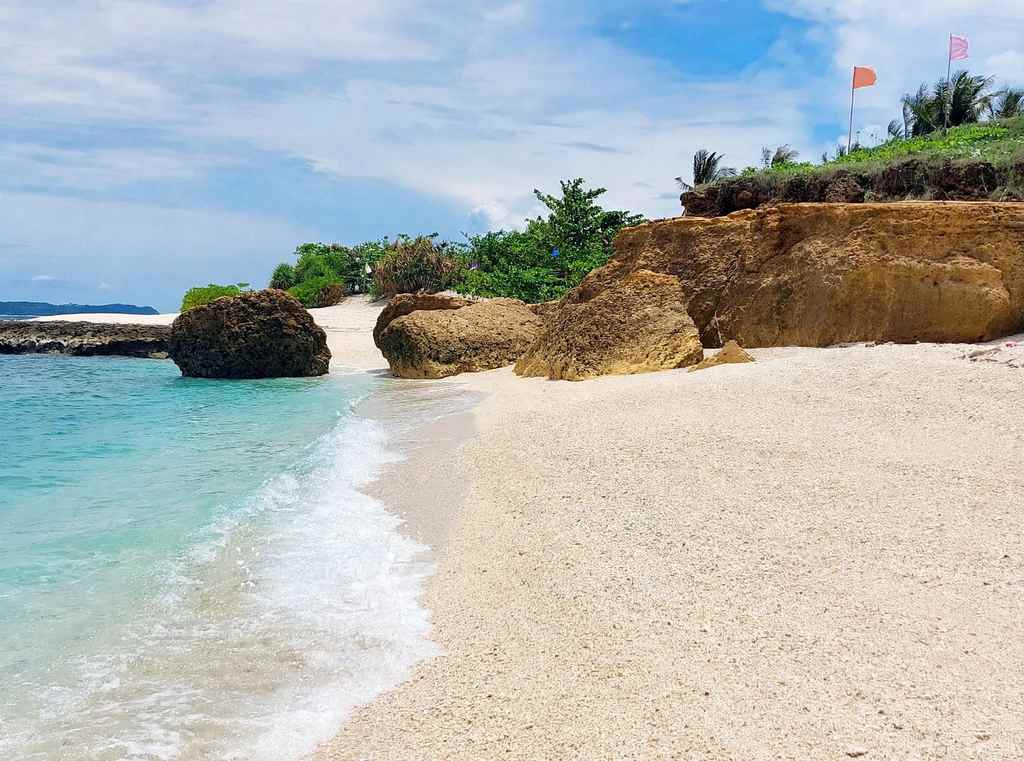
The sandbar and why the tide decides everything
Tinalisayan has two personalities. At high tide it looks like any small island: a strip of pale beach, some brush, a few tan sandstone boulders worn smooth by the waves, and clear water lapping close to the vegetation line. At low tide a long tongue of sand surfaces and stretches away from the island, with shallow water on both sides. That second version is the one in the photos people share.
The sand is fine and very white, and on a sunny day it throws the light straight back at you. There is almost no shade once you walk out onto the bar, so the hour you arrive matters for comfort as much as for the view. A mid-morning visit on a falling or low tide gives you the full sandbar without the harshest noon sun.
Tide times shift by roughly an hour each day, so there is no fixed "best hour" to quote. Boatmen in San Pascual know the local pattern well. Tell them when you register that the sandbar is a priority, and they will usually order the stops so you reach Tinalisayan as the water drops.
Swimming at Tinalisayan
For most visitors this is the most relaxing swim of the day. The water around the sandbar is shallow, calm in good weather and warm, which makes it friendly for kids and for people who are not strong swimmers. You can wade a long way out on the bar and still be standing.
Two cautions. First, shallow water near a sandbar can change quickly as the tide turns, and the edges drop off into deeper channels. Stay where you can see the bottom, and keep children within arm's reach. Second, there are no lifeguards on any of the Burias islands. Your boatman is the closest thing to one, so swim near the boat and let him know if anyone in the group is nervous in the water. Aqua shoes help on the rockier parts near the boulders.
Snorkeling: set your expectations
Snorkeling here is casual rather than spectacular. The appeal is the clarity of the water: in calm conditions you can float over the sand and around the rock edges and watch small fish moving below you. Visitors who come with a mask often spend a happy hour or two in the shallows taking underwater photos.
Do not expect a dive-site reef or rental counters. Bring your own mask, snorkel and a dry bag for your phone, and wear a rash guard, because the reflected sun off the sand burns faster than people expect. Look but do not stand on anything living, and leave shells where you found them.
Fees and what you will find on the island
Tinalisayan has an entrance fee collected on arrival, usually somewhere between ₱50 and ₱100 per person, plus a separate docking charge for the boat. A shaded cottage or table for lunch goes for around ₱300. These amounts change from season to season, so ask for the current list at the San Pascual tourism office when you register your boat, and carry small bills, since each fee goes to a different collector.
There is no running water, no electricity and no store you can count on, so pack drinking water, lunch and snacks before leaving the port. Take every piece of trash back to the boat. Most groups use Sombrero Island, a short ride away, for an overnight stay; on Tinalisayan, ask the caretaker before assuming you can camp.
Best time to visit
March to May is the most reliable window. The seas between San Pascual and the islands are at their calmest, the skies are clearest and the water is at its most turquoise. It is also the busiest period, and San Pascual's town fiesta in mid-May fills the few inns quickly.
November to February is a decent second choice with fewer visitors, though the northeast wind can make the open-water stretches bumpy, and late-season storms still pass through. June to October brings the southwest monsoon and typhoons, and no-sail orders are common. A cancelled boat in this season can leave you stuck on Burias or on the mainland side, so travel then only with spare days.
Whatever the month, leave the port by about 8:00 AM. The wind tends to rise after midday, and the ride back is noticeably rougher in the afternoon.
How to fit Tinalisayan into a Burias itinerary
Burias is not a place to rush. Boats to the island leave only a few times a day, power and mobile signal are limited outside the town centre, and there are no ATMs, so bring all the cash you need. Three days with two nights in San Pascual gives you a buffer for weather. Routes, boat times and fares to San Pascual are covered in our guide to Animasola Island and its rock pools.
Day 1: Arrive and settle in San Pascual
Cross to San Pascual on a morning boat. Check in, then go straight to the tourism office beside the port to register and book a boat for the next morning. Tell them you want Tinalisayan at low tide and ask what time to be ready. Spend the late afternoon walking around the old town and its church, and watch the sunset from the port.
Day 2: Island hopping with the sandbar as the anchor
Start early. A standard tour covers Animasola, Tinalisayan and Sombrero, and the order depends on the tide. If low water falls in the morning, Animasola's rock pools and the Tinalisayan sandbar both come first, with Sombrero for lunch and a late swim. If it falls later, your boatman may flip the route. The usual charter for this circuit runs about ₱3,000 to ₱4,000 for a boat of five or six, with extra stops such as Dapa costing more. If you want the island to yourself after the day boats leave, stay the night on Sombrero instead of returning to town.
Day 3: Back to the mainland
Take the earliest boat you can manage. Morning crossings are calmer, and catching one leaves time to make onward connections the same day. If the sea was too rough on Day 2, this is your spare day for the islands, with the trip home moved to the afternoon or the following morning.
A few things worth packing
Sunscreen that is kind to the reef, a wide-brimmed hat, a rash guard, aqua shoes, a dry bag, a power bank and a small first-aid kit cover most of the needs. If you have visited another sandbar, such as Kalanggaman in Leyte, the routine will feel familiar, only with fewer people and fewer facilities. Our island-hopping safety checklist has the rest, including what to ask before you step on a boat.
Tinalisayan rewards a little planning. Pick a calm month, get to San Pascual with a day to spare, and let the tide set your schedule, and the sandbar will be waiting when the water goes down.
Photo credit: Tripadvisor.

Comments
No comments yet. Been here recently? Share a tip or ask a question.
Leave a Reply