San Juanico Bridge no longer holds the title it is best known for. The Cebu–Cordova Link Expressway, at 8.9 kilometres, became the country's longest bridge when it opened in 2022, and San Juanico, at 2,164 metres, now ranks third among Philippine bridges over seawater. It remains the one people actually cross a strait to see, and it is the strongest reason to pair Tacloban with a weekend away from Cebu.
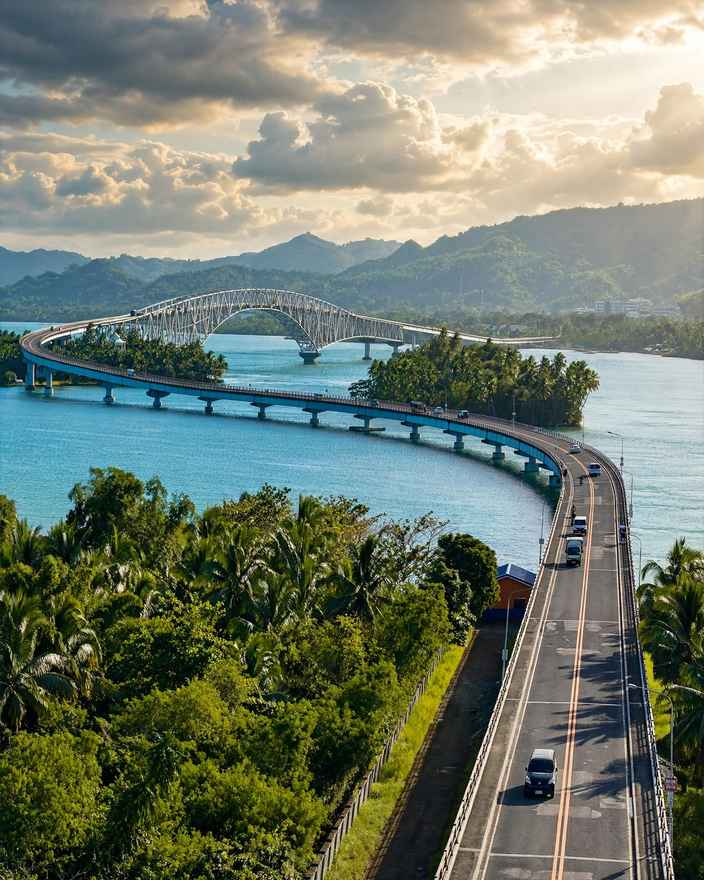
The bridge opened on 2 July 1973 after four years of construction, paid for with Japanese development loans. Its 43 steel spans carry the Pan-Philippine Highway over San Juanico Strait between Tacloban in Leyte and Santa Rita in Samar, with an arch-shaped truss over the main channel and a long curve on the approaches. It is also known as the Bridge of Love.
This guide puts the bridge in a two-day plan with the Leyte Landing Memorial in Palo and a few stops in the city, explains how to reach Tacloban from Cebu, and deals with something most older posts skip: the bridge has been under load restrictions and repair plans since 2025, and that affects how you visit.
Check the Bridge's Status First
A 3-ton limit went on in May 2025 after structural concerns, which kept out buses and trucks and left Samar-bound traffic relying on ferries. Two-way traffic returned in December 2025 under a 15-ton cap, and the government has targeted full capacity again during 2026 alongside a repair programme estimated at about PHP 5.9 billion. A 15-ton cap is comfortable for cars and vans, but the rules have moved several times, so ask your driver, hotel or the DPWH Eastern Visayas office what applies on your travel date. Ask the same if you plan to continue to Samar by bus.
Pedestrians were barred when the restrictions began, so do not build your plan around walking the span. Treat the approaches as your viewing spots and a ride across as a bonus. The DPWH has also built a viewing deck on the Leyte side, which is worth asking about locally.
Getting to Tacloban From Cebu
By air
Cebgo and Philippine Airlines fly Cebu to Tacloban nonstop in about an hour, roughly 22 flights a week between them. Cebu Pacific stopped flying the route in June 2026, so search by route, not by carrier. Fares on thin routes swing widely, and our ferry versus flight budget guide shows how to compare total trip cost rather than ticket price alone.
By sea and road
OceanJet's fast craft runs from Cebu to Ormoc four times a day, at 6:00 AM, 9:30 AM, 1:00 PM and 4:30 PM, in about three hours. Fares are listed from roughly PHP 1,400 to PHP 1,950 depending on class, and fuel surcharges change. From Ormoc, a van to Tacloban takes about two and a half to three hours. The route costs you most of a day each way, though it pairs neatly with Kalanggaman Island if you have a third day.
A Two-Day Plan
Take an early flight so the first day is not wasted. Spend the morning in the city and save the bridge for late afternoon. Sleep in Tacloban, and give the second morning to Palo before a midday flight back to Cebu. The memorial is a short ride south of the city, so it fits before a midday departure.
Day one: city, then the strait
The Santo Niño Shrine and Heritage Museum is the city's most unusual stop. Ferdinand Marcos had it built for Imelda, who was born in Tacloban, as a rest house, and its themed rooms, chapel and ballroom are very much a product of that era. It reopened on 8 December 2013 after Typhoon Yolanda damaged it. Go in the morning, and confirm the closing time and entrance fee before you set out.
Head to the bridge for the last hours of daylight. Photograph from the approaches and viewing areas, not from the carriageway, where traffic moves fast and there is little room to stop.
Day two: Palo and the landing site
MacArthur Landing Memorial National Park sits in Barangay Candahug in Palo, about five kilometres south of Tacloban along the highway. Seven double-life-size bronze figures stand in a shallow pool, marking the 20 October 1944 landing that began the campaign to retake the Philippines. The sculptor was Anastacio Caedo, and the statues were unveiled in 1981. Yolanda knocked one of them off its base in 2013, and it was restored within twenty days. The park also holds a museum and the Rock Garden of Peace, and the Leyte provincial government rehabilitated the grounds in 2024 ahead of the 80th anniversary. Confirm the museum's fee and hours at the entrance.
What to Eat and Bring Home
Moron is the local gift of goodwill: a chocolate-and-rice kakanin made from glutinous rice, coconut milk and roasted cacao, wrapped in banana leaf. It is labour-intensive, so families have traditionally started making it days before a fiesta. Binagol, a sweet taro pudding steamed in a coconut shell, is the other pasalubong to look for. Buy both on your last day, and ask the seller how long they keep without refrigeration.
When to Go and What to Budget
Tacloban has no truly dry season. April is the driest month on average, and December the wettest, so the weeks from March to May give you the best odds. The city sits in a typhoon corridor, and 8 November marks the anniversary of Yolanda, a solemn day for residents. Festival timing is the other option: the Kasadyaan, the festival of festivals of Leyte, is held every 29 June alongside the Pintados celebration of Señor Santo Niño, but expect busier flights and fuller hotels.
Budget for the flight or the ferry first, then one hotel night, local meals and a few short rides. Carry some cash for tricycles and small stalls.
Is It Worth a Weekend From Cebu?
For anyone curious about the Eastern Visayas, yes, with one adjustment: treat San Juanico as the anchor of the trip rather than the whole of it. The bridge is photogenic and historically significant, but the visit gets better when you add Palo and a proper local meal. If repairs have tightened access to the span itself, the plan still works from the approaches. Anyone with extra days can carry on across the strait, and our Samar caves guide picks up from there.